What It Is
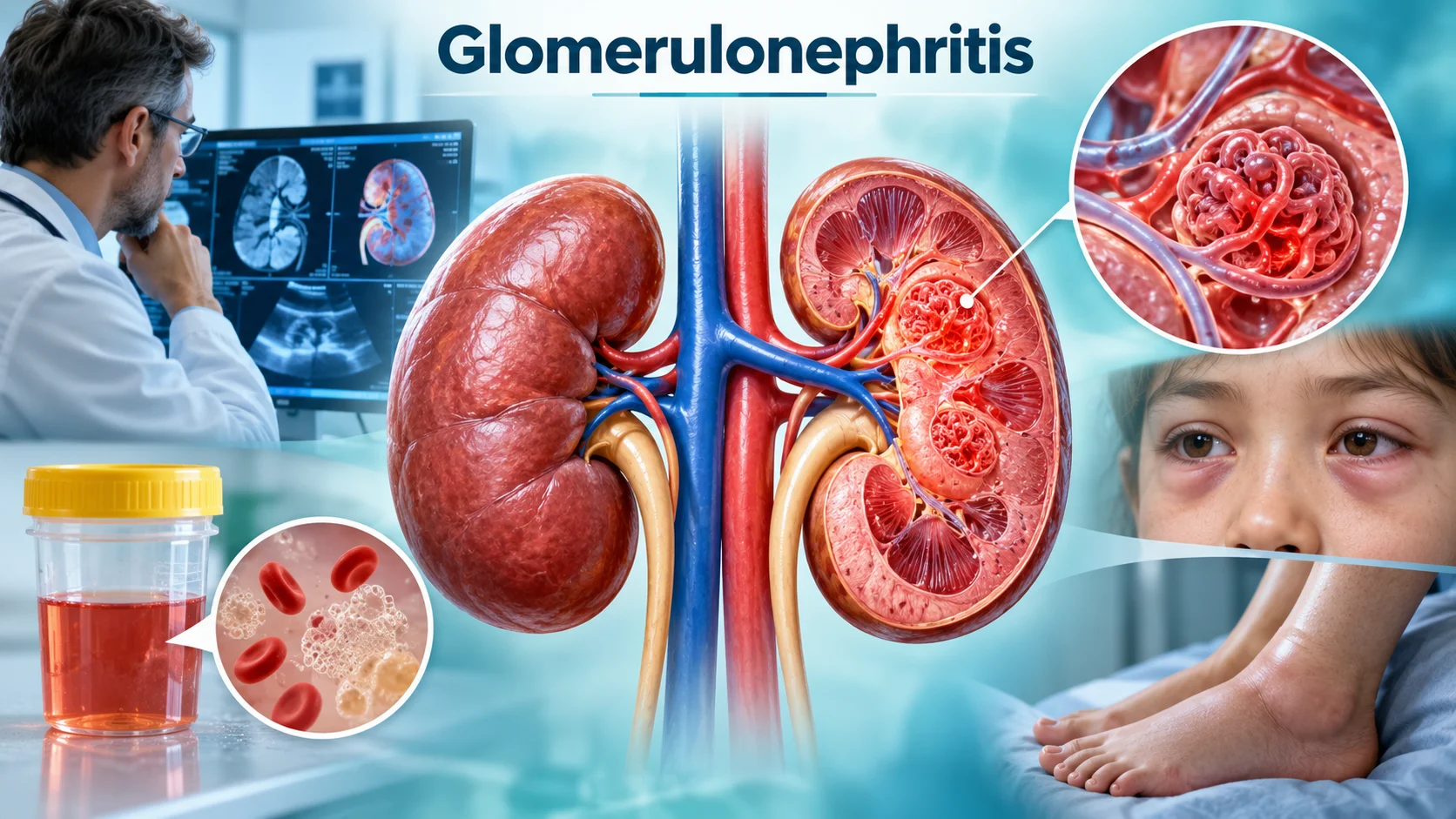
Glomerulonephritis is inflammation of the glomeruli, the tiny filtering units within the kidneys responsible for removing waste and excess fluid from the blood.
How It Develops
Glomerulonephritis often develops when the immune system, in the course of responding to an infection or another trigger, mistakenly causes inflammation within the glomeruli themselves. This can happen following certain infections, as part of broader autoimmune conditions affecting other parts of the body, or, in some cases, without a clearly identified trigger. The resulting inflammation can affect the glomeruli's ability to filter blood properly.
General Symptoms
Symptoms of glomerulonephritis can include blood in the urine, which may cause the urine to appear pink, red, or cola-colored, along with foamy urine related to protein loss. Other common symptoms include swelling, particularly around the eyes, legs, or ankles, and elevated blood pressure. Symptoms can vary considerably depending on how much of the kidney's filtering tissue is affected and how quickly the condition develops.
General Treatment Approaches
Treatment for glomerulonephritis depends on the underlying cause and how severe the inflammation is. In cases related to an infection, addressing the infection itself is often a key part of treatment. Broader treatment approaches may include medications aimed at reducing inflammation and calming an overactive immune response, along with supportive measures to manage blood pressure and fluid balance. Close monitoring of kidney function is typically an important part of ongoing care.
Background
Glomerulonephritis was recognized as a distinct kidney condition in the 19th century, as physicians began linking certain patterns of urine changes to underlying kidney inflammation. Advances in kidney biopsy techniques during the 20th century allowed for direct examination of glomerular tissue, considerably improving understanding of the many different specific patterns and causes that fall under the broader category of glomerulonephritis today.