What It Is
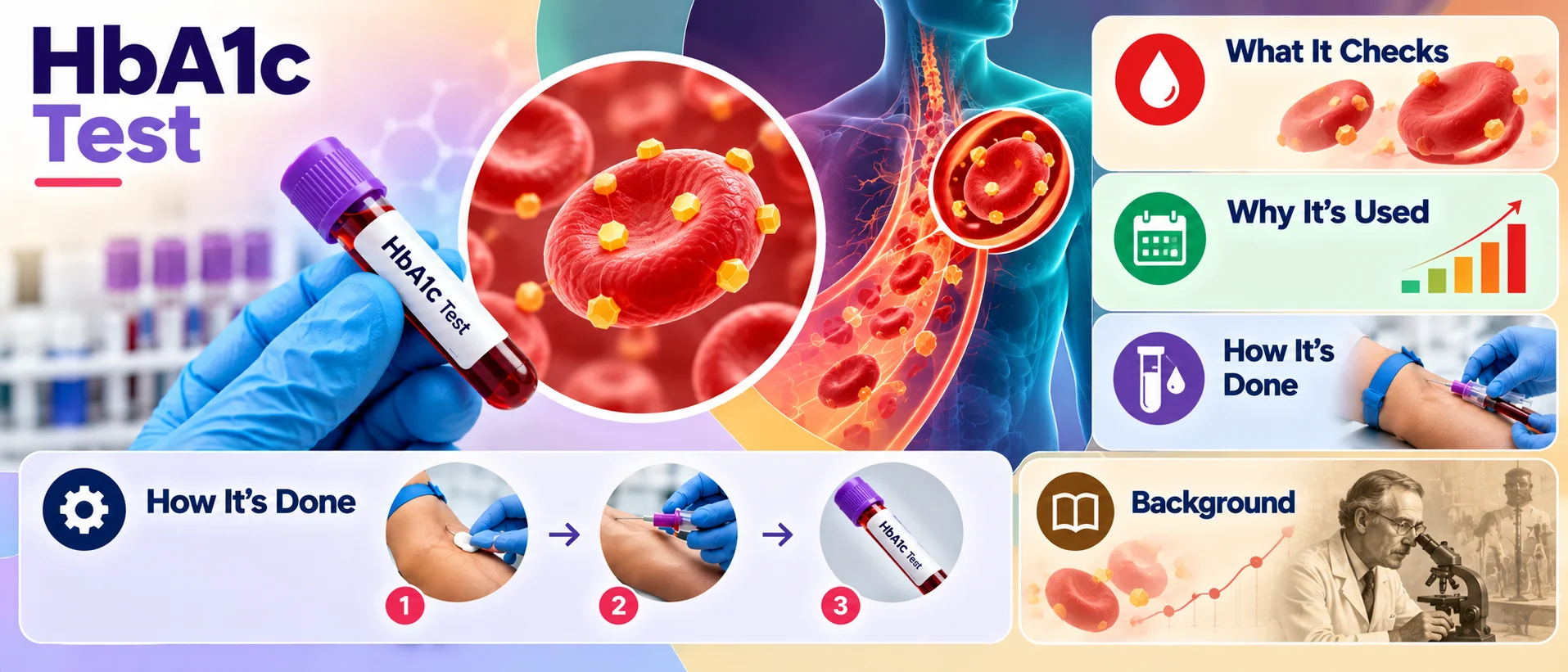
HbA1c, also known as glycated hemoglobin, is a blood test that reflects average blood sugar levels over a period of time, rather than the blood sugar level at a single moment.
What It Checks
The test measures the proportion of hemoglobin, the oxygen-carrying protein in red blood cells, that has glucose attached to it. Glucose naturally attaches to hemoglobin in small amounts as red blood cells circulate through the bloodstream, and the more glucose that's been present in the blood over time, the more of it becomes attached to hemoglobin. Because red blood cells have a lifespan of about three months, this test reflects an average of blood sugar levels over roughly that period.
Why It's Used
HbA1c is commonly used to help monitor blood sugar control over time, and is particularly valued because it isn't affected by short-term factors like a recent meal, unlike a standard blood sugar test taken at a single point in time.
How It's Done
HbA1c testing requires a blood sample, typically drawn from a vein in the arm, similar to most routine blood tests. Unlike some blood sugar tests, fasting beforehand isn't required, since the test reflects a longer-term average rather than a current blood sugar reading.
Background
The relationship between glucose and hemoglobin was first described by researchers in the late 1960s, and its potential usefulness as a measure of longer-term blood sugar control was recognized shortly afterward. Standardized HbA1c testing became widely adopted in clinical practice starting in the 1980s, and it has since become one of the most commonly used tests for monitoring blood sugar trends over time, valued for the broader picture it provides compared to a single blood sugar reading.