What It Is
Heart failure is a condition in which the heart isn't able to pump blood as effectively as the body needs. Despite its name, it doesn't mean the heart has stopped working, but rather that it's working less efficiently than it should.
How It Develops
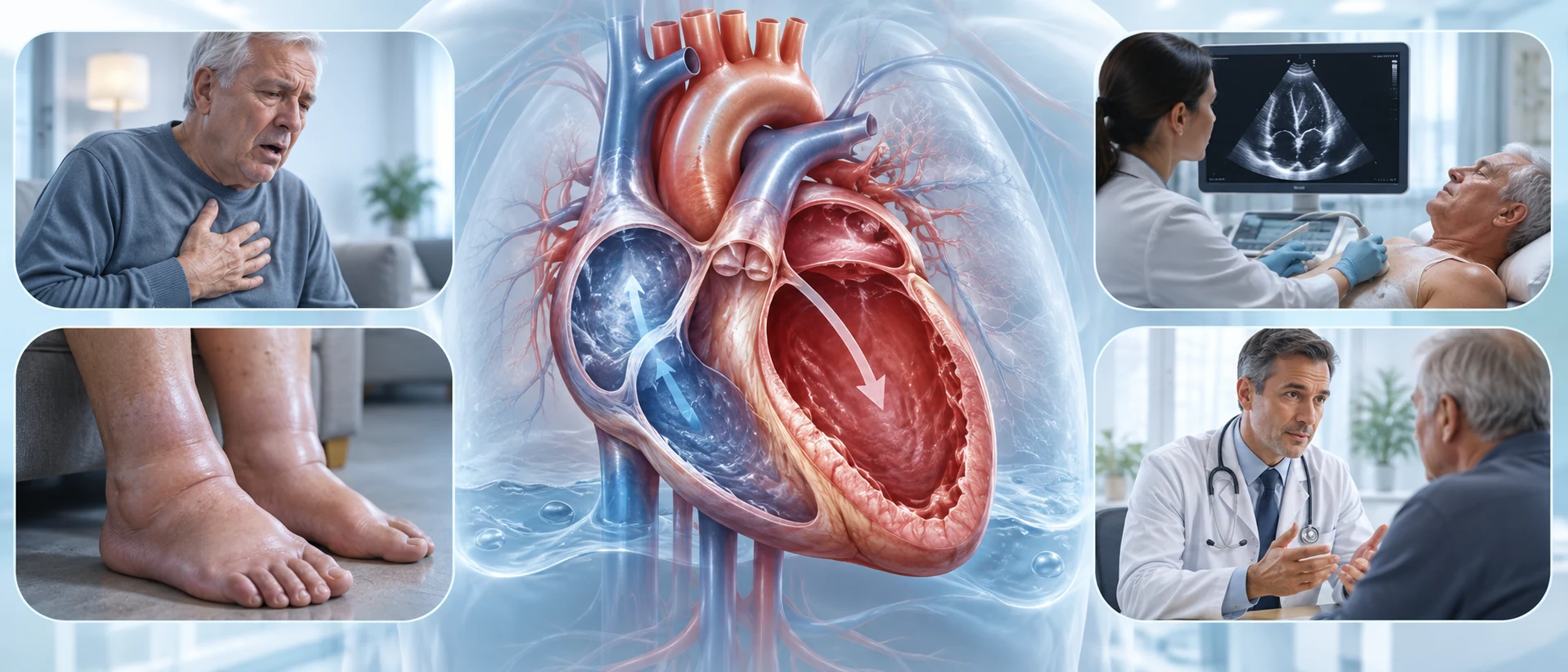
Heart failure typically develops as a result of underlying conditions that gradually weaken or stiffen the heart muscle over time, such as coronary artery disease, long-standing high blood pressure, or damage from a previous heart attack. As the heart's pumping ability declines, the body may not receive enough oxygen-rich blood, and fluid can begin to back up in the lungs and other tissues.
General Symptoms
Common symptoms of heart failure include shortness of breath, particularly during physical activity or when lying down, fatigue, and swelling in the legs, ankles, or abdomen due to fluid buildup. Some people also experience a persistent cough or rapid weight gain related to fluid retention. Symptoms often develop gradually and can worsen over time if the underlying cause isn't addressed.
General Treatment Approaches
Treatment for heart failure generally focuses on managing the underlying cause where possible, along with medications designed to reduce the heart's workload, help remove excess fluid, and support more efficient pumping function. Lifestyle adjustments, including changes to salt and fluid intake and regular monitoring of weight and symptoms, are also commonly part of ongoing management. In certain cases, medical devices or surgical interventions may be considered, depending on the specific underlying cause and severity.
Background
The understanding of heart failure has evolved considerably over the past century, shifting from a relatively limited view focused mainly on fluid buildup to a more detailed understanding of the different ways the heart's pumping and relaxing functions can be affected. This evolving understanding has led to a wider range of treatment approaches developed over recent decades, aimed at addressing the specific underlying patterns involved in each case.