What It Is
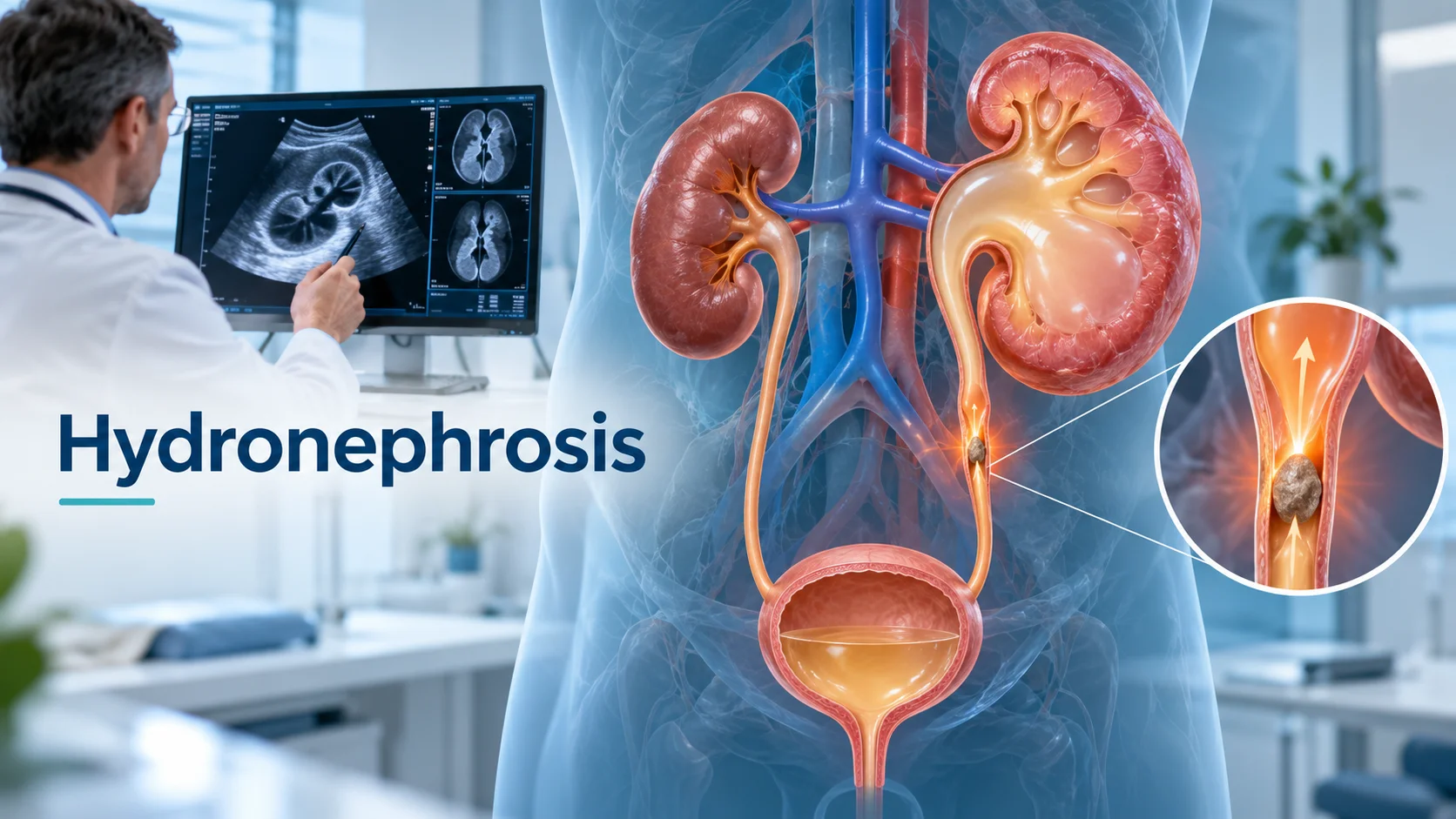
Hydronephrosis is a condition in which one or both kidneys become swollen due to a buildup of urine, typically caused by a blockage somewhere along the urinary tract.
How It Develops
Normally, urine produced by the kidneys flows steadily down through the ureters into the bladder. Hydronephrosis develops when something obstructs this normal flow, such as a kidney stone, structural narrowing somewhere along the urinary tract, or, in some cases, external pressure from a nearby structure. When urine can't drain properly, it backs up into the kidney, causing it to gradually swell and, if the blockage persists, potentially affecting kidney function over time.
General Symptoms
Symptoms of hydronephrosis vary depending on how the blockage develops. When it occurs suddenly, such as from a kidney stone, it often causes significant pain in the back or side. When it develops more gradually, it may cause milder, less specific discomfort, or in some cases, no noticeable symptoms at all, particularly if only one kidney is affected and the other is compensating normally. Other possible symptoms include changes in urination patterns and, in some cases, urinary tract infections related to the blockage.
General Treatment Approaches
Treatment for hydronephrosis focuses on identifying and relieving the underlying blockage. Depending on the cause, this might involve removing or breaking up a kidney stone, addressing a structural narrowing, or managing whatever external factor is causing the obstruction. In some cases, a temporary drainage tube may be placed to relieve pressure on the kidney while the underlying cause is being addressed.
Background
Hydronephrosis has been recognized as a distinct finding since early anatomical studies identified swollen, fluid-filled kidneys during examinations. The development of imaging techniques such as ultrasound in the mid-20th century made it possible to detect hydronephrosis non-invasively and much earlier than had previously been possible, considerably improving the ability to identify and address underlying urinary tract blockages before they cause more significant kidney damage.