What It Is
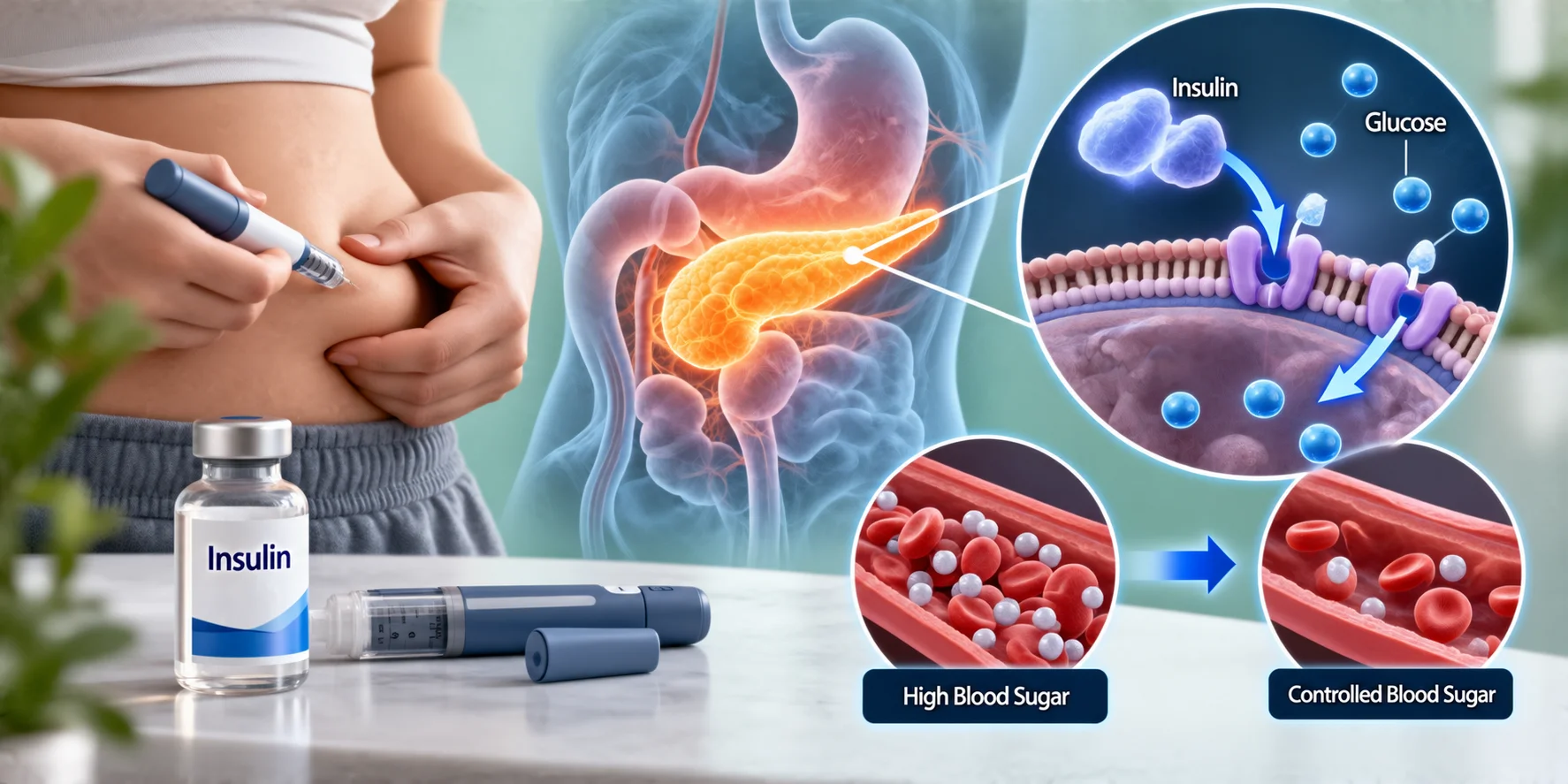
Insulin is a hormone medicine, used as a replacement or supplement for the insulin the body's own pancreas would normally produce, and belongs to a broader category of medicines used to manage diabetes.
What It's Used For
Insulin is generally used to help manage blood sugar levels in people with diabetes, particularly type 1 diabetes, where the body produces little to no insulin naturally, and in certain cases of type 2 diabetes as well.
How It Works
Insulin's natural role is to allow cells throughout the body, particularly muscle and fat cells, to take up glucose from the bloodstream for energy or storage. It does this by binding to insulin receptors on the surface of cells, triggering a series of internal signals that allow glucose transporters to move to the cell surface and let glucose enter. When insulin is given as a medicine, it performs this same function, helping lower blood sugar levels that would otherwise remain too high without adequate natural insulin activity.
History and Regulatory Status
Insulin was first successfully isolated and used to treat a person with diabetes in the early 1920s, by a team of Canadian researchers, representing one of the most significant medical breakthroughs of the 20th century, transforming a previously fatal diagnosis into a manageable condition. Early insulin was derived from animal sources, primarily cattle and pigs, before advances in biotechnology allowed for the production of synthetic human insulin in the early 1980s, and later, modified insulin formulations with different timing profiles. Insulin remains available today as a prescription medicine in various forms worldwide.