What It Is
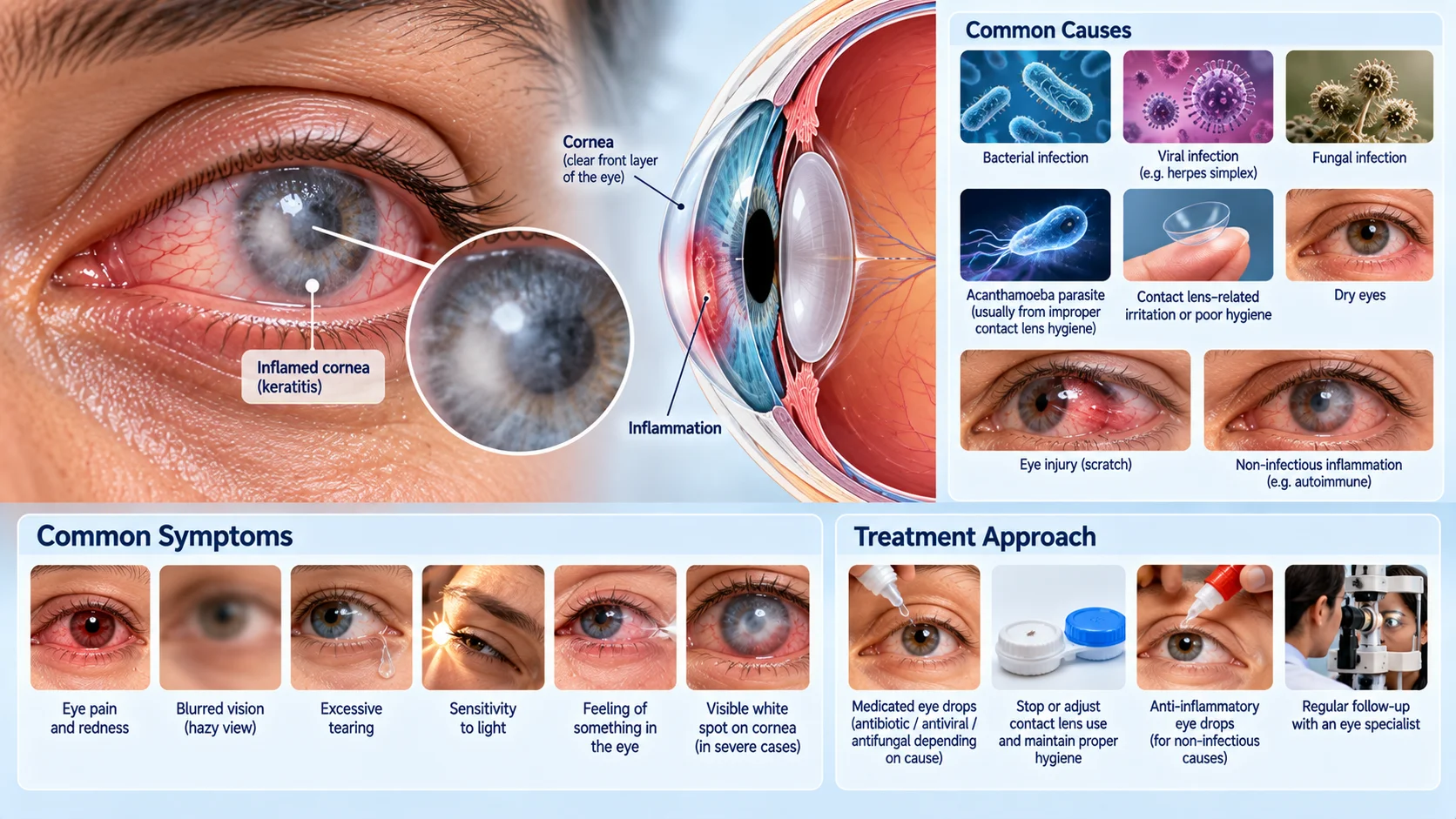
Keratitis is inflammation of the cornea, the clear, dome-shaped front surface of the eye, which can range from mild to sight-threatening depending on its cause and severity.
How It Develops
Keratitis can develop from an infection, involving bacteria, viruses, fungi, or, in some cases, a specific type of parasite associated with improper contact lens hygiene, or from non-infectious causes such as prolonged contact lens wear, dry eyes, or an eye injury. In infectious keratitis, the responsible organism directly invades and damages corneal tissue, while non-infectious keratitis generally involves inflammation without an active infection present.
General Symptoms
Common symptoms of keratitis include eye pain, redness, blurred vision, excessive tearing, sensitivity to light, and a feeling of something being in the eye. In more significant cases, a visible cloudy or white spot may develop on the cornea.
General Treatment Approaches
Treatment for keratitis depends on the underlying cause. Infectious keratitis is generally treated with medicated eye drops targeted at the specific type of organism involved, such as antibiotic, antifungal, or antiviral drops. Non-infectious keratitis is often managed by addressing the underlying contributing factor, such as adjusting contact lens habits or treating underlying dry eye. Prompt evaluation and treatment are generally emphasized given the cornea's importance to clear vision.
Background
Keratitis has been recognized as a significant cause of vision impairment throughout much of recorded medical history, and understanding of its infectious causes developed considerably following the growth of microbiology in the 19th century. The rise of contact lens use in the latter half of the 20th century introduced a new and increasingly recognized risk factor for certain types of keratitis, shaping ongoing public health guidance around proper contact lens hygiene.