What It Is
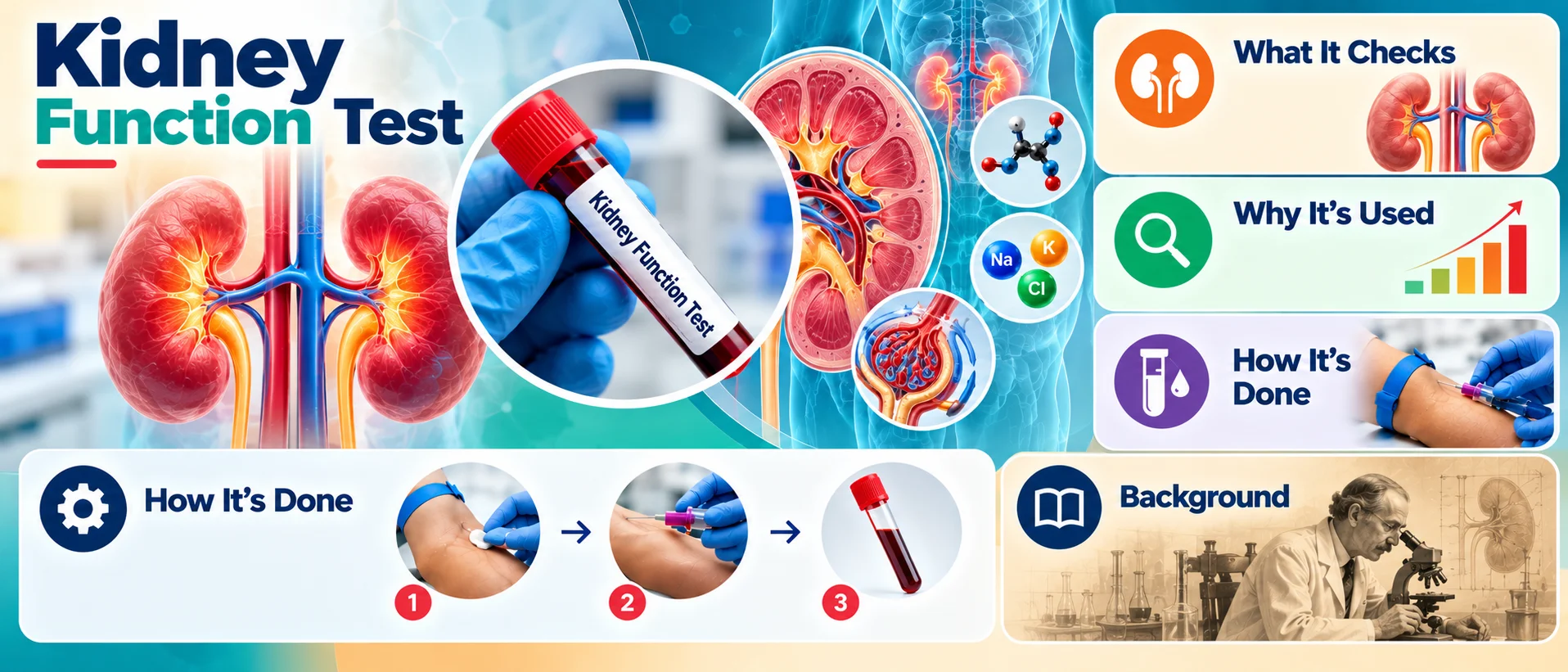
A kidney function test, sometimes called a renal function panel, is a group of blood tests used to assess how effectively the kidneys are filtering waste from the blood.
What It Checks
A kidney function panel typically measures substances like creatinine and blood urea nitrogen, both waste products that the kidneys normally filter out of the blood. It often also includes measurements of electrolytes, such as sodium and potassium, since the kidneys play a central role in regulating these as well. Based on some of these measurements, particularly creatinine levels along with factors like age and sex, an estimate of overall kidney filtering capacity can also be calculated.
Why It's Used
Because the kidneys play such a central role in filtering blood and maintaining fluid and electrolyte balance, kidney function tests are commonly used as part of routine health checkups, to investigate symptoms that might relate to kidney health, or to monitor kidney function over time in various clinical contexts.
How It's Done
A kidney function test requires a blood sample, typically drawn from a vein in the arm. In some cases, a urine sample may also be collected alongside the blood test, since certain aspects of kidney function can be assessed by measuring specific substances in urine as well.
Background
Creatinine and blood urea nitrogen were identified as useful indicators of kidney filtering activity in the early to mid-20th century, as researchers developed a clearer understanding of how the kidneys process and eliminate these substances. Testing methods have been refined considerably since then, including the development of standardized formulas for estimating overall kidney filtering capacity, making kidney function testing a routine and widely accessible part of laboratory medicine today.