What It Is
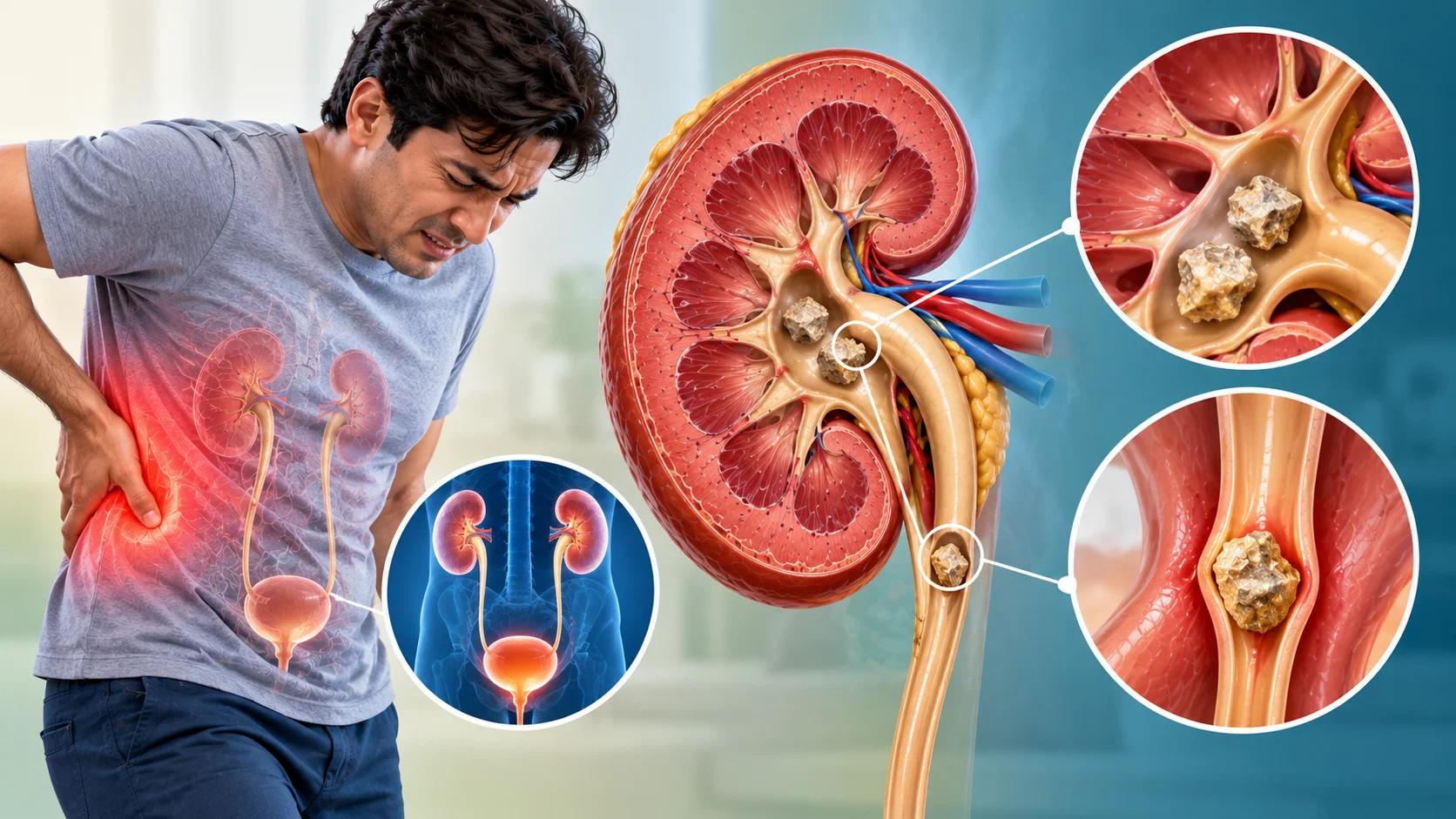
Kidney stones are hard deposits made of minerals and salts that form inside the kidneys, ranging in size from tiny grains to considerably larger formations.
How It Develops
Kidney stones form when certain substances in urine, such as calcium, oxalate, or uric acid, become highly concentrated and crystallize, gradually clumping together to form a solid stone. This is often influenced by factors such as insufficient fluid intake, certain dietary patterns, and underlying metabolic factors that affect how these substances are processed and excreted. Once formed, a stone may remain in the kidney or begin moving into the urinary tract.
General Symptoms
Small kidney stones may pass without causing noticeable symptoms. Larger stones, particularly when moving through the urinary tract, commonly cause sudden, severe pain in the back or side, which may shift toward the lower abdomen or groin as the stone moves. Other symptoms can include blood in the urine, nausea, and a frequent or urgent need to urinate.
General Treatment Approaches
Treatment for kidney stones depends largely on their size and location. Smaller stones are often managed with increased fluid intake and pain relief while the body passes the stone naturally. Larger stones, or those causing a blockage, may require procedures to break the stone into smaller pieces, such as using focused sound waves, or procedures to remove the stone directly. Preventive strategies, including dietary adjustments, are often recommended afterward to reduce the risk of future stones.
Background
Kidney stones have been recognized as a medical condition since ancient times, with descriptions and even early surgical attempts to remove them documented in historical medical texts. Treatment advanced considerably in the latter half of the 20th century with the development of non-surgical techniques, such as shock wave lithotripsy, which uses external sound waves to break stones apart, significantly reducing the need for more invasive surgical procedures.