What It Is
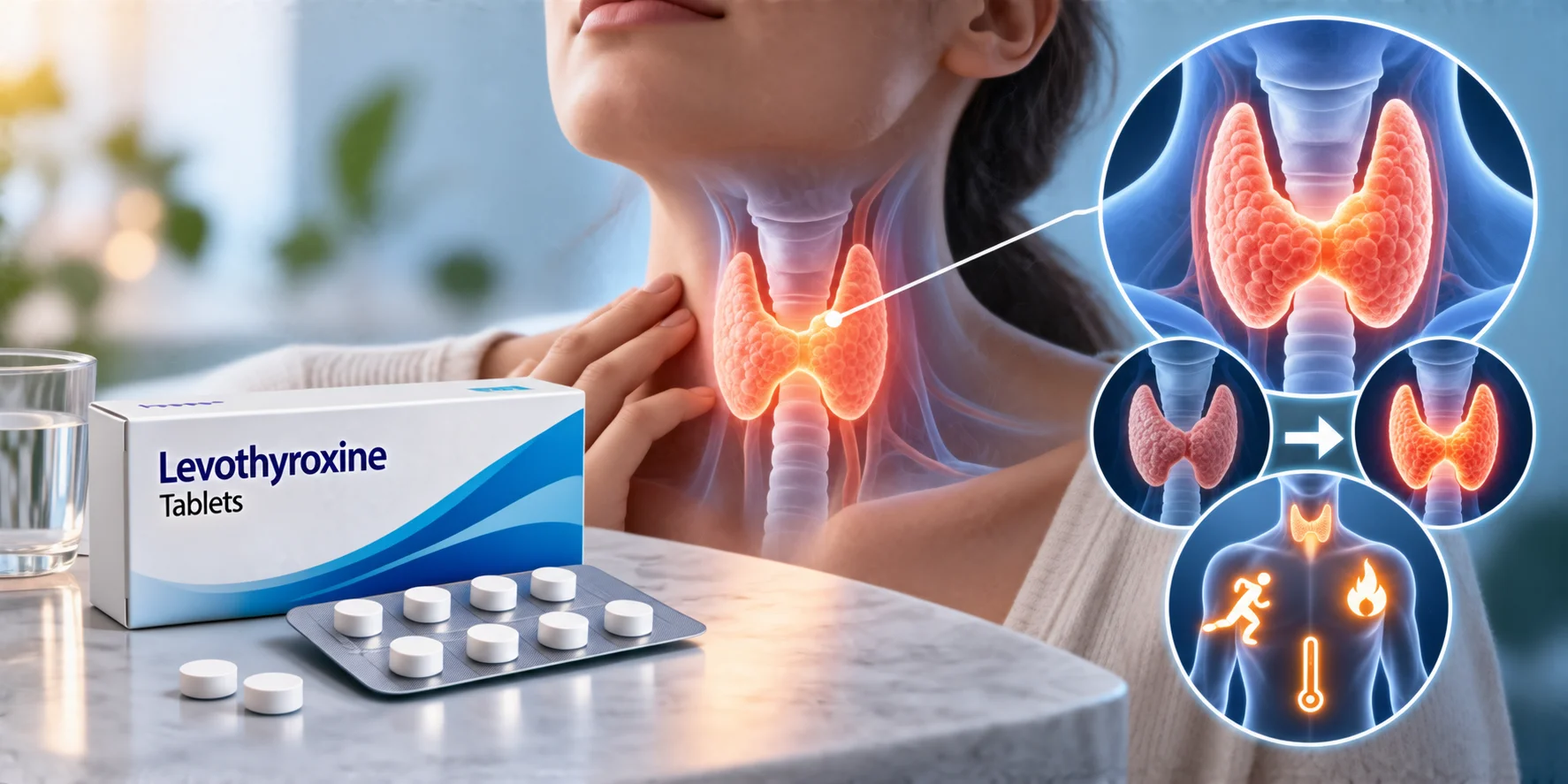
Levothyroxine is a synthetic form of thyroxine, one of the main hormones naturally produced by the thyroid gland, and belongs to a class of medicines called thyroid hormone replacements.
What It's Used For
Levothyroxine is generally used to supplement or replace thyroid hormone in people whose thyroid gland doesn't produce enough of it naturally, a condition known as an underactive thyroid.
How It Works
Levothyroxine is chemically identical to the thyroxine hormone the thyroid gland normally produces. Once taken, the body converts a portion of it into a more biologically active related hormone, and both forms circulate throughout the body, binding to receptors inside cells and influencing the rate at which those cells carry out metabolic processes. In effect, levothyroxine restores thyroid hormone levels to a range similar to what the body would maintain on its own with normal thyroid function.
History and Regulatory Status
Thyroid hormone extracted from animal thyroid glands was used in medicine as far back as the late 19th century, but the synthetic form of levothyroxine was developed later, becoming available for clinical use in the mid-20th century. Its introduction allowed for more precise and consistent dosing compared to earlier animal-derived thyroid extracts, whose hormone content could vary. Levothyroxine has since become one of the most commonly prescribed medicines globally, reflecting how common thyroid hormone deficiency is as a condition, and remains available as a standard prescription medicine in virtually all countries.