What It Is
A liver biopsy is a procedure in which a small sample of liver tissue is removed for closer examination, helping assess the health and condition of the liver in detail.
What It Checks
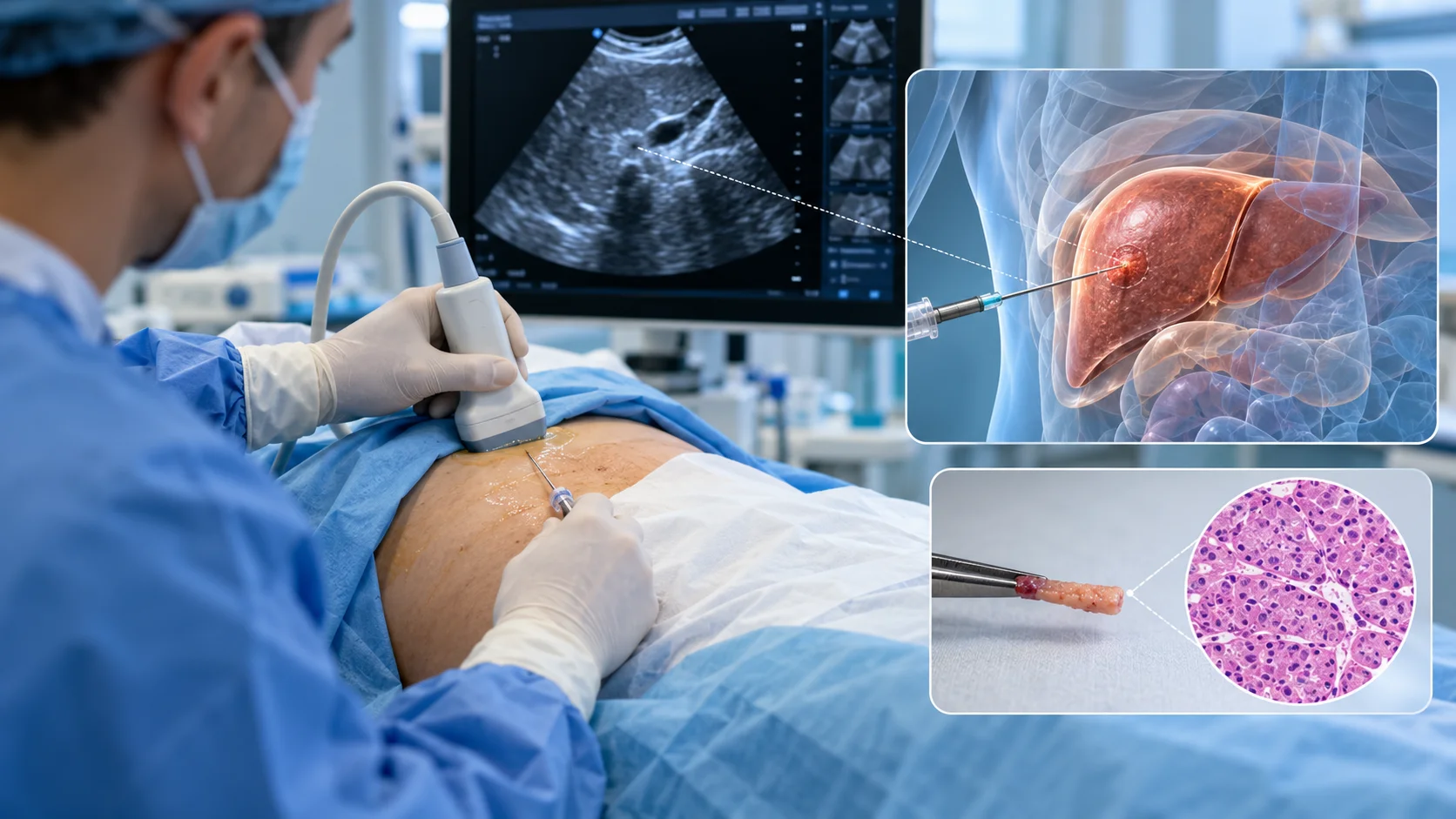
A liver biopsy allows direct microscopic examination of liver tissue, which can reveal the extent of inflammation, scarring, fat buildup, or other changes affecting the liver, often providing more detailed information than blood tests or imaging alone.
Why It's Used
A liver biopsy is commonly used to help diagnose the specific cause and severity of liver disease when other tests haven't provided a complete picture, and to monitor the progression of certain chronic liver conditions over time.
How It's Done
A liver biopsy is most commonly performed using a thin needle inserted through the skin into the liver, often guided by ultrasound imaging to help ensure accurate placement, after numbing the area. A small sample of tissue is withdrawn through the needle and sent to a laboratory for detailed examination by a pathologist.
Background
Liver biopsy techniques developed over the mid-20th century, as physicians sought a way to directly examine liver tissue rather than relying solely on blood tests and physical examination to assess liver health. The introduction of ultrasound guidance in the latter half of the 20th century made the procedure considerably safer and more precise, and liver biopsy remains a valuable diagnostic tool for detailed evaluation of liver conditions today.