What It Is
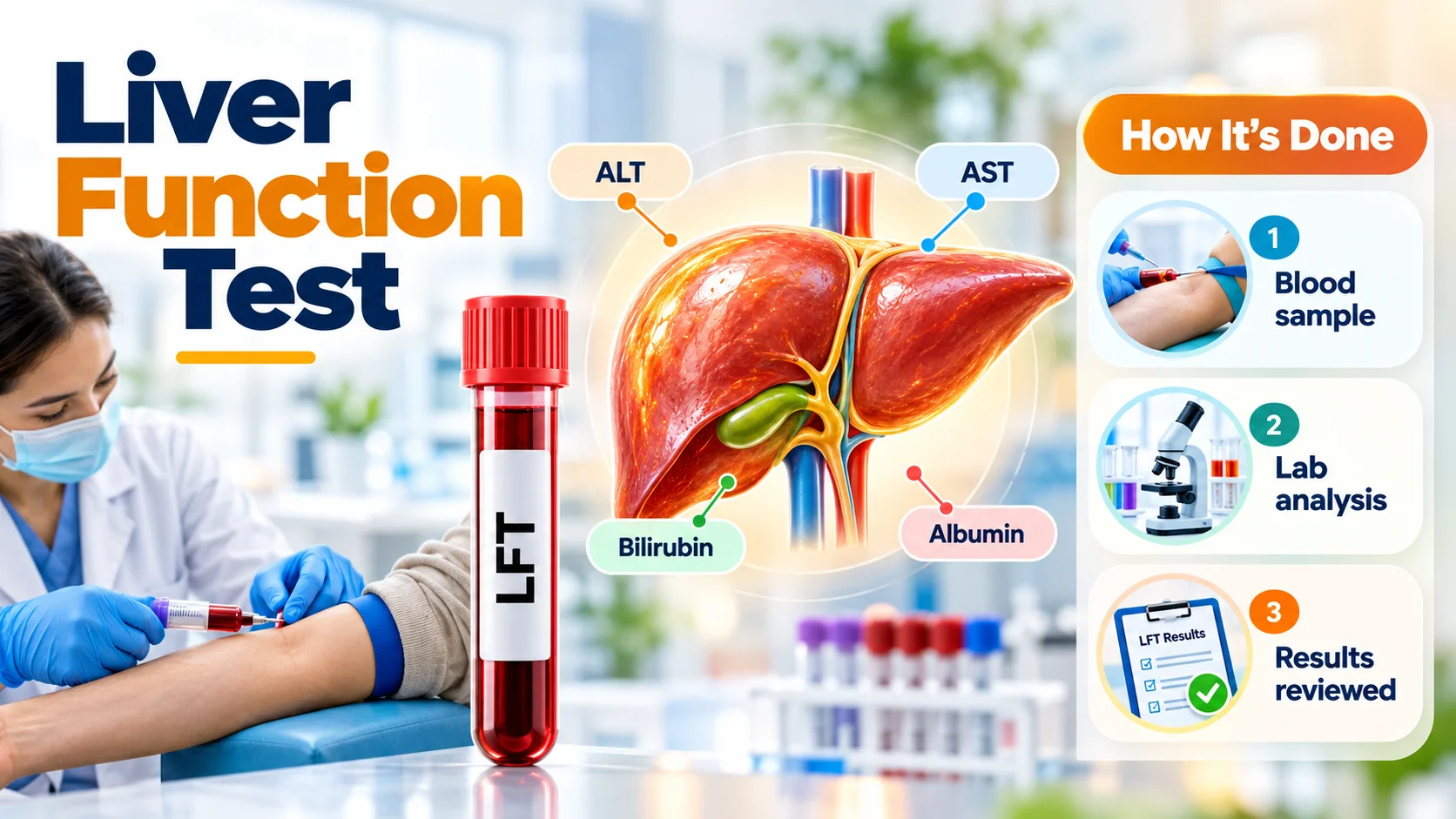
A liver function test, commonly abbreviated as LFT, is actually a panel of several individual blood tests, grouped together because they each provide information related to how the liver is working.
What It Checks
An LFT panel typically measures a combination of liver enzymes, along with substances like bilirubin and certain proteins the liver produces. Liver enzymes are released into the blood when liver cells are irritated or damaged, while bilirubin and liver-produced proteins reflect how well the liver is carrying out its normal functions, such as processing waste products and producing essential blood proteins.
Why It's Used
Because the liver is involved in so many bodily processes, an LFT panel is commonly used as a general screening tool, as part of routine health checkups, or to investigate symptoms that might be related to the liver. It's also frequently used to monitor liver health over time in various clinical contexts.
How It's Done
Like most blood tests, an LFT panel requires a blood sample drawn from a vein, typically in the arm. The sample is sent to a laboratory, where each individual component of the panel is measured separately using automated testing equipment.
Background
The individual components that make up a modern LFT panel were identified and developed as separate tests over the course of the 20th century, as researchers gradually gained a better understanding of liver enzymes and their role in reflecting liver activity. Over time, laboratories began grouping several of these related tests together into a single panel, given how often they're ordered together, which is how the now-standard combined LFT panel came into common use.