What It Is
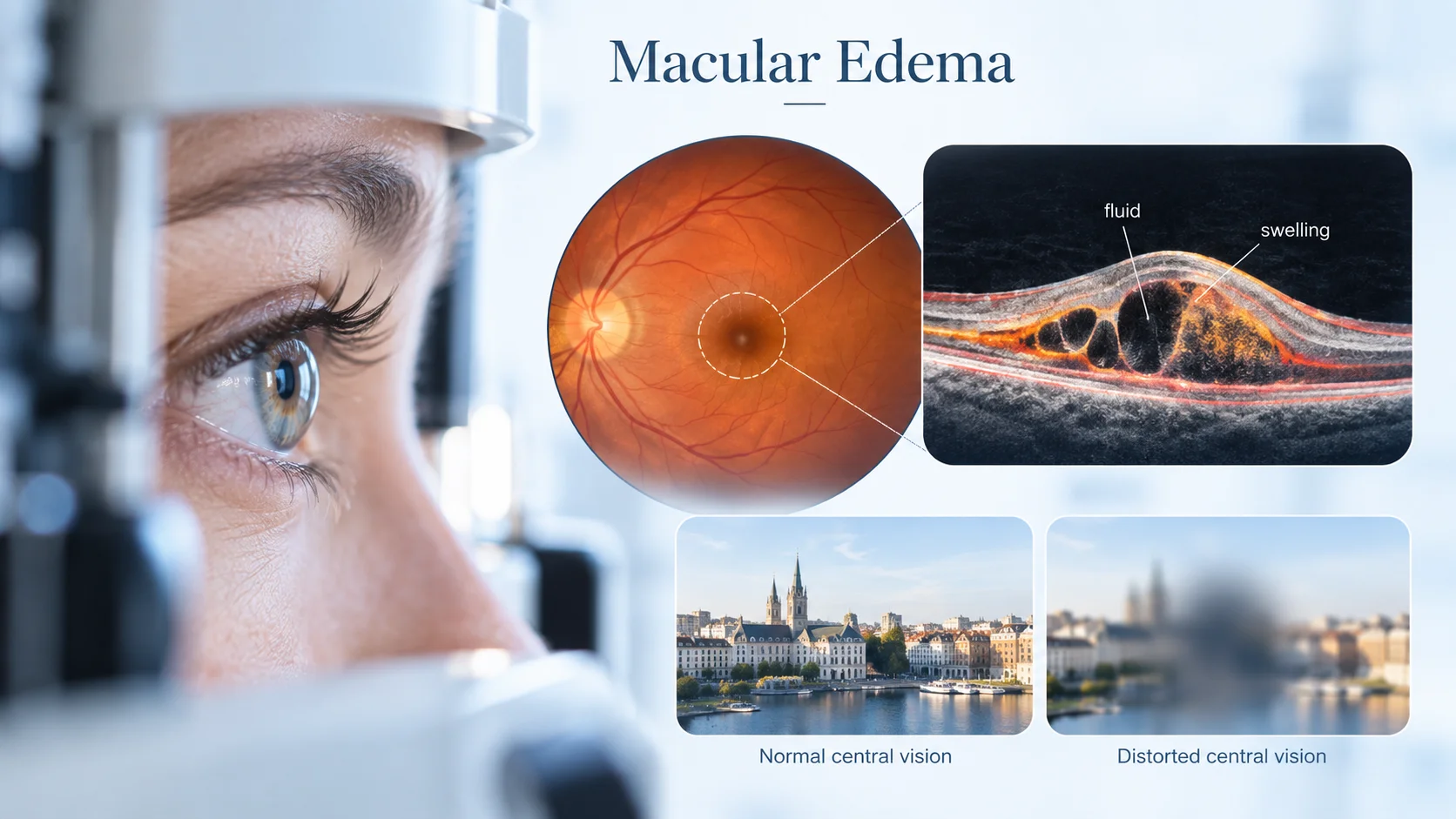
Macular edema is swelling of the macula, the central part of the retina, caused by fluid accumulating within its tissue.
How It Develops
Macular edema occurs when blood vessels near the macula become leaky or damaged, allowing fluid to seep into the surrounding retinal tissue and cause swelling. This can happen as a complication of several underlying conditions, including diabetic retinopathy and retinal vein occlusion, or following certain types of eye surgery or inflammation within the eye.
General Symptoms
The main symptom of macular edema is blurred or distorted central vision, since swelling within the macula directly interferes with its ability to process detailed visual information. Colors may also appear less vivid or slightly washed out in the affected area of vision.
General Treatment Approaches
Treatment for macular edema generally focuses on addressing the underlying cause where possible, alongside treatments aimed directly at reducing the swelling itself, such as injections of medication into the eye or, in some cases, laser treatment. The specific approach depends heavily on what's causing the fluid buildup in each individual case.
Background
Macular edema was recognized as a specific pattern of retinal swelling following the development of tools that allowed detailed examination of the retina in the 19th and 20th centuries. More recent advances in retinal imaging, particularly a technique called optical coherence tomography developed in the 1990s, allowed macular edema to be visualized and measured with far greater precision than before, considerably improving both diagnosis and the ability to monitor treatment response over time.