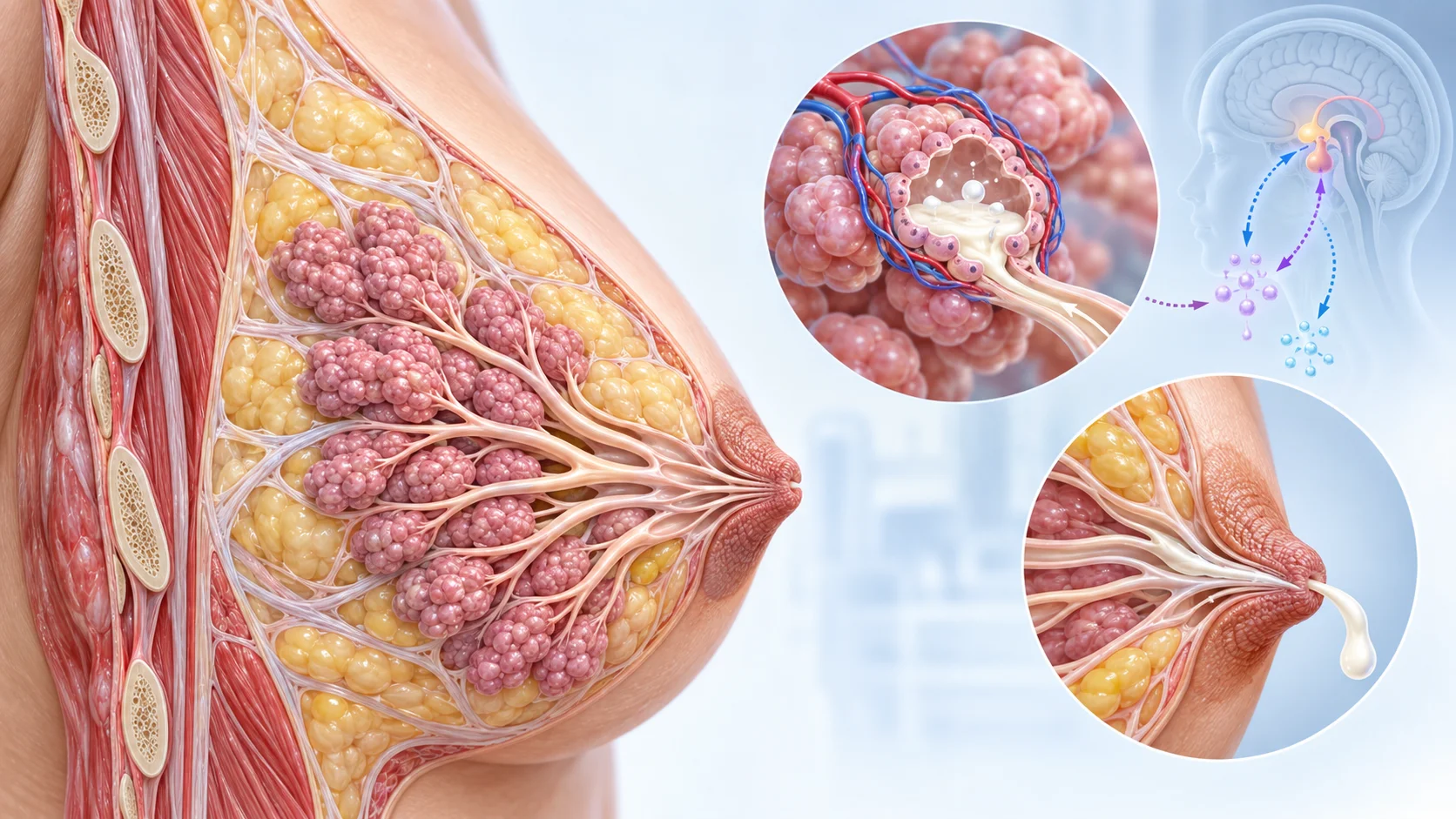
The mammary glands are specialized glands located within breast tissue, present in both sexes but functionally active primarily in females, particularly during and after pregnancy. Their core role is producing milk to nourish an infant.
Structure of the Gland
Mammary glands are made up of a network of small, grape-like clusters called lobules, where milk is actually produced, connected by a system of ducts that carry milk toward the nipple. This glandular tissue is surrounded and supported by fatty and connective tissue, which largely determines the overall size and shape of the breast, though it isn't directly involved in milk production itself.
Hormonal Development
Mammary gland tissue remains largely inactive and underdeveloped until puberty, when rising levels of estrogen and progesterone trigger the growth of ducts and surrounding tissue. Full functional development of the milk-producing lobules, however, doesn't typically occur until pregnancy.
Preparing for Milk Production
During pregnancy, hormonal changes, particularly involving progesterone, estrogen, and prolactin, drive significant further development of the glandular tissue, preparing it for milk production. Prolactin, produced by the pituitary gland, is the primary hormone responsible for stimulating milk production itself.
Producing and Releasing Milk
After childbirth, prolactin levels support ongoing milk production within the lobules. A separate hormone, oxytocin, triggers the "let-down reflex," causing small muscle-like cells around the lobules to contract and push milk through the ducts toward the nipple, typically triggered by an infant nursing or even by anticipation of feeding.
An Adaptive System
Milk production is a responsive process — the more consistently milk is removed through nursing, the more the glands are stimulated to continue producing it, meaning the system adjusts its output based largely on ongoing demand rather than working on a fixed schedule.