What It Is
Morphine belongs to a class of medicines called opioids, and is one of the original reference compounds from which this entire class of pain-relieving medicines takes its name.
What It's Used For
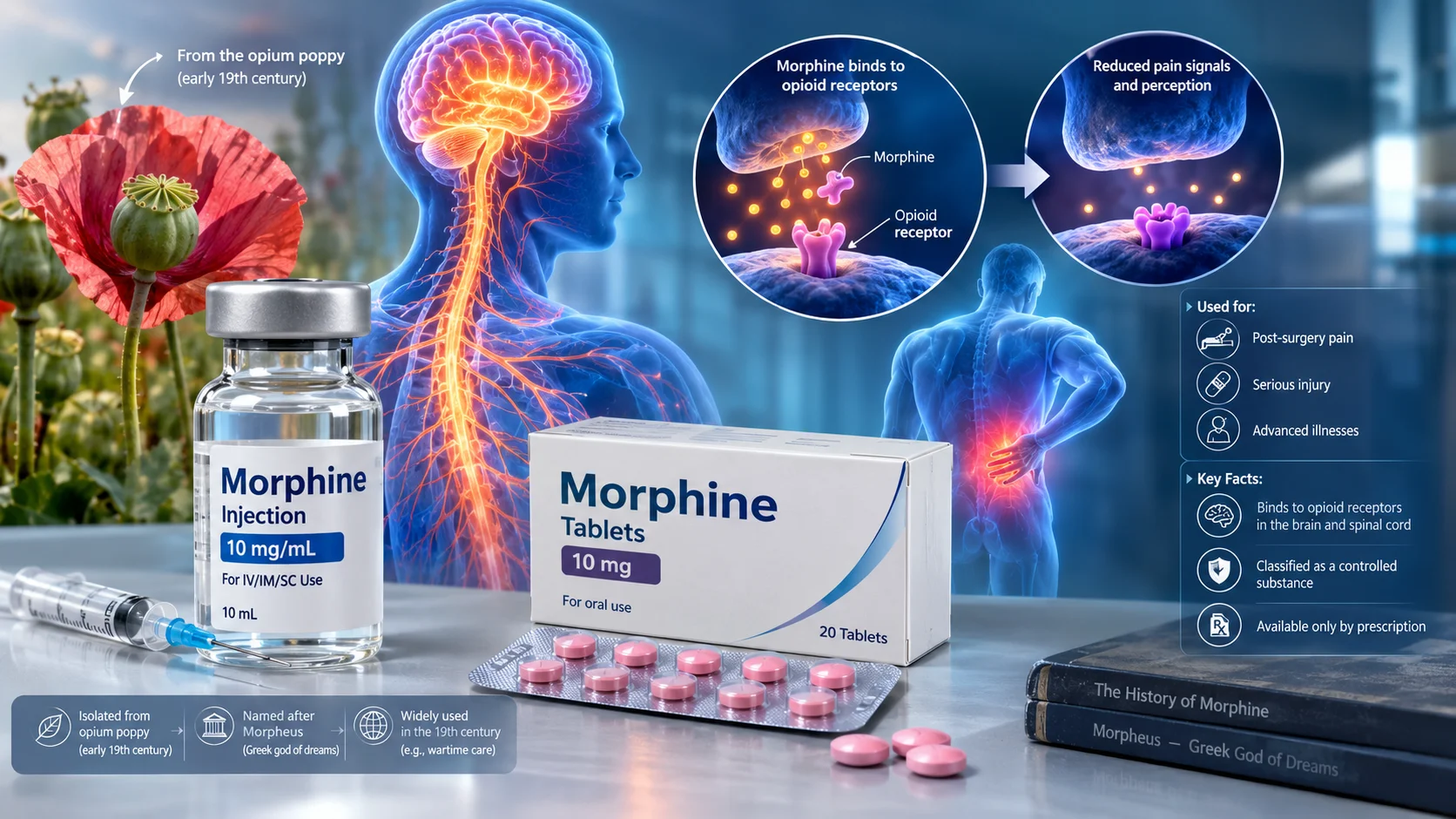
Morphine is generally used to relieve moderate to severe pain, commonly in settings such as after surgery, following serious injury, or in the context of certain advanced illnesses.
How It Works
Morphine works by binding to opioid receptors, found throughout the central nervous system, including the brain and spinal cord. These receptors are part of the body's natural pain-regulating system, normally activated by the body's own opioid-like chemicals. When morphine binds to these receptors, it reduces the transmission and perception of pain signals, and also produces a range of other effects on the nervous system associated with opioid medicines more broadly.
History and Regulatory Status
Morphine was first isolated from the opium poppy plant in the early 19th century by a German pharmacist, making it one of the earliest active compounds ever purified from a plant source for medical use. It was named after Morpheus, the Greek god of dreams, reflecting its sedative properties. Its use expanded considerably during the 19th century, including notably during wartime medical care. Given its potential for dependence and misuse, morphine is classified as a controlled substance in essentially all countries today, available only by prescription and subject to strict regulatory oversight regarding its manufacture, distribution, and use.