What It Is
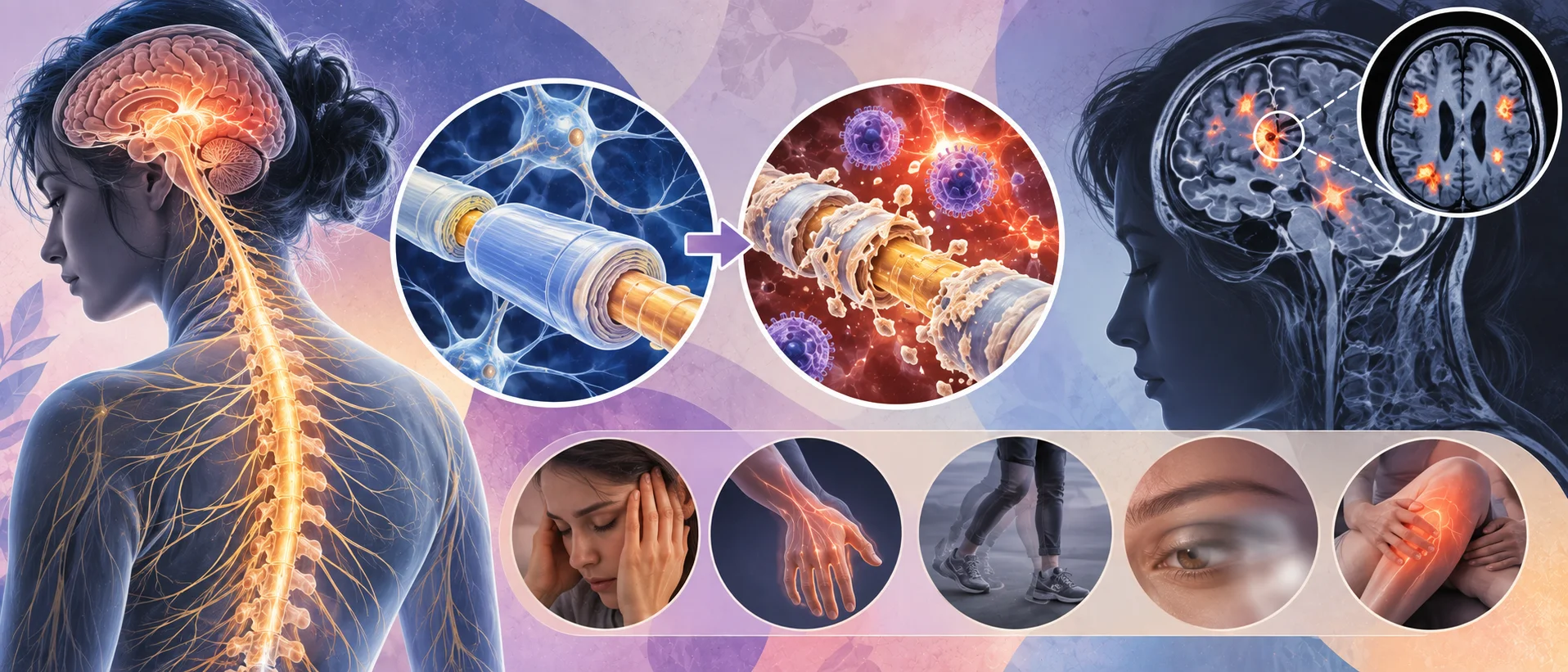
Multiple sclerosis, commonly abbreviated as MS, is a chronic condition in which the immune system mistakenly attacks the protective covering of nerve fibers within the brain and spinal cord, disrupting normal communication between the brain and the rest of the body.
How It Develops
Nerve fibers in the brain and spinal cord are normally wrapped in a fatty substance called myelin, which helps electrical signals travel quickly and efficiently. In MS, the immune system attacks this myelin covering, causing inflammation and damage that slows or disrupts nerve signal transmission. Over time, this can also affect the underlying nerve fibers themselves. The exact cause isn't fully understood, but it's thought to involve a combination of genetic susceptibility and environmental factors.
General Symptoms
Symptoms of MS vary considerably depending on which nerve pathways are affected, but commonly include fatigue, numbness or tingling, muscle weakness, difficulties with coordination or balance, and vision changes. Many people with MS experience a pattern of symptom flare-ups followed by periods of partial or complete recovery, though the specific pattern and progression can differ significantly from person to person.
General Treatment Approaches
Treatment for MS generally focuses on managing symptoms during flare-ups, reducing the frequency and severity of future flare-ups, and slowing disease progression. This commonly includes medications that modify the immune system's activity, along with treatments aimed at specific symptoms, such as fatigue or muscle stiffness. Physical therapy and rehabilitation support are also commonly incorporated into ongoing management.
Background
Multiple sclerosis was first clearly described as a distinct disease by a French neurologist in the 1860s, based on detailed clinical and pathological observations. Understanding of the condition expanded considerably over the 20th century, particularly following the development of MRI, which allowed the characteristic areas of nerve damage to be directly visualized for the first time, transforming both diagnosis and the ability to monitor the disease over time.