What They Do
A neonatologist is a physician who specializes in the medical care of newborn infants, particularly those who are premature, critically ill, or otherwise require specialized medical attention beyond routine newborn care. Neonatology is a subspecialty within pediatrics, focused specifically on the earliest period of life.
What They Treat
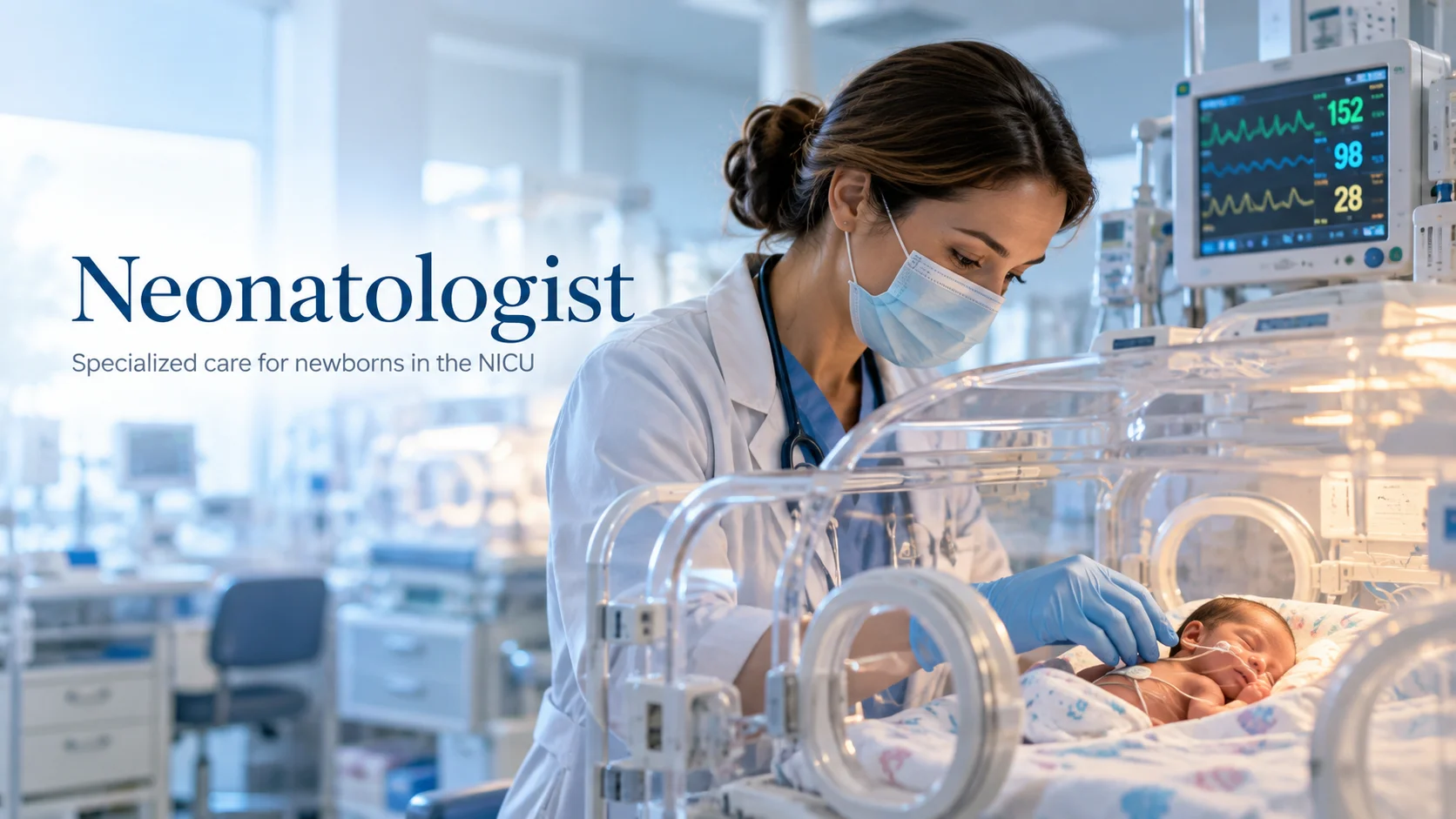
Neonatologists manage the medical care of premature infants, newborns with congenital conditions, and infants experiencing complications shortly after birth. They work within neonatal intensive care units, overseeing the specialized equipment and closely monitored care that critically ill or premature newborns often require during this particularly vulnerable period.
Training Path
Becoming a neonatologist requires completing a medical degree, followed by residency training in general pediatrics, and then additional specialized fellowship training specifically in neonatology, covering the particular medical needs of newborns, especially those born prematurely or with significant medical complications.
When to See One
Neonatologists are typically involved in a newborn's care automatically when a baby is born prematurely, has a known congenital condition, or develops complications shortly after birth that require specialized care beyond what routine newborn care provides. Parents generally don't seek out a neonatologist directly, but are connected with one through the hospital's care team when their newborn's medical needs call for it.
Background
Neonatology developed as a distinct pediatric subspecialty over the course of the 20th century, growing alongside major advances in supporting premature and critically ill newborns, including improvements in respiratory support and specialized monitoring technology. These advances considerably improved survival rates for premature infants over the decades, and the field continues to be an area of active ongoing medical research and technological development.