
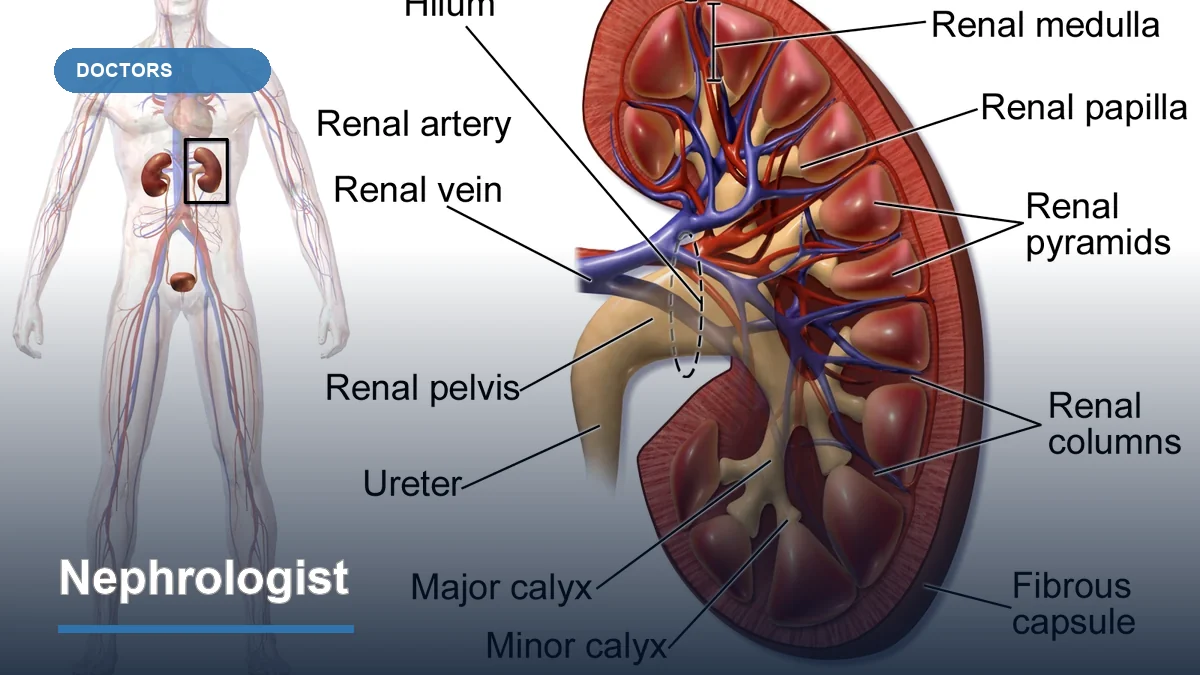
What They Do
A nephrologist is a physician who specializes in diagnosing and medically managing conditions affecting the kidneys. Nephrology is a medical, non-surgical specialty, with nephrologists referring patients to a urologist or transplant surgeon when surgical treatment is needed.
What They Treat
Nephrologists manage a wide range of kidney-related conditions, including chronic kidney disease, acute kidney injury, kidney stones from a medical management standpoint, and conditions involving inflammation of the kidney's filtering structures. They also oversee dialysis treatment for patients with significantly reduced kidney function, and play a central role in the medical evaluation and ongoing care of patients before and after kidney transplantation.
Training Path
Becoming a nephrologist requires completing a medical degree, followed by residency training in internal medicine, and then additional specialized fellowship training specifically in nephrology, covering the detailed physiology of kidney function and the range of conditions that can affect it.
When to See One
People are commonly referred to a nephrologist when blood or urine tests show signs of reduced kidney function, or when managing conditions like diabetes or high blood pressure that carry an elevated risk of affecting the kidneys over time. Nephrologists are also closely involved in the ongoing care of patients on dialysis and those who have received a kidney transplant.
Background
Nephrology developed as a distinct medical specialty in the mid-20th century, closely tied to the development of dialysis technology, which for the first time allowed patients with severe kidney failure to survive through artificial filtering of the blood. This breakthrough, followed shortly after by advances in kidney transplantation, transformed the field and established nephrology as a specialty focused not just on diagnosis but on actively sustaining kidney-related health through these newly available treatments.