What It Is
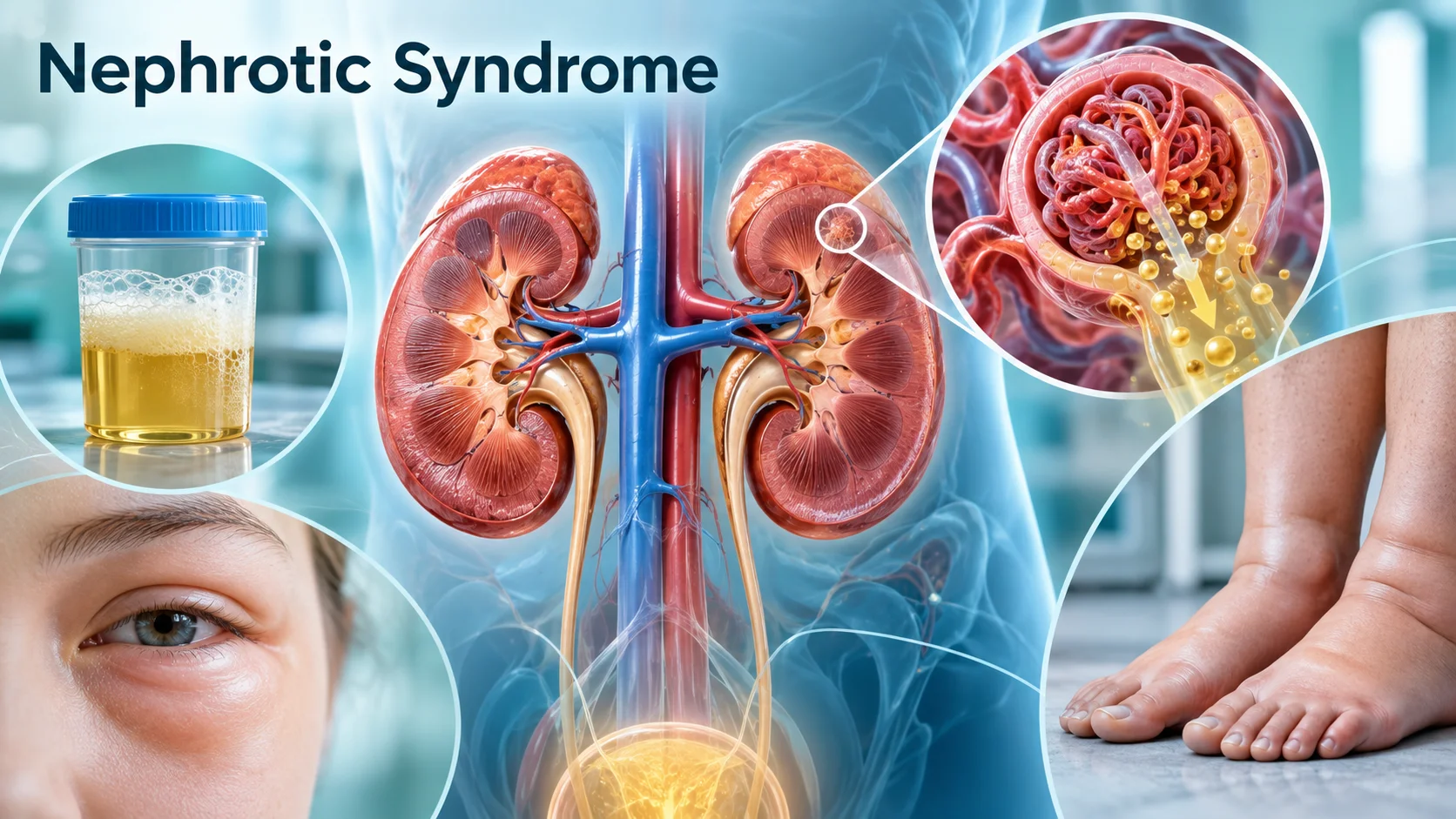
Nephrotic syndrome is a condition characterized by a specific pattern of kidney problems, primarily involving the loss of significant amounts of protein into the urine due to damage in the kidneys' filtering units.
How It Develops
Nephrotic syndrome develops when the glomeruli, the kidneys' filtering structures, become damaged in a way that allows protein, which would normally stay in the bloodstream, to leak into the urine instead. This can result from various underlying conditions that affect the glomeruli, including certain immune-related conditions, some chronic diseases affecting the whole body, or, in some cases, no clearly identified underlying cause, particularly in children.
General Symptoms
The hallmark features of nephrotic syndrome include significant swelling, often noticeable around the eyes, legs, and abdomen, related to fluid retention, along with foamy urine caused by high protein levels. Other associated features can include unintended weight gain due to fluid buildup and an increased susceptibility to certain infections, related to the loss of specific proteins involved in immune function.
General Treatment Approaches
Treatment for nephrotic syndrome depends on the underlying cause, when one can be identified. General approaches often include medications aimed at reducing inflammation in the kidneys and calming an overactive immune response, along with medications to help manage fluid retention and protect kidney function. Dietary adjustments, particularly related to salt intake, are also commonly part of management, alongside monitoring for potential complications.
Background
Nephrotic syndrome was described as a distinct clinical pattern in the 19th century, as physicians began to connect significant swelling with abnormal findings in urine testing. The development of kidney biopsy techniques in the mid-20th century allowed for much more precise identification of the specific underlying patterns of glomerular damage responsible for nephrotic syndrome in individual cases, refining both diagnosis and treatment approaches considerably since then.