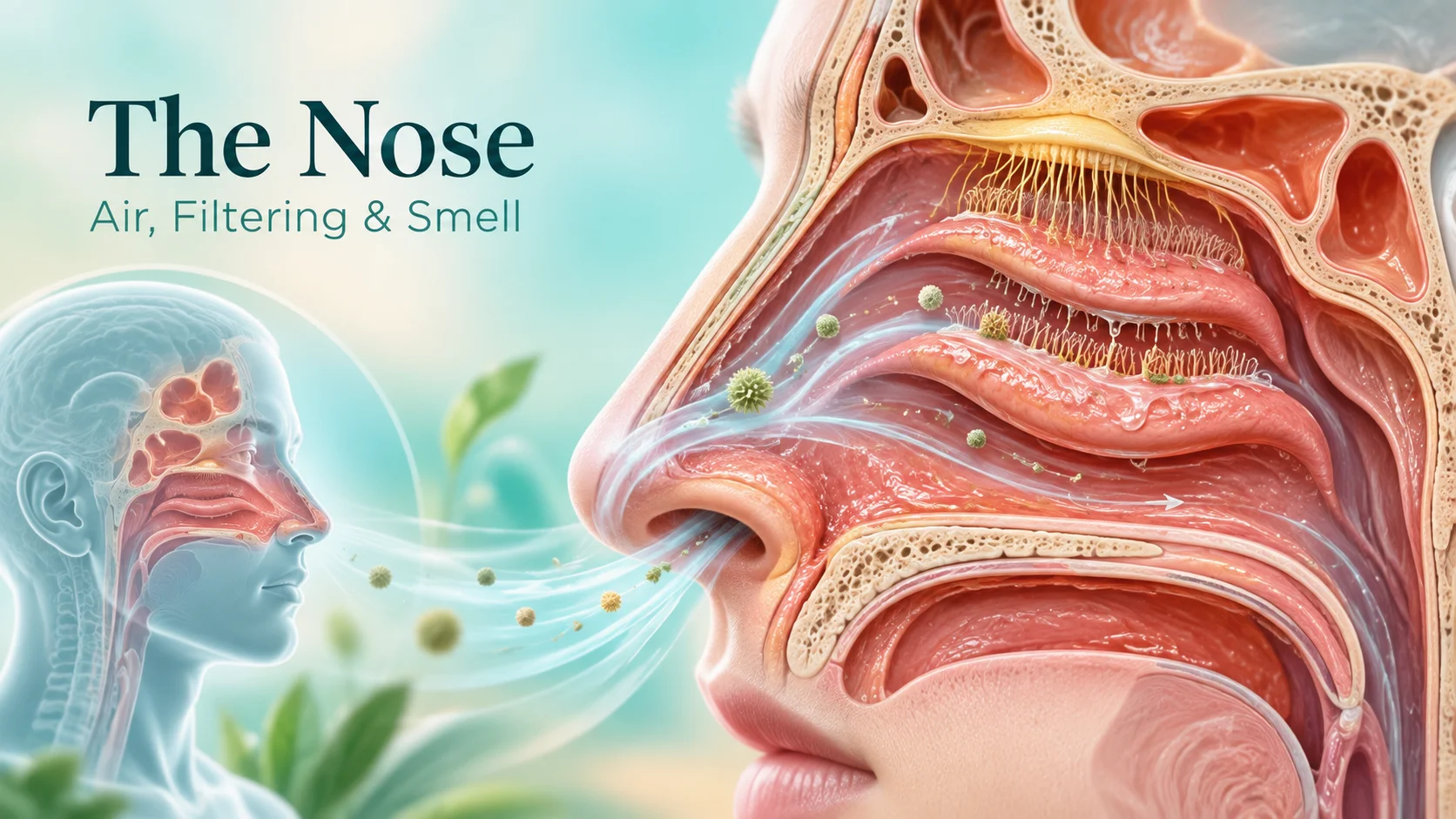
The nose is the primary entry point for air into the respiratory system, and together with the sinuses, a set of connected air-filled cavities within the skull, it plays a larger role in preparing air for the lungs than its size might suggest.
Conditioning the Air
As air passes through the nose, it's warmed toward body temperature and humidified by moisture from the nasal lining, regardless of how cold or dry the outside air is. This conditioning helps protect the delicate tissue of the airways and lungs further down the respiratory tract from temperature and moisture extremes.
Filtering Incoming Air
Fine hairs just inside the nostrils trap larger particles like dust and debris before they can travel further into the airway. Deeper inside, the nasal lining is coated in mucus, which catches smaller particles, including many bacteria and viruses, and microscopic hair-like structures called cilia continuously sweep this mucus, along with trapped particles, toward the throat to be swallowed or expelled.
The Sense of Smell
High inside the nasal cavity lies a small patch of specialized tissue containing scent receptors. Airborne molecules dissolve in the mucus covering this tissue and bind to these receptors, generating signals that travel via the olfactory nerve directly to the brain, allowing the perception of smell.
The Role of the Sinuses
The sinuses are hollow spaces within the bones of the skull, connected to the nasal cavity. They're lined with the same mucus-producing tissue as the nose and are thought to help humidify and warm inhaled air, lighten the weight of the skull, and contribute to the resonance of the voice.
A Two-Way Airway
The nose doesn't just handle incoming air — it also plays a role in exhalation, and its structure, including the nasal turbinates, ridges that increase surface area inside the nasal cavity, maximizes contact between air and the conditioning, filtering tissue lining the nose.