What It Is
A non-stress test, commonly abbreviated as NST, is a simple, non-invasive test performed during pregnancy to monitor a developing baby's heart rate and its response to movement.
What It Checks
An NST monitors the baby's heart rate over a period of time, looking for a normal pattern in which the heart rate rises somewhat in response to the baby's own movements, a pattern generally considered a reassuring sign of the baby's wellbeing. The term "non-stress" refers to the fact that the test doesn't involve placing any stress on the baby, unlike some other related tests.
Why It's Used
An NST is commonly used later in pregnancy to help monitor the wellbeing of the baby, particularly in pregnancies considered to carry a higher level of risk, or when there's a specific reason to check on the baby's current status more closely.
How It's Done
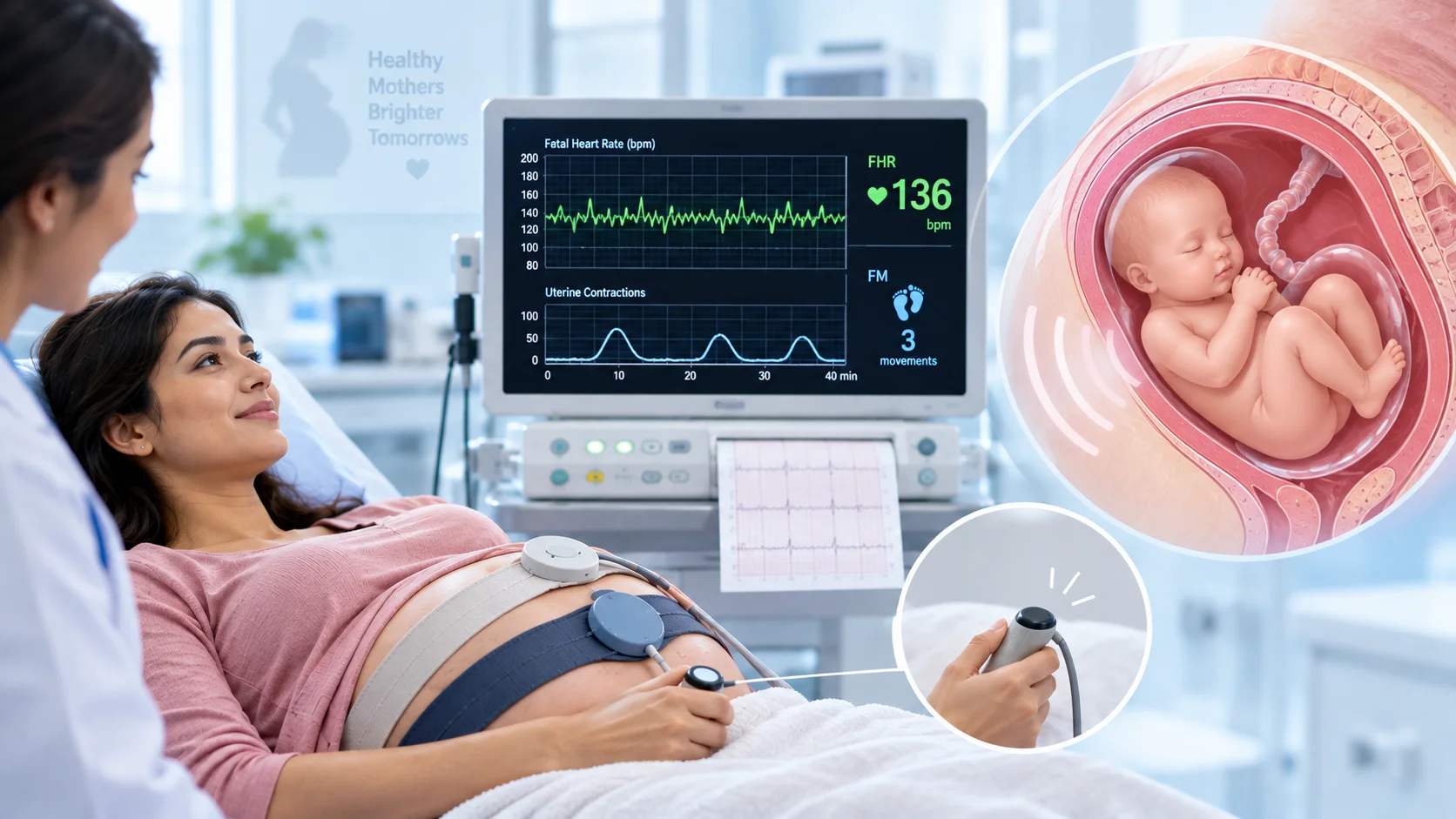
During an NST, the mother sits or reclines comfortably while a monitoring belt, fitted with sensors, is placed around the abdomen to track the baby's heart rate along with any contractions. The mother is often given a small handheld button to press whenever she feels the baby move, allowing the baby's heart rate response to movement to be recorded and reviewed. The test typically takes around twenty to forty minutes.
Background
Fetal heart rate monitoring technology developed considerably over the mid-20th century, and the non-stress test specifically emerged as a standardized approach in the 1970s, building on this monitoring technology to create a simple, low-risk way of assessing fetal wellbeing without needing to induce any physical stress on the baby, unlike some other testing approaches used at the time. It remains a routinely used, straightforward tool in monitoring pregnancies today.