What They Do
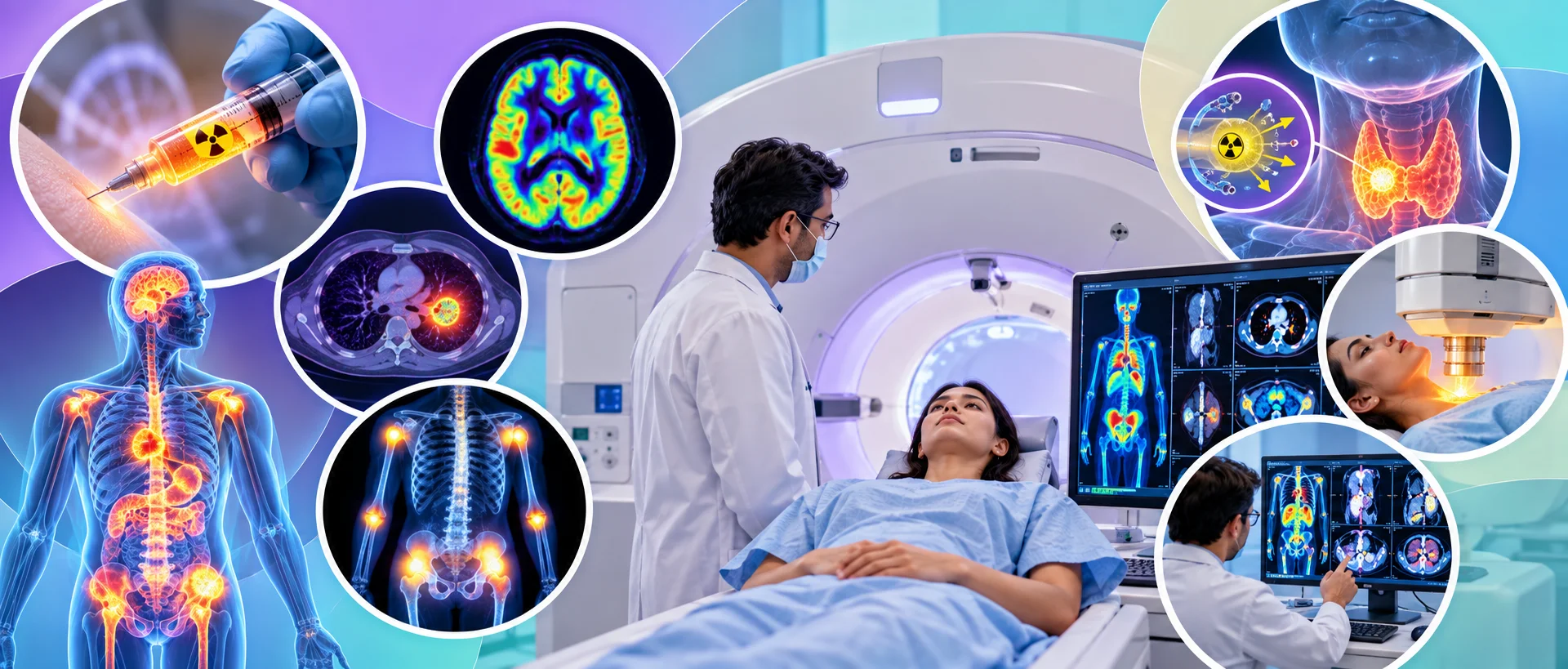
A nuclear medicine specialist is a physician who specializes in using small amounts of radioactive material, known as radiotracers, for both diagnostic imaging and certain treatments. This distinguishes nuclear medicine from general radiology, which primarily relies on external imaging technology such as X-rays, CT, or MRI, rather than substances introduced into the body.
What They Do in Practice
Nuclear medicine specialists use radiotracers, typically given by injection, to perform imaging studies that show how organs and tissues are functioning, rather than focusing primarily on their structural appearance the way many other imaging techniques do. Common examples include bone scans, certain cardiac imaging studies, and PET scans, often used in cancer diagnosis and monitoring. Some nuclear medicine specialists also administer certain radioactive treatments directly, such as for specific thyroid conditions.
Training Path
Becoming a nuclear medicine specialist requires completing a medical degree, followed by dedicated residency training specifically in nuclear medicine, covering the safe use of radioactive materials for both imaging and treatment purposes. Some physicians enter nuclear medicine after training in a related field, such as radiology, with additional specific nuclear medicine training.
When Patients Interact With One
Patients typically interact with nuclear medicine specialists when referred for a specific type of imaging study that relies on radiotracers, such as certain cancer-related imaging, or for particular treatments that use radioactive material directly, such as for some thyroid conditions.
Background
Nuclear medicine developed as a distinct medical field in the mid-20th century, following the development of radioactive tracers that could be used safely within the body to reveal how specific organs and tissues were functioning. The field expanded considerably with the later development of PET scanning technology, which combined nuclear medicine techniques with more detailed imaging, becoming particularly valuable in cancer diagnosis and monitoring.