What It Is
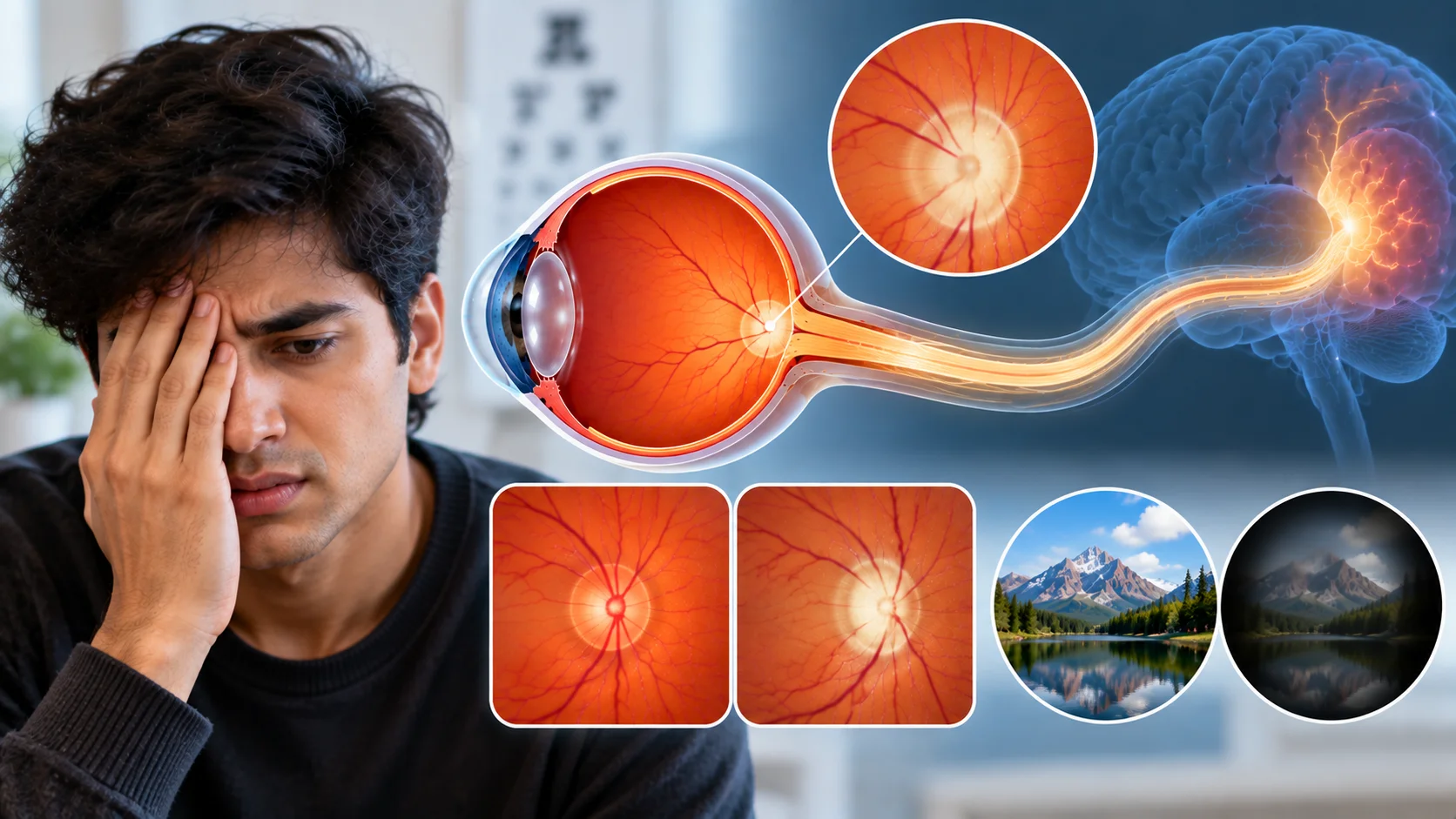
Optic atrophy refers to damage or degeneration of the optic nerve, the structure responsible for carrying visual signals from the eye to the brain, resulting in the nerve appearing pale and thinned when examined.
How It Develops
Optic atrophy isn't a disease in itself, but rather the end result of damage to the optic nerve from an underlying cause, which can include prolonged untreated glaucoma, optic neuritis, reduced blood flow to the nerve, compression from a nearby growth, or certain inherited conditions. Once optic nerve fibers are significantly damaged, they generally can't regenerate, which is why optic atrophy typically represents a more permanent stage of nerve damage.
General Symptoms
The main symptom associated with optic atrophy is vision loss, which can vary considerably in pattern and severity depending on the underlying cause and how much of the optic nerve has been affected. This might include reduced visual clarity, a smaller field of vision, or changes in color perception.
General Treatment Approaches
Because optic nerve damage generally isn't reversible once significant atrophy has occurred, treatment focuses primarily on identifying and addressing the underlying cause as early as possible, aiming to prevent further nerve damage from progressing. Supportive measures, such as low-vision aids, may also be used to help make the most of any remaining vision.
Background
Optic atrophy has been recognized as a distinct finding since the development of the ophthalmoscope in the mid-19th century allowed direct examination of the optic nerve for the first time. Since then, understanding of the many different underlying causes that can lead to optic atrophy has expanded considerably, and identifying the specific cause behind a case of optic atrophy remains an important diagnostic step in modern ophthalmology and neurology.