What It Is
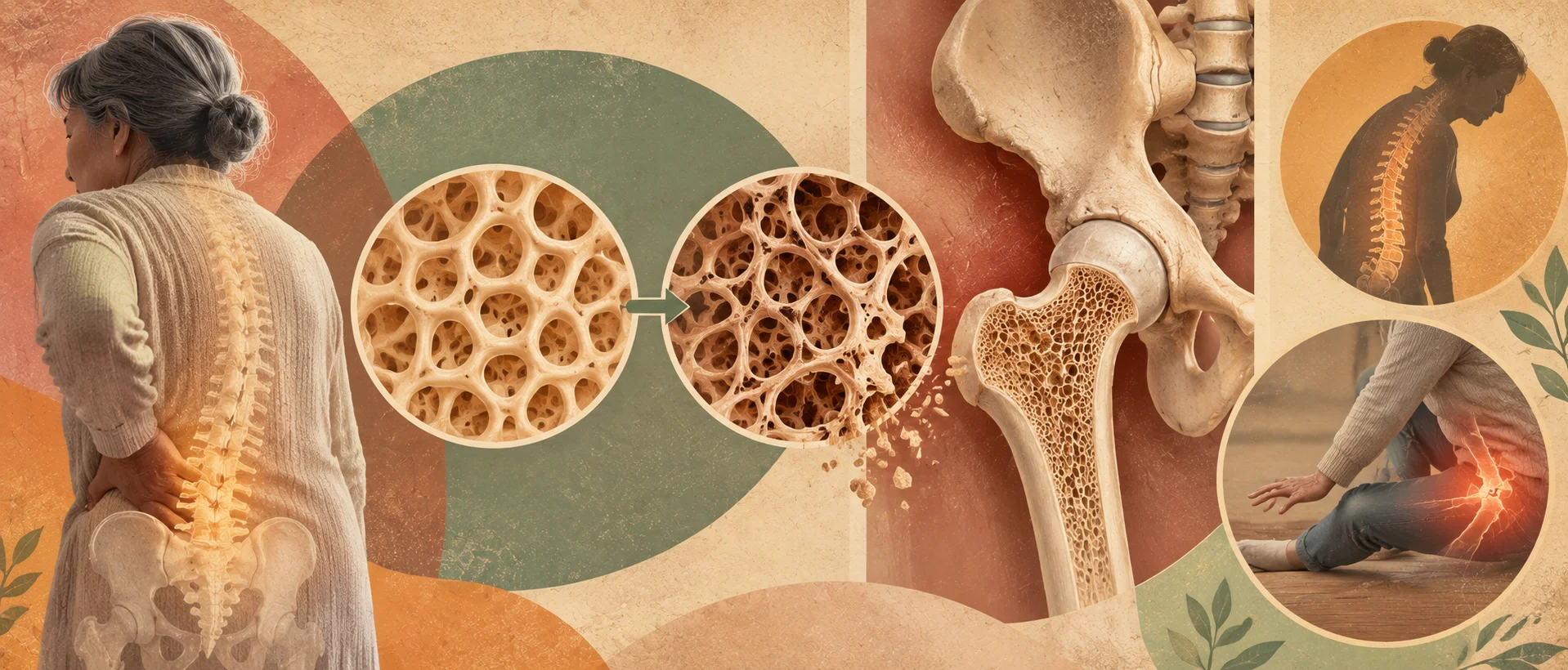
Osteoporosis is a condition in which bones gradually lose density and become weaker and more fragile than normal, increasing the risk of fractures even from relatively minor falls or impacts.
How It Develops
Bone is living tissue that's continuously broken down and rebuilt throughout life, a process that generally stays balanced during adulthood. Osteoporosis develops when bone breakdown begins to outpace the rate of new bone formation, gradually reducing overall bone density and weakening the internal structure of the bone over time. This imbalance becomes more common with age, and hormonal changes, particularly the decline in estrogen that occurs after menopause, are a significant contributing factor in many cases.
General Symptoms
Osteoporosis is often described as a silent condition, since bone loss itself typically causes no noticeable symptoms in its earlier stages. For many people, the condition isn't identified until a fracture occurs, sometimes from a fall that wouldn't be expected to cause a break in someone with normal bone density. In more advanced cases, a gradual loss of height or a stooped posture can develop due to small fractures within the spine.
General Treatment Approaches
Treatment for osteoporosis generally aims to slow further bone loss and reduce fracture risk. This commonly includes ensuring adequate calcium and vitamin D intake, weight-bearing exercise to help support bone strength, and, when needed, medications specifically aimed at slowing bone breakdown or supporting new bone formation. Fall prevention strategies are also commonly emphasized, given how directly fracture risk relates to both bone strength and the likelihood of a fall occurring.
Background
The term osteoporosis, meaning "porous bone," came into use in the 19th century as pathologists began describing the characteristic loss of bone density observed in certain cases. The development of bone density testing, particularly DEXA scanning in the late 1980s, transformed the condition from one that was often only recognized after a fracture had already occurred into one that can be identified and monitored well before a fracture happens, considerably changing the approach to prevention and treatment.