What It Is
Pantoprazole belongs to a class of medicines called proton pump inhibitors, commonly abbreviated as PPIs, the same class as omeprazole, used to reduce stomach acid production.
What It's Used For
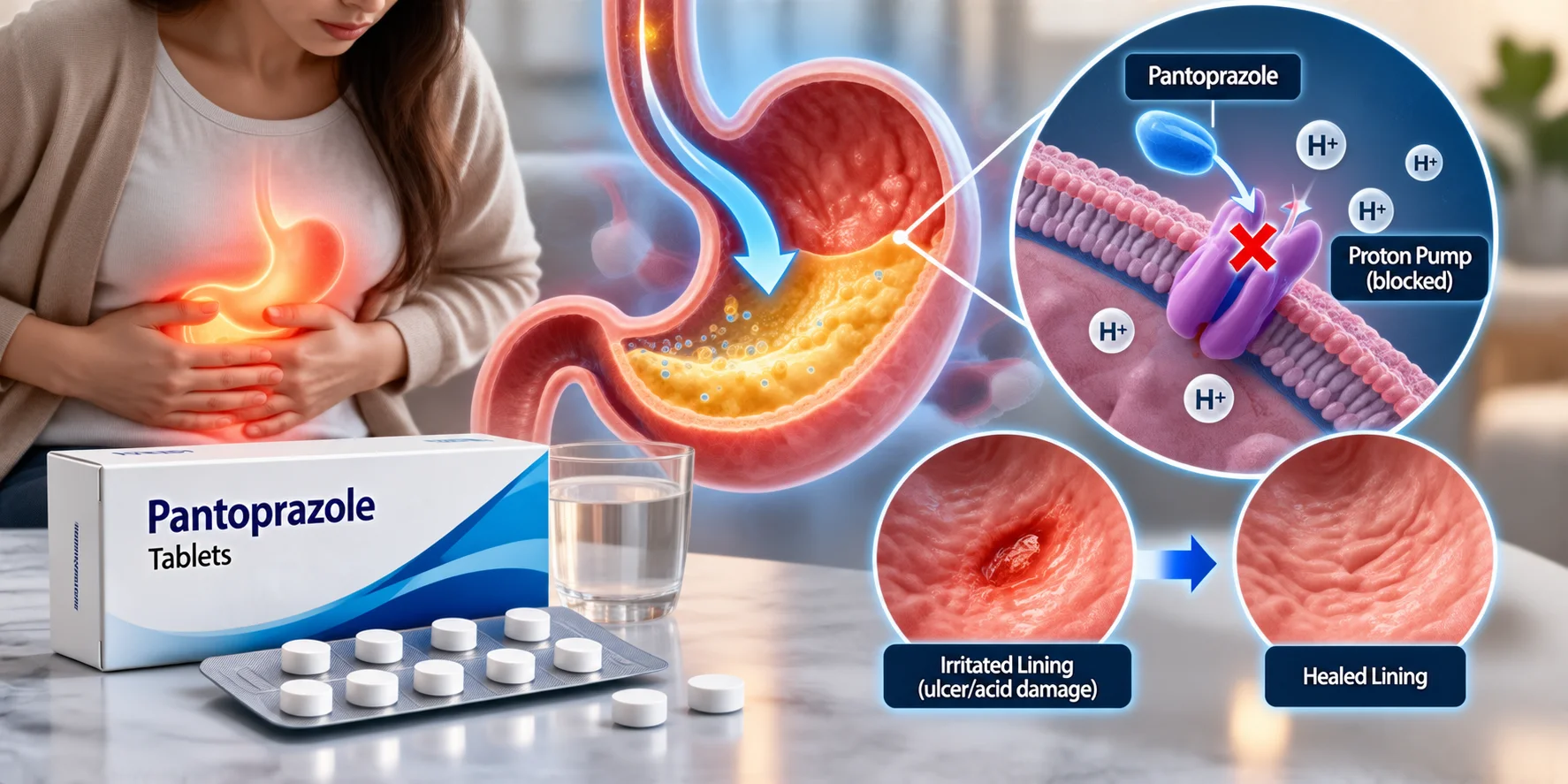
Pantoprazole is generally used to reduce the amount of acid produced in the stomach, and is commonly used for conditions related to excess stomach acid, including acid reflux and ulcers of the stomach or upper intestine.
How It Works
Pantoprazole works in much the same way as other proton pump inhibitors, binding to and blocking the proton pump enzyme system within acid-producing cells lining the stomach. By inhibiting this pump, pantoprazole substantially reduces the stomach's ability to secrete acid, allowing irritated or damaged tissue, such as that affected by acid reflux or ulcers, an opportunity to heal in a less acidic environment.
History and Regulatory Status
Pantoprazole was developed by a German pharmaceutical company as part of continued research within the proton pump inhibitor class, following the earlier introduction of omeprazole. It was introduced for clinical use in the early to mid-1990s, offering an additional option within a class of medicines that was rapidly becoming a standard approach to managing acid-related digestive conditions. Its patent protection expired in the mid-2000s to 2010s depending on the country, after which it became widely available as a generic medicine, and it remains commonly prescribed, available both by prescription and, in some countries, in lower-strength over-the-counter forms.