What It Is
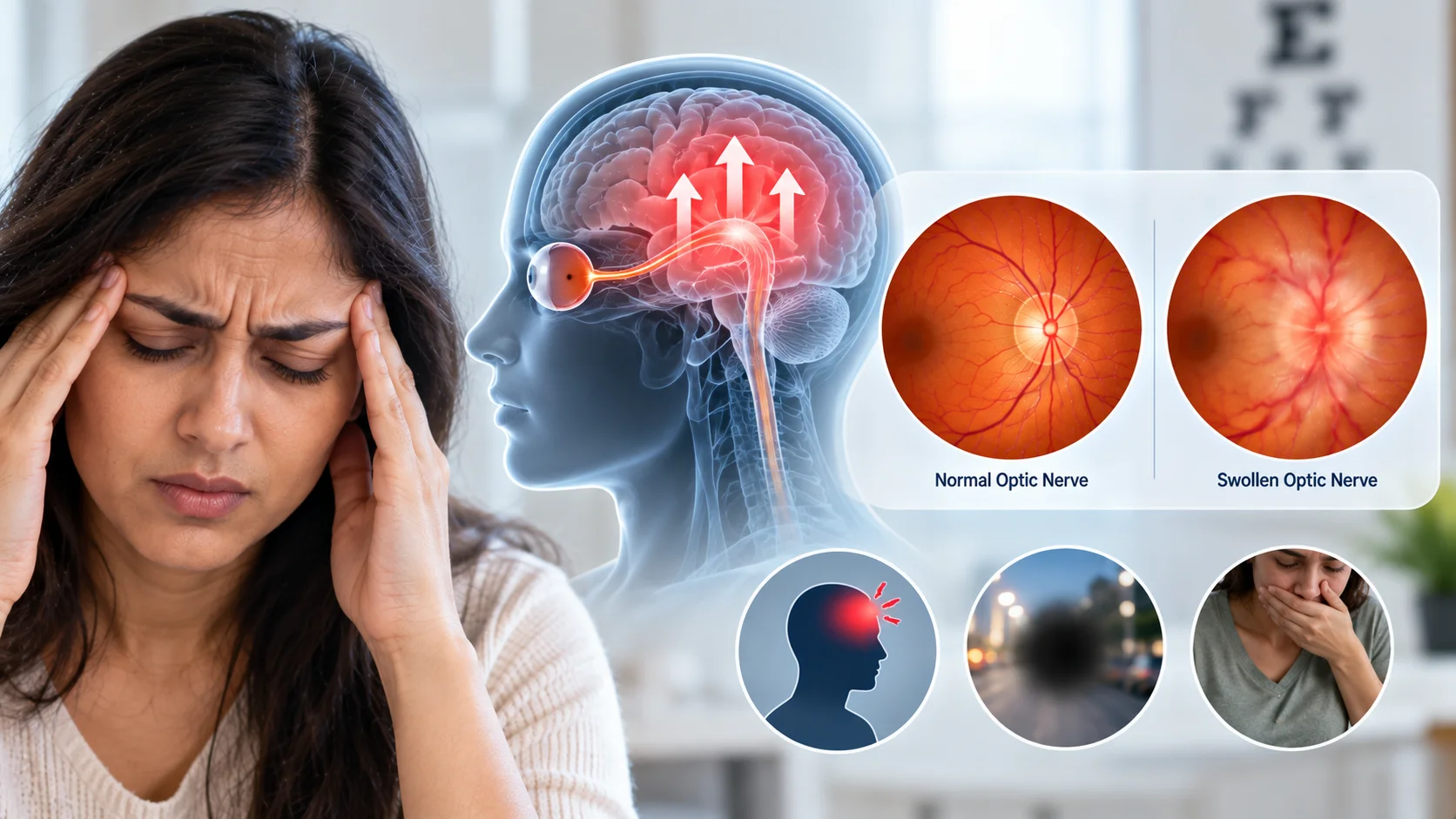
Papilledema is swelling of the optic nerve head, the point where the optic nerve enters the eye, occurring specifically as a result of increased pressure within the skull.
How It Develops
The space surrounding the brain and spinal cord normally contains a certain amount of fluid under a relatively stable pressure. When pressure within this space rises, for reasons that can include a brain tumor, certain infections, or other conditions affecting fluid buildup around the brain, this increased pressure is transmitted along the optic nerve and causes its visible head, at the back of the eye, to swell.
General Symptoms
Papilledema itself often causes few direct visual symptoms in its early stages, though some people notice brief episodes of blurred or grayed-out vision, particularly with changes in position. Because papilledema results from raised pressure within the skull, it's often accompanied by other symptoms related to that underlying cause, such as headache, nausea, or vomiting.
General Treatment Approaches
Treatment for papilledema focuses on identifying and addressing the underlying cause of the raised pressure within the skull, since the swelling itself is a sign of that broader problem rather than a separate condition to treat in isolation. If the increased pressure isn't addressed, papilledema can eventually threaten vision, which is part of why prompt evaluation of the underlying cause is generally emphasized.
Background
Papilledema was first identified through the use of the ophthalmoscope in the mid-19th century, which allowed physicians to directly examine the optic nerve head and recognize this characteristic pattern of swelling for the first time. Its usefulness as a visible external sign of raised pressure within the skull made it a particularly valuable diagnostic clue in an era before imaging technology like CT and MRI existed, and it remains an important finding checked during eye examinations today.