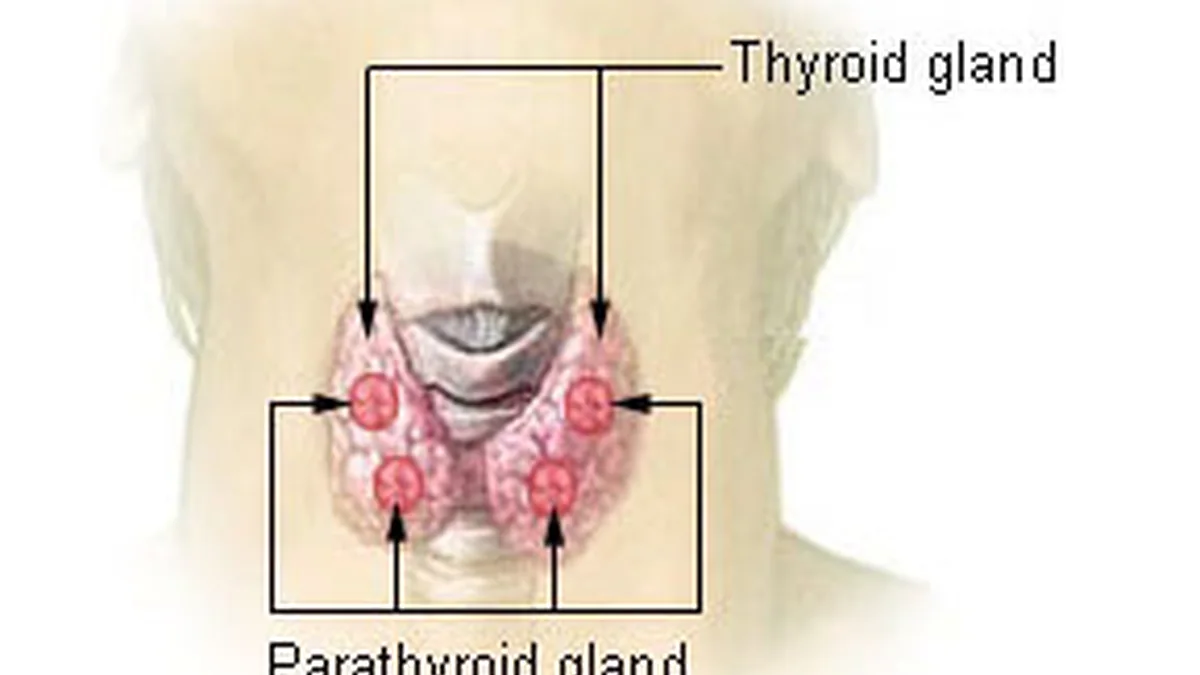
The parathyroid glands are four tiny, pea-sized glands located directly behind the thyroid gland in the neck. Despite their small size and close proximity to the thyroid, they perform an entirely separate function, focused specifically on regulating calcium levels in the body.
Producing Parathyroid Hormone
The parathyroid glands produce parathyroid hormone, often abbreviated as PTH, which plays the central role in keeping blood calcium levels within a stable, narrow range. Calcium is essential for a wide range of bodily functions, including muscle contraction, nerve signaling, and blood clotting, which is part of why the body tightly regulates its levels.
Responding to Calcium Levels
The parathyroid glands continuously monitor calcium levels circulating in the blood. When calcium levels drop too low, the glands release more parathyroid hormone, which acts in several ways: it signals bones to release stored calcium into the bloodstream, it encourages the kidneys to reabsorb more calcium rather than excreting it in urine, and it helps activate vitamin D, which in turn improves calcium absorption from food in the digestive tract. When calcium levels rise back into a normal range, parathyroid hormone release decreases accordingly.
Working Opposite Another Hormone
Parathyroid hormone works in a generally opposing relationship to calcitonin, a hormone produced by the thyroid gland that lowers blood calcium when levels are too high. Together, these two hormones help keep calcium levels balanced within a fairly narrow, stable range.
Background
The parathyroid glands were identified as distinct structures separate from the thyroid gland in the late 19th century, initially discovered through anatomical study before their specific hormonal function was understood. Their role in regulating calcium was clarified further in the early 20th century, as researchers connected parathyroid hormone to its effects on bone, kidney, and calcium levels. Understanding of the parathyroid glands continues to be refined, and they remain a key part of how the body maintains stable calcium levels essential for everyday function.