What It Is
PCR, short for polymerase chain reaction, is a laboratory technique used to detect the genetic material of a specific organism, such as a virus or bacteria, even when only a very small amount is present in a sample.
What It Checks
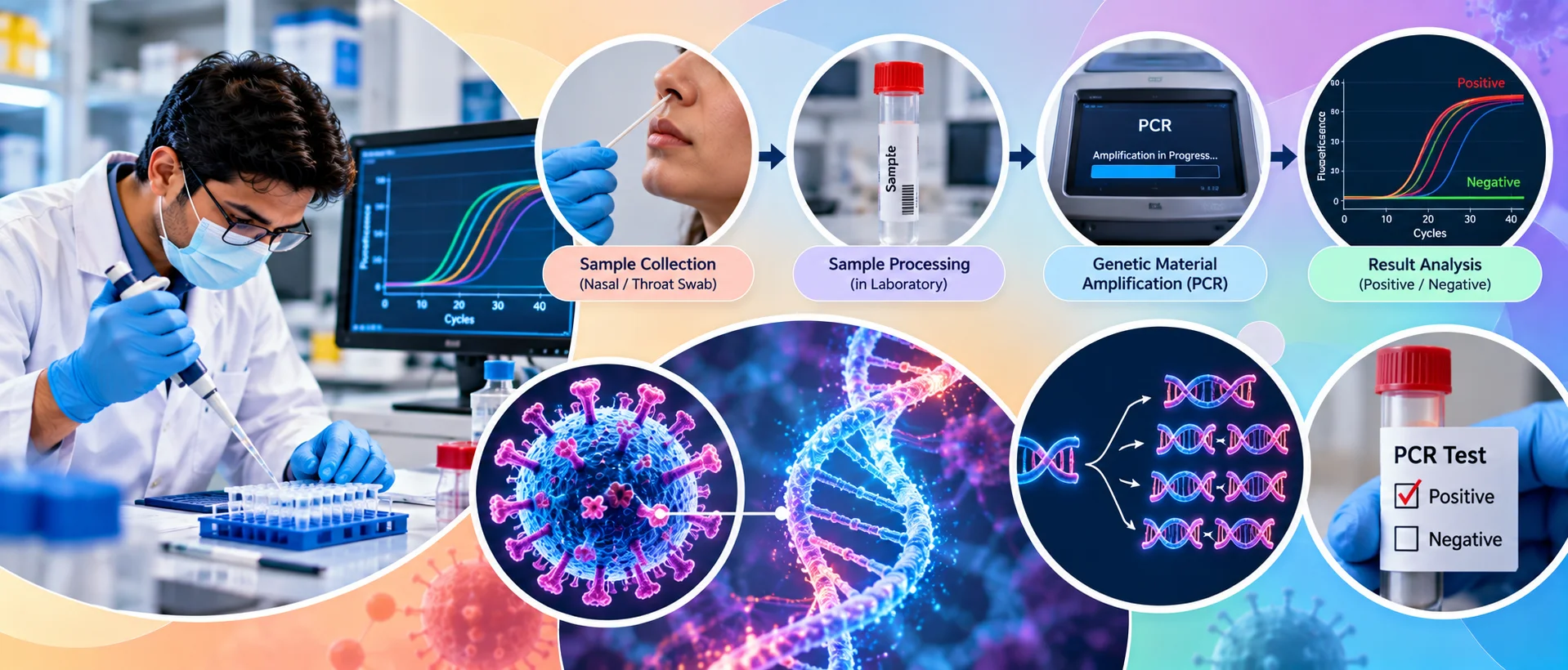
A PCR test detects the presence of specific genetic material belonging to the organism being tested for, such as a particular virus. The technique works by making many copies of a targeted section of genetic material, amplifying even a very small original amount to a level that becomes detectable, which is what gives PCR its high sensitivity.
Why It's Used
PCR testing is commonly used to diagnose infections, including respiratory viruses and certain bacterial infections such as tuberculosis, particularly in situations where a highly sensitive and specific test is valuable for confirming the presence of a particular organism.
How It's Done
Depending on the specific infection being tested for, a PCR test sample might be collected via a nasal or throat swab, a blood sample, or another type of sample relevant to where the organism is likely to be found. The sample is processed in a laboratory using specialized equipment that repeatedly copies the targeted genetic material until it reaches a detectable level, with results typically available within a period ranging from a few hours to a day or two, depending on the laboratory and specific test.
Background
The polymerase chain reaction technique was developed by an American biochemist in the mid-1980s, a discovery that later earned him a Nobel Prize and transformed molecular biology and diagnostic medicine considerably. PCR testing became particularly widely recognized during recent global outbreaks of respiratory illness, where it served as a primary diagnostic method, and it remains one of the most sensitive and widely used tools for detecting infectious organisms in medicine today.