What It Is
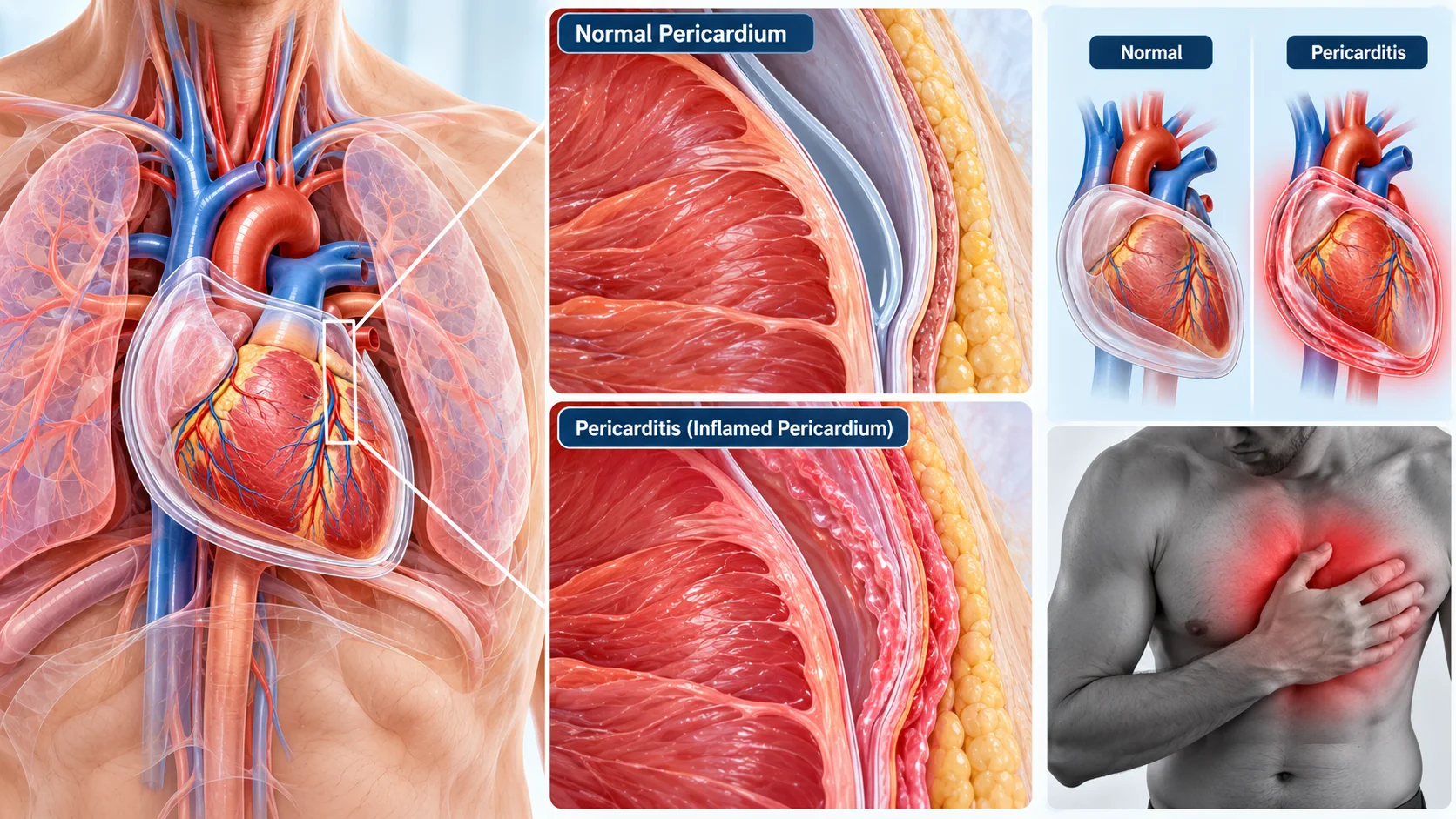
Pericarditis is inflammation of the pericardium, the thin, double-layered sac that surrounds and protects the heart.
How It Develops
The pericardium normally allows the heart to move smoothly as it beats, aided by a small amount of lubricating fluid between its layers. Pericarditis develops when this sac becomes inflamed, which can occur for a variety of reasons, including viral infections, which are among the most commonly identified causes, as well as other underlying conditions affecting the body more broadly. In some cases, a clear underlying cause isn't identified.
General Symptoms
The most common symptom of pericarditis is chest pain, often described as sharp and worsened by lying down, deep breathing, or coughing, and sometimes improved by sitting up and leaning forward. Other possible symptoms include a low-grade fever and a general sense of feeling unwell. In some cases, inflammation of the pericardium can lead to fluid accumulating within the sac, which may cause additional symptoms depending on the amount of fluid involved.
General Treatment Approaches
Treatment for pericarditis often focuses on reducing inflammation and managing pain, commonly using anti-inflammatory medications as a first approach. If an underlying cause is identified, treatment may also be directed at that specific cause. In cases involving significant fluid buildup around the heart, additional procedures may be needed to address the fluid directly, depending on the amount present and its effect on heart function.
Background
Pericarditis has been recognized as a distinct condition for a long time, with descriptions of pericardial inflammation appearing in medical literature well before modern diagnostic tools existed. The development of imaging techniques such as echocardiography in the 20th century allowed for much more accurate detection of pericardial inflammation and any associated fluid buildup, considerably improving the ability to diagnose and monitor the condition.