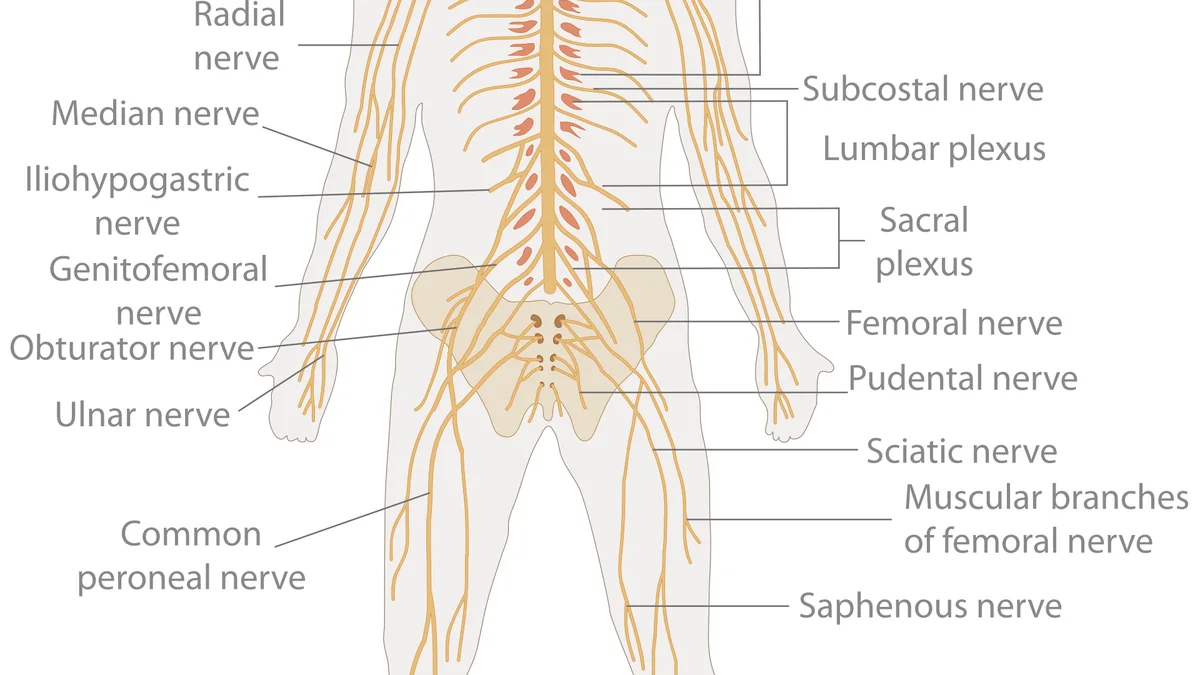
The peripheral nervous system is the vast network of nerves extending out from the brain and spinal cord to every other part of the body — muscles, skin, organs, and glands. While the brain and spinal cord make up the central nervous system, the peripheral nerves are what actually reach the body's periphery.
Two Main Types of Signals
Peripheral nerves carry two broad categories of information. Sensory nerves carry information from the body toward the central nervous system — signals related to touch, temperature, pain, and the body's internal state. Motor nerves carry commands in the opposite direction, from the central nervous system out to muscles, triggering movement.
Built for Fast Transmission
Individual nerve fibers are often wrapped in a fatty substance called myelin, which acts similarly to insulation on an electrical wire. Myelin allows electrical signals to travel along the nerve far faster than they would otherwise, which is essential given how quickly the body often needs to respond to sensory input or coordinate movement.
Voluntary and Involuntary Branches
The peripheral nervous system itself is divided into two main branches. The somatic nervous system controls voluntary movement, carrying signals to skeletal muscles under conscious control. The autonomic nervous system manages involuntary functions — heart rate, digestion, and gland activity — operating largely without conscious input.
Two Opposing Forces Within the Autonomic System
Within the autonomic branch, two further systems typically work in opposition. The sympathetic nervous system prepares the body for action, associated with the fight-or-flight response. The parasympathetic nervous system promotes rest and recovery, slowing heart rate and supporting digestion during calmer periods. The balance between these two systems helps the body respond appropriately to changing circumstances.
A Vast, Branching Network
All told, the peripheral nervous system contains an extensive web of nerves reaching virtually every tissue in the body, allowing continuous, real-time communication between the brain and spinal cord and the rest of the body.