What They Do
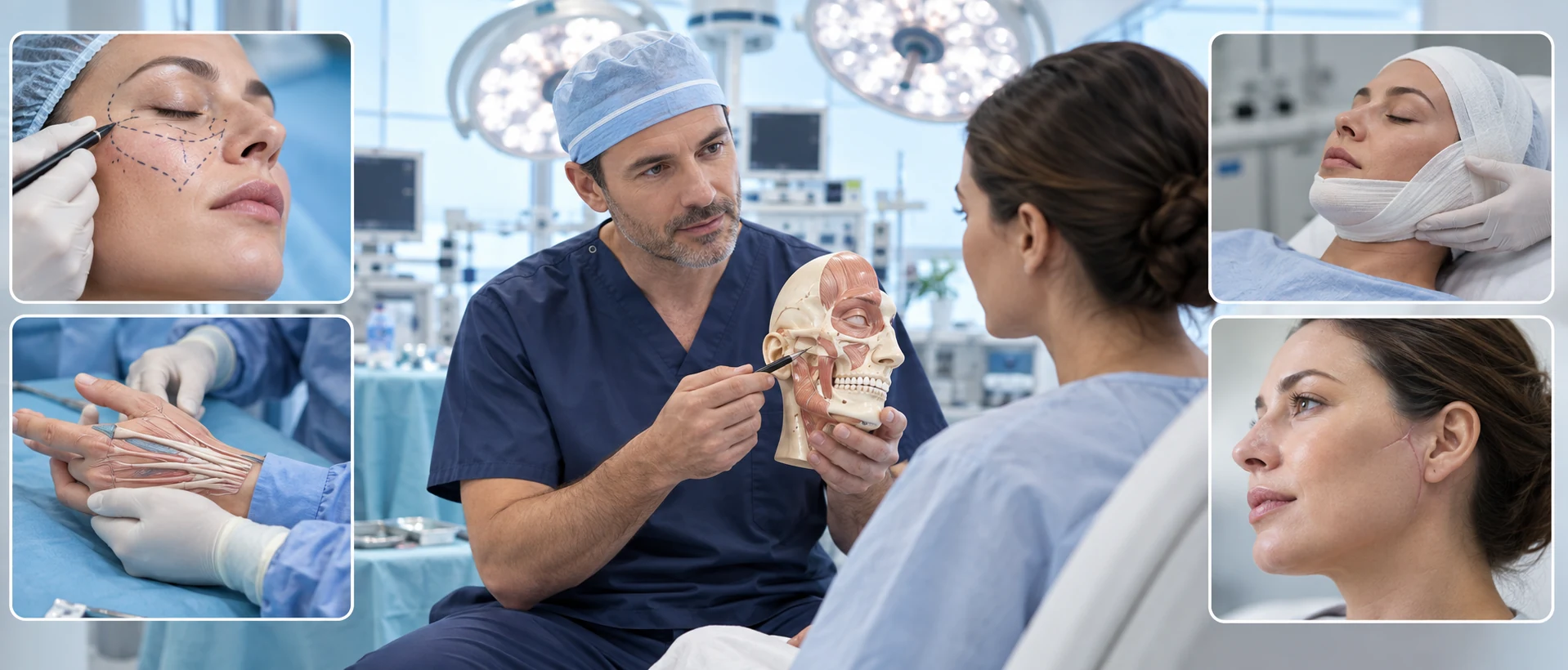
A plastic surgeon is a physician who specializes in reconstructive and cosmetic surgical procedures involving the skin, soft tissue, and underlying structures of the body. The specialty covers two broad categories of work: reconstructive surgery, aimed at restoring form and function after injury, illness, or congenital conditions, and cosmetic surgery, aimed at altering appearance by choice.
What They Treat
Reconstructive plastic surgeons commonly perform procedures related to burn injuries, traumatic injuries, breast reconstruction following cancer treatment, and correction of congenital differences such as cleft lip and palate. Cosmetic plastic surgeons perform procedures aimed at changing appearance, ranging from facial procedures to body contouring. Many plastic surgeons perform both reconstructive and cosmetic work throughout their practice.
Training Path
Becoming a plastic surgeon requires completing a medical degree, followed by surgical residency training, and then additional dedicated training specifically in plastic and reconstructive surgery. This training covers a wide range of surgical techniques across many different parts of the body, reflecting how broad the specialty's scope can be compared to surgical fields focused on a single organ system.
When to See One
People see a reconstructive plastic surgeon following significant injuries, burns, or as part of treatment for certain conditions requiring tissue reconstruction, often as part of a broader care team alongside other specialists. People seek out a cosmetic plastic surgeon by choice for procedures aimed at altering physical appearance.
Background
Reconstructive surgical techniques have ancient roots, with early descriptions of certain procedures found in historical medical texts from various cultures. Plastic surgery developed considerably as a modern specialty in the early 20th century, driven in large part by the need to treat severe facial and bodily injuries sustained during wartime, which spurred major advances in reconstructive technique that later extended into the cosmetic applications more widely associated with the field today.