What It Is
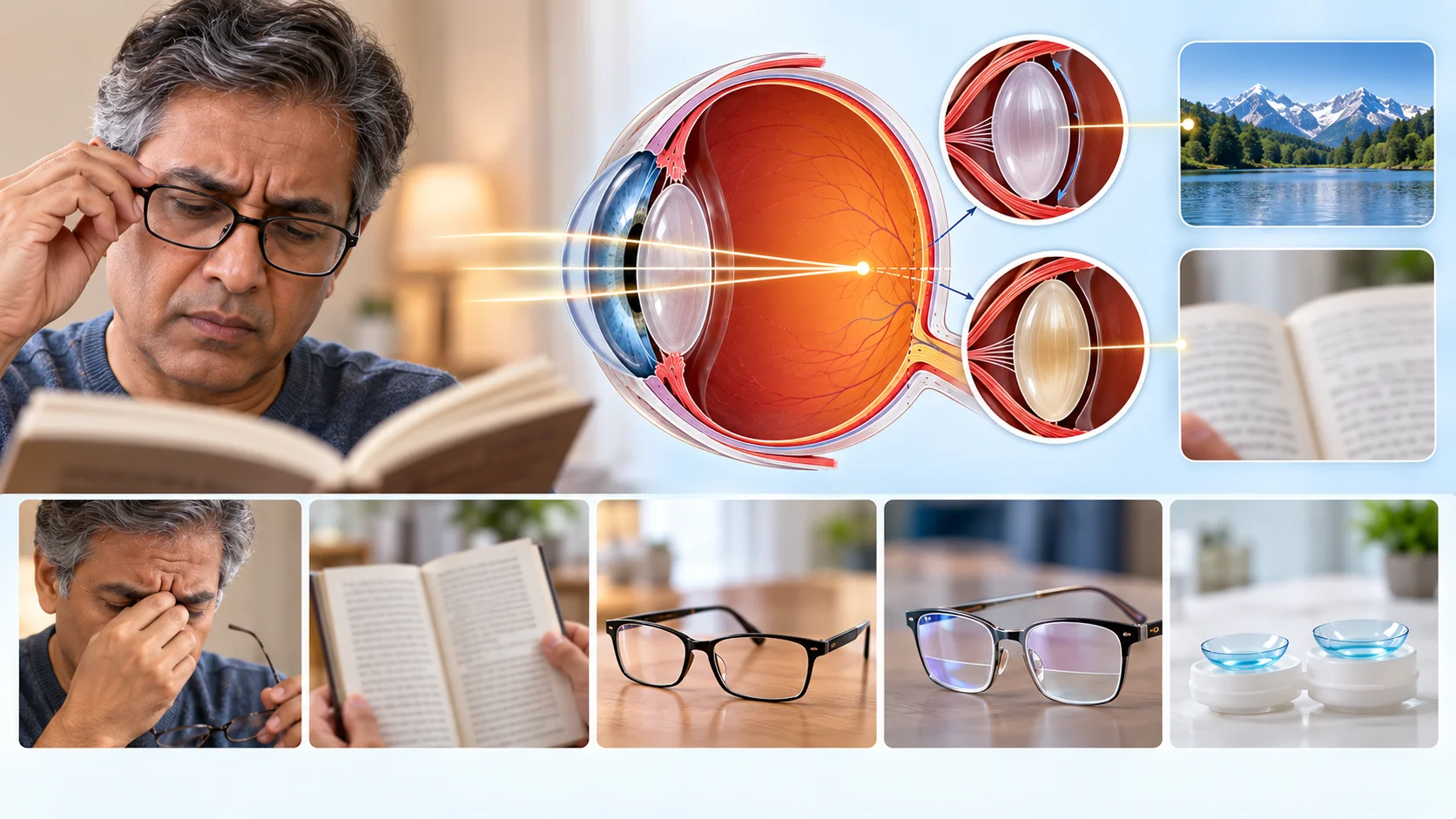
Presbyopia is a common, age-related decline in the eye's ability to focus on close objects, generally becoming noticeable in most people starting in their forties.
How It Develops
The eye's lens normally changes shape to help focus on objects at different distances, a process controlled by small muscles surrounding it. With age, the lens gradually becomes less flexible and more rigid, making it harder for these muscles to change its shape effectively. This particularly affects the ability to focus on close-up objects, since that requires the greatest degree of lens flexibility. Presbyopia is a normal part of aging and eventually affects nearly everyone to some degree.
General Symptoms
The main symptom of presbyopia is difficulty focusing on close-up objects, such as reading small print, particularly in dim lighting. Many people notice themselves holding reading material farther away to bring it into focus, along with eye strain or headaches after close-up work.
General Treatment Approaches
Presbyopia is commonly corrected with reading glasses, bifocal or multifocal lenses, or contact lenses specifically designed to address both near and distance vision. Some people also opt for a specific type of refractive surgery aimed at improving near vision.
Background
The word presbyopia comes from Greek terms meaning "old eye," and reading glasses to address this exact age-related change have been used since at least the 13th century, making them among the earliest forms of vision correction in history. The underlying mechanism, involving the lens's gradual loss of flexibility with age, was understood in increasing detail over the 19th and 20th centuries, and presbyopia correction remains one of the most common reasons people seek eyewear later in life.