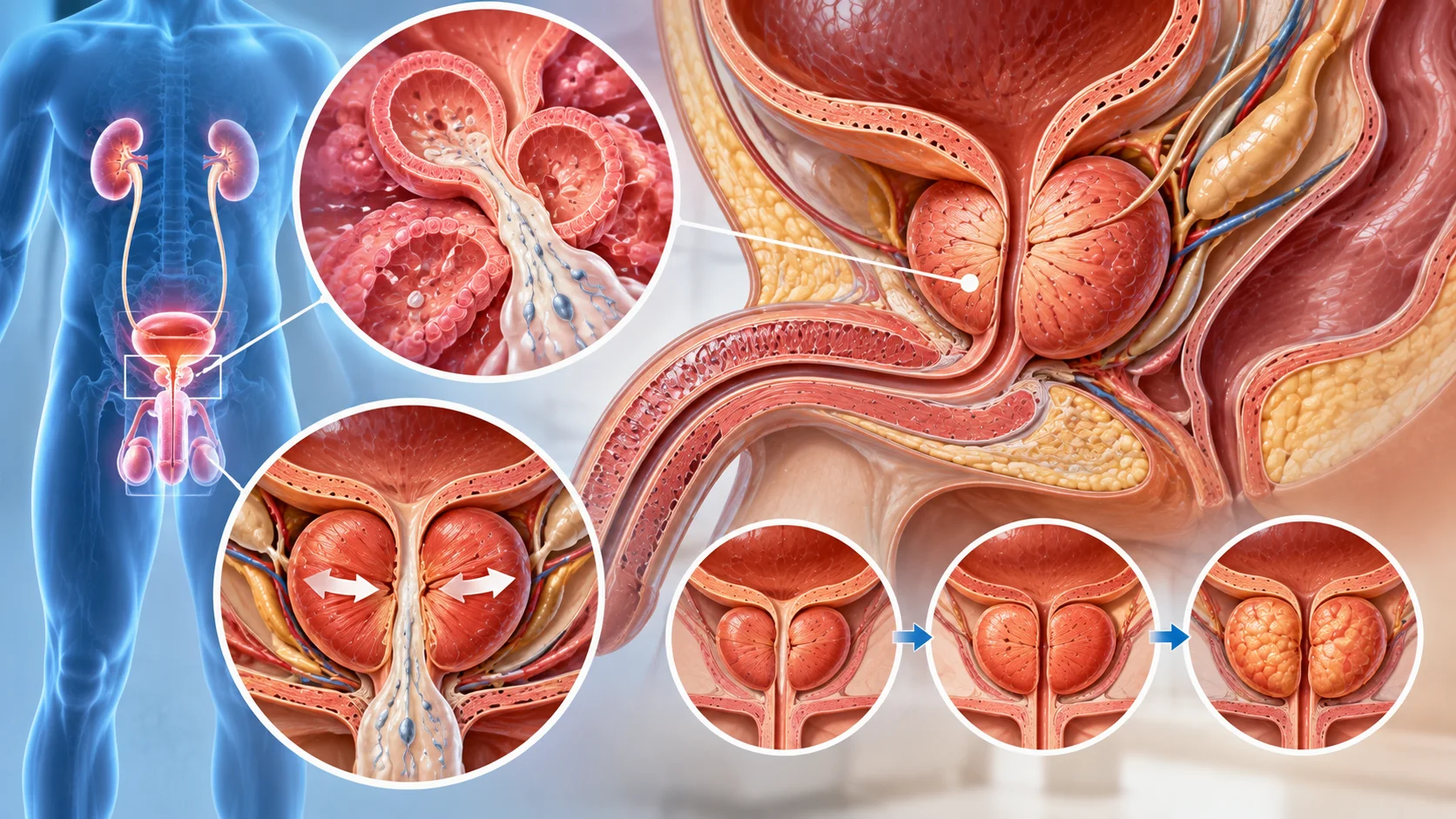
The prostate is a small, walnut-sized gland that forms part of the male reproductive system, located just below the bladder, surrounding part of the urethra, the tube that carries urine and semen out of the body.
Producing Seminal Fluid
The prostate's main function is producing a fluid that makes up a significant portion of semen. This fluid contains various enzymes, proteins, and nutrients that help nourish and protect sperm cells, supporting their survival and mobility after ejaculation. The prostate fluid also helps give semen its characteristic consistency.
Its Role During Ejaculation
During ejaculation, the muscular tissue of the prostate contracts, helping to push prostate fluid, along with sperm arriving from the testes and fluid from other nearby glands, into the urethra, where they combine to form semen. This coordinated muscular action is timed with other reproductive structures to allow semen to be expelled from the body.
Its Position Relative to the Urethra
Because the prostate surrounds a section of the urethra, its size and condition can directly affect urinary function, given how closely the two structures are positioned. This anatomical relationship is a key reason the prostate is often discussed alongside urinary health, since changes to the gland's size can influence the surrounding urethra.
Growth and Development
The prostate remains relatively small throughout childhood and undergoes significant growth during puberty, driven by rising levels of testosterone. It's common for the prostate to continue gradually growing further later in life as well, a normal part of aging for many men.
Background
The prostate has been recognized as a distinct anatomical structure since early anatomical studies, though its specific function in reproduction wasn't clearly understood until more detailed physiological research in the 19th and 20th centuries. Ongoing research into prostate biology continues to refine understanding of the gland's role in fertility and its relationship to nearby structures like the bladder and urethra.