What It Is
Prothrombin time, commonly abbreviated as PT and often reported alongside a standardized value called the INR, is a blood test that measures how long it takes for blood to clot.
What It Checks
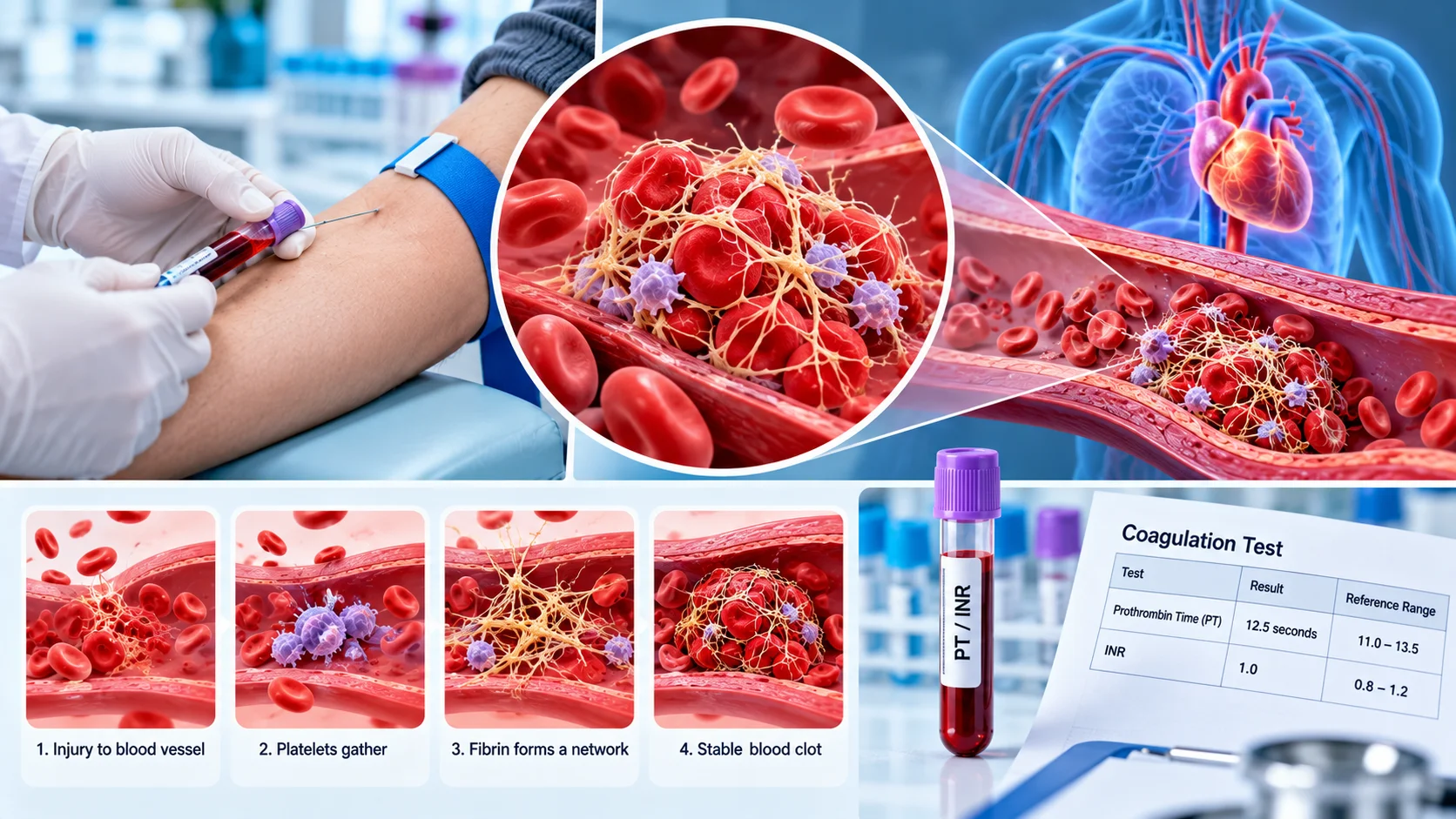
The test measures the time it takes for a blood sample to form a clot under specific laboratory conditions, reflecting the activity of several clotting factors, proteins produced primarily by the liver that are essential to the blood clotting process. The INR, or international normalized ratio, is a standardized way of reporting this result, allowing results from different laboratories to be compared consistently.
Why It's Used
PT/INR testing is commonly used to assess the blood's general clotting ability, which can be affected by liver function, certain nutrient levels, and specific medicines that influence clotting. It's also used to help evaluate clotting function before certain medical procedures.
How It's Done
The test requires a blood sample, typically drawn from a vein in the arm, similar to most routine blood tests. The sample is sent to a laboratory, where specific reagents are added under controlled conditions to measure how long clot formation takes.
Background
Prothrombin and its role in blood clotting were identified in the early 20th century, and the prothrombin time test was developed shortly afterward as a way to assess clotting function. The INR system was introduced later, in the early 1980s, as a way to standardize results across different laboratories and testing methods, which had previously varied considerably, making PT/INR results more consistent and comparable across different healthcare settings worldwide.