What It Is
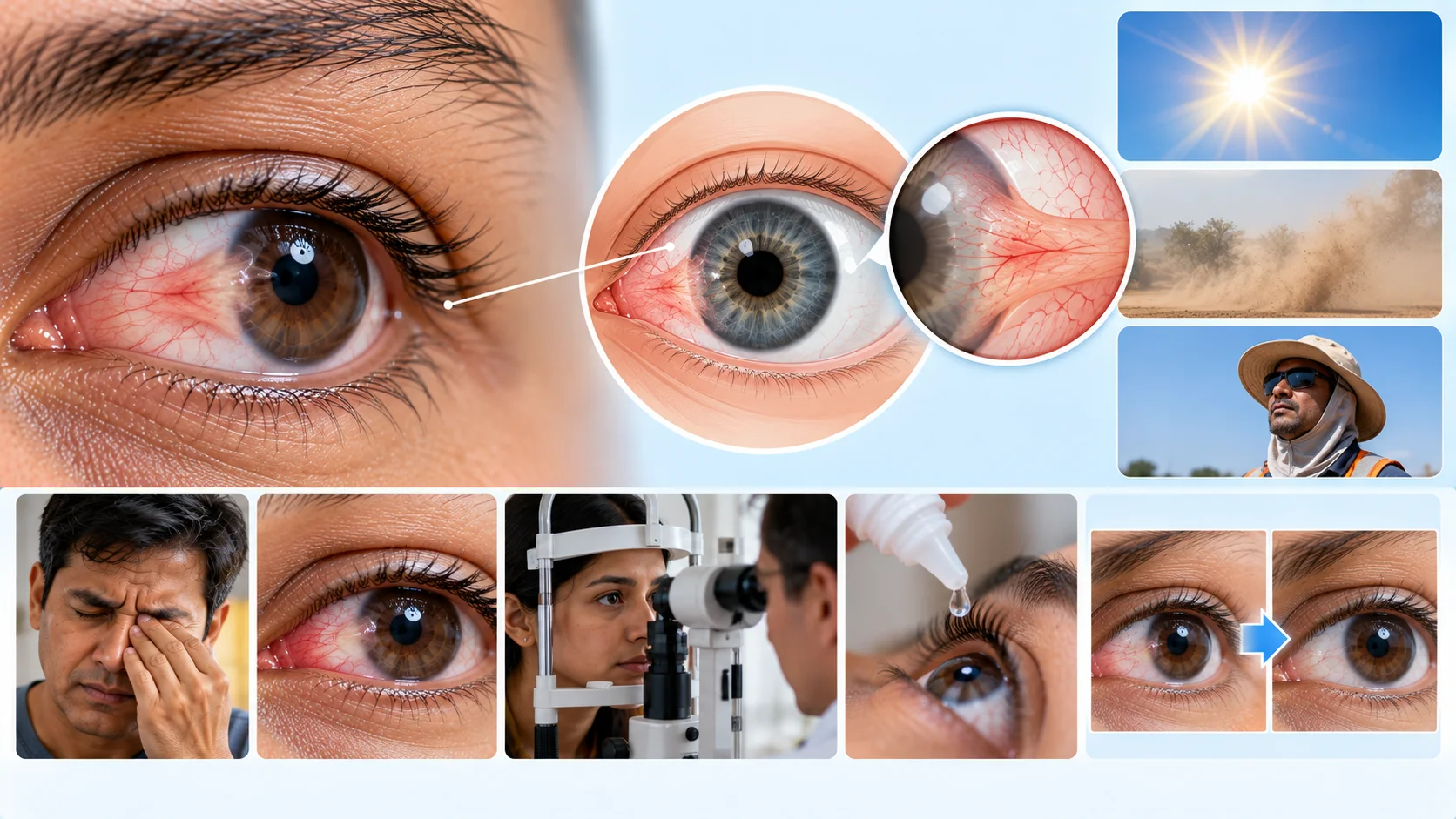
A pterygium is a growth of pink, fleshy tissue that develops on the white part of the eye, sometimes extending onto the cornea, typically appearing on the side of the eye closest to the nose.
How It Develops
A pterygium is thought to develop largely in response to long-term exposure to ultraviolet light, wind, and dust, which is why it's more common in people who spend a lot of time outdoors, particularly in sunny or dry climates. Over time, this chronic irritation appears to trigger abnormal tissue growth on the surface of the eye.
General Symptoms
Many small pterygia cause few or no symptoms initially. As they grow larger, common symptoms can include redness, irritation, a feeling of something being in the eye, and, if the growth extends far enough onto the cornea, blurred vision due to the distortion it can cause to the corneal surface.
General Treatment Approaches
Smaller pterygia that aren't causing significant symptoms are often simply monitored over time, sometimes with lubricating eye drops to ease mild irritation. For pterygia that grow large enough to threaten vision or cause persistent discomfort, surgical removal is an option, generally recommended once the growth becomes more significant rather than for cosmetic reasons alone in milder cases.
Background
Pterygium has been recognized as a distinct eye condition since ancient times, with early descriptions found in historical Greek and Indian medical texts. Understanding of its connection to prolonged ultraviolet and environmental exposure developed more fully over the 20th century, and surgical techniques for removing pterygia, including approaches designed to reduce the chance of the growth returning afterward, have continued to be refined considerably in recent decades.