What It Is
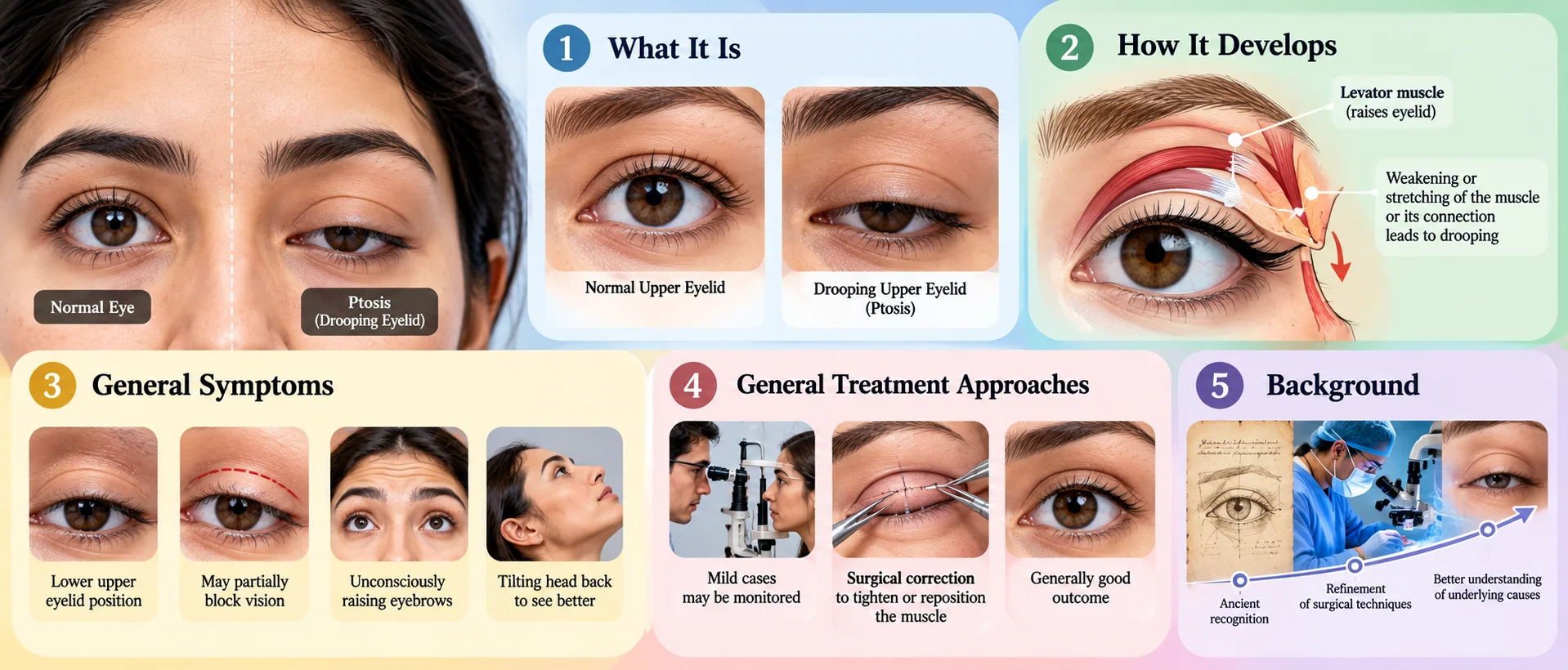
Ptosis refers to drooping of the upper eyelid, which can range from a barely noticeable droop to one significant enough to partially cover the pupil and affect vision.
How It Develops
Ptosis occurs when the muscle responsible for raising the upper eyelid weakens or its connection to the eyelid becomes stretched or loosened. This most commonly happens gradually with age, but ptosis can also be present from birth due to underdevelopment of that muscle, or develop due to nerve or muscle-related conditions affecting how well the eyelid-raising muscle functions.
General Symptoms
The main symptom of ptosis is a visibly lower position of one or both upper eyelids compared to normal. If the droop is significant enough, it can partially block the upper part of the visual field, and people with more significant ptosis sometimes unconsciously raise their eyebrows or tilt their head back to help compensate and see more clearly.
General Treatment Approaches
Treatment for ptosis depends on its cause and severity. Mild cases that aren't affecting vision may simply be monitored. When ptosis significantly affects vision or is a cosmetic concern, surgical correction to tighten or reposition the muscle responsible for lifting the eyelid is the standard treatment, generally with a good outcome.
Background
Ptosis has been recognized and described since ancient medical texts, given how visibly noticeable it is. Surgical techniques for correcting ptosis have a long history of gradual refinement, and understanding of the different underlying causes, including nerve-related, muscle-related, and age-related patterns, has become increasingly detailed, helping guide more tailored surgical approaches depending on the specific cause identified in each case.