What They Do
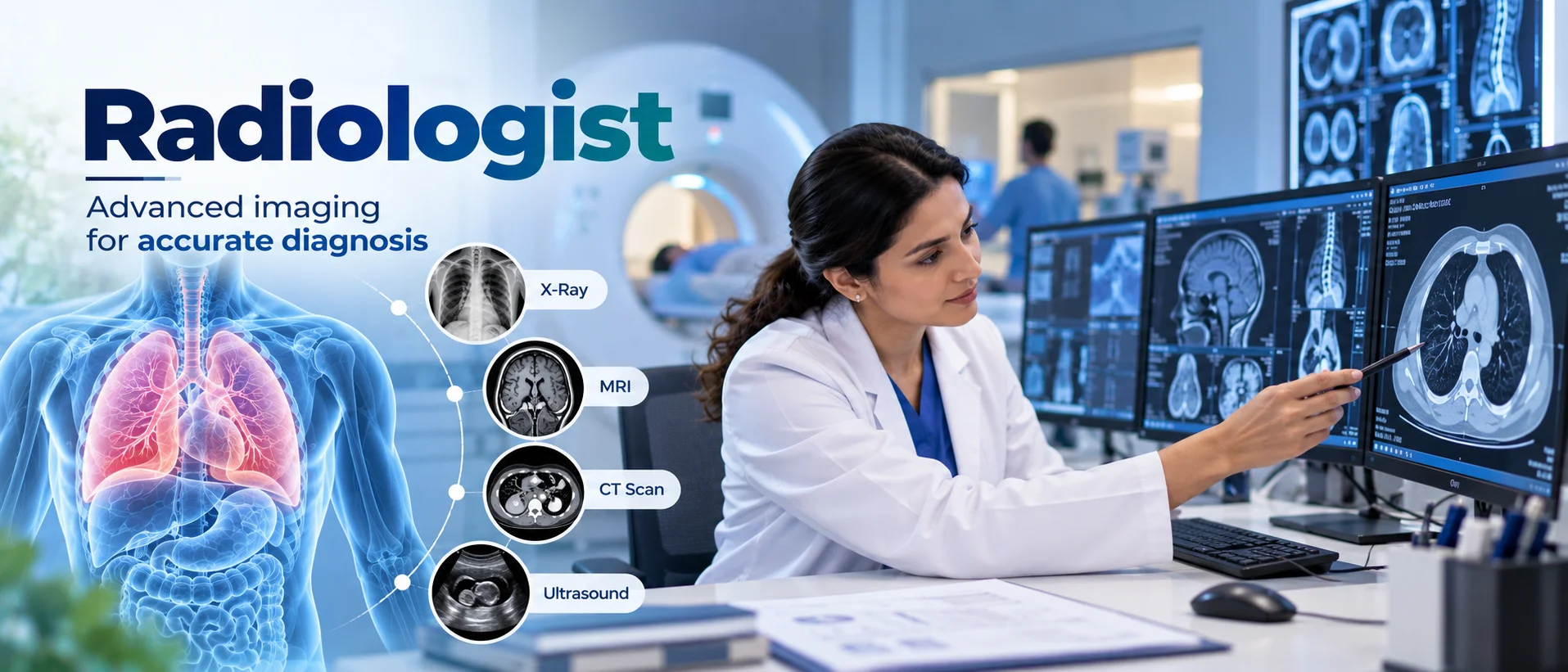
A radiologist is a physician who specializes in interpreting medical imaging, including X-rays, CT scans, MRIs, and ultrasounds, to help diagnose a wide range of medical conditions. Radiologists typically work behind the scenes compared to many other specialists, reviewing and interpreting images and providing detailed reports to the referring physician.
What They Do in Practice
Radiologists examine imaging studies in detail, identifying and describing any abnormalities present, and provide expert interpretation that guides diagnosis and treatment decisions made by other physicians. Some radiologists further subspecialize in a specific area, such as interpreting imaging of a particular body region, or in interventional radiology, a distinct branch that performs minimally invasive, image-guided procedures directly, rather than only interpreting images.
Training Path
Becoming a radiologist requires completing a medical degree, followed by dedicated residency training specifically in radiology, covering the interpretation of the many different imaging techniques used in modern medicine. Radiologists interested in interventional radiology complete additional specialized fellowship training focused on performing image-guided procedures.
When Patients Interact With One
Most patients don't meet directly with a radiologist in the way they would with many other specialists, since radiologists primarily interpret imaging on behalf of the referring physician. Patients are more likely to directly interact with an interventional radiologist, given that this subspecialty involves performing procedures directly on patients.
Background
Radiology developed as a medical specialty following the discovery of X-rays in the late 19th century, which for the first time allowed physicians to see inside the body without surgery. The field has expanded enormously since then, incorporating an ever-growing range of imaging technologies developed over the 20th century, including CT, MRI, and ultrasound, each adding new ways of visualizing different tissues and conditions within the body.