What It Is
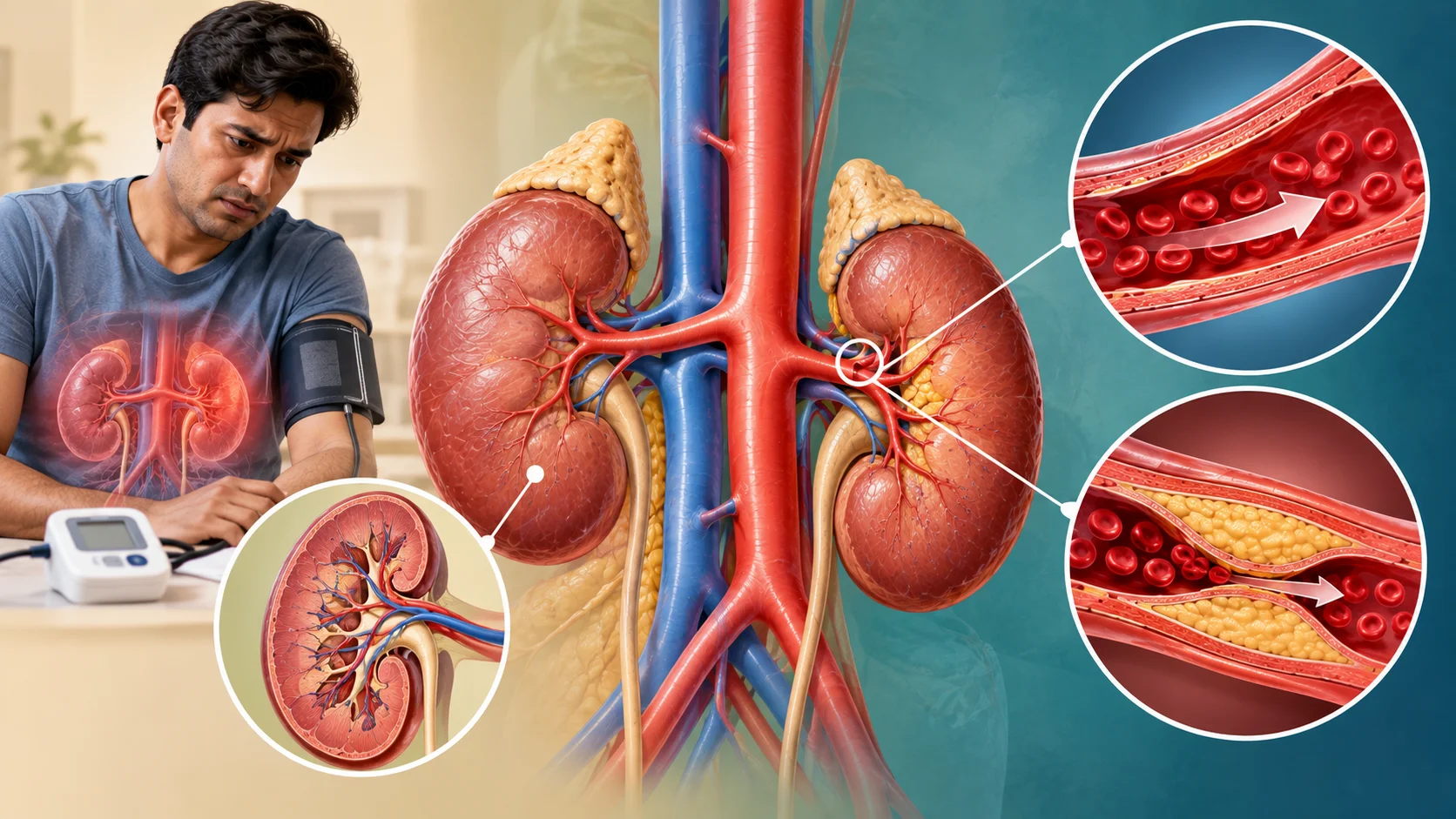
Renal artery stenosis is a narrowing of one or both of the renal arteries, the blood vessels that supply blood directly to the kidneys.
How It Develops
Renal artery stenosis most commonly develops due to atherosclerosis, the same process of fatty plaque buildup that affects arteries elsewhere in the body, including the heart's coronary arteries. As plaque accumulates along the walls of the renal artery, it gradually narrows the vessel, reducing blood flow to the affected kidney. A less common cause involves an abnormal thickening pattern in the artery wall that isn't related to plaque buildup, which tends to occur in a different pattern and often affects a different population than the more common atherosclerotic form.
General Symptoms
Renal artery stenosis often causes no direct symptoms on its own in its earlier stages. Because reduced blood flow to the kidneys can trigger hormonal responses that raise blood pressure, one of the most common signs is high blood pressure that's difficult to control with standard treatment, or that develops suddenly in a way that seems disproportionate to other risk factors. In more significant cases, declining kidney function may also become apparent.
General Treatment Approaches
Treatment for renal artery stenosis generally focuses on managing blood pressure, often requiring a combination of medications, and addressing underlying risk factors related to atherosclerosis, such as cholesterol levels, in cases related to plaque buildup. In certain cases, procedures to open the narrowed artery, such as angioplasty, sometimes combined with stent placement, may be considered, depending on the severity of the narrowing and its impact on kidney function and blood pressure control.
Background
Renal artery stenosis was identified as a cause of high blood pressure in the mid-20th century, following research into the hormonal systems the kidneys use to help regulate blood pressure. This discovery helped explain why narrowing of the renal artery could lead to significant blood pressure elevation, and it remains an important, though less common, condition considered when evaluating certain patterns of difficult-to-control high blood pressure.