What It Is
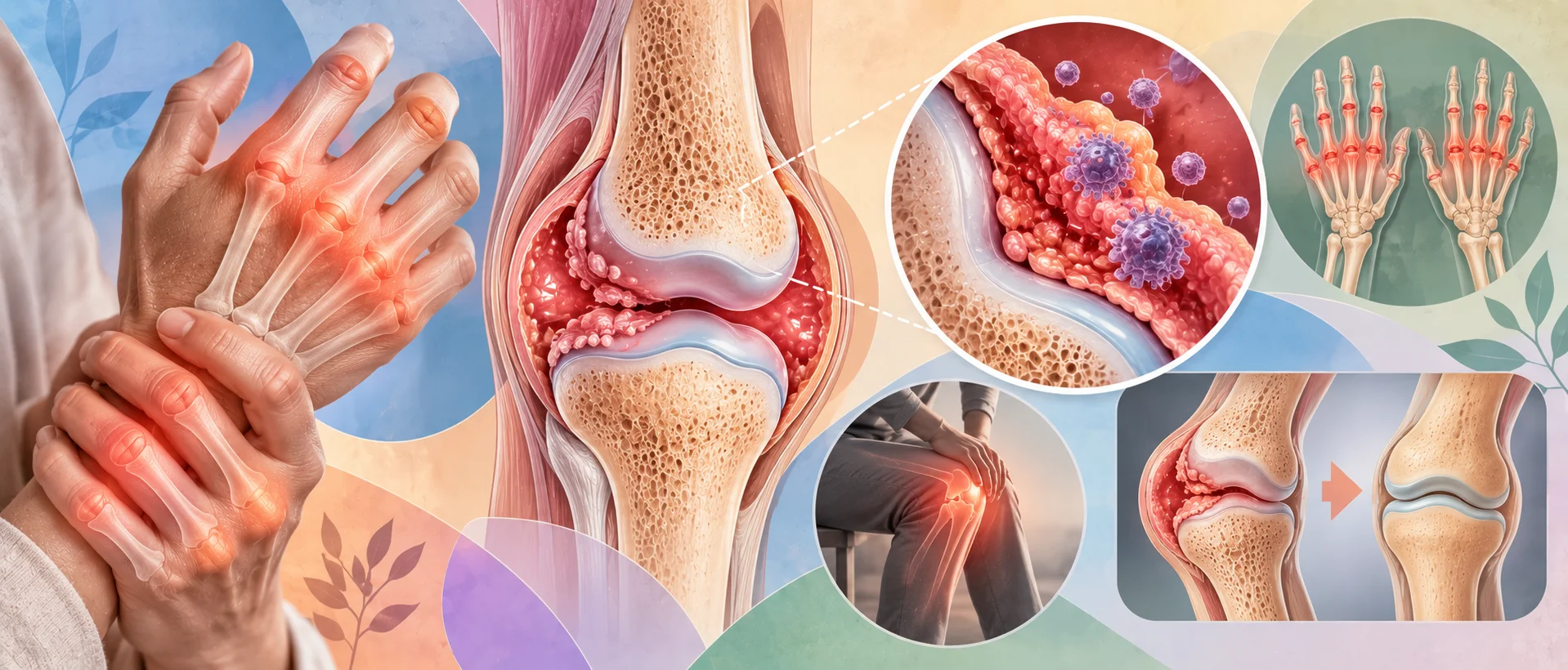
Rheumatoid arthritis is a chronic autoimmune condition that primarily affects the joints, causing inflammation that can lead to pain, swelling, and, over time, joint damage.
How It Develops
In rheumatoid arthritis, the immune system mistakenly targets the synovium, the thin membrane lining the joints, causing chronic inflammation. This ongoing inflammation can gradually damage the cartilage and bone within the affected joints if left unmanaged. Unlike the wear-and-tear pattern seen in osteoarthritis, rheumatoid arthritis stems from this underlying immune system dysfunction, and its exact trigger involves a combination of genetic susceptibility and environmental factors that isn't yet fully understood.
General Symptoms
Common symptoms of rheumatoid arthritis include joint pain, swelling, and stiffness, particularly noticeable in the morning or after periods of inactivity, often affecting the same joints on both sides of the body symmetrically. Fatigue is also a common accompanying symptom. Because it's a systemic autoimmune condition, rheumatoid arthritis can sometimes affect other parts of the body beyond the joints as well.
General Treatment Approaches
Treatment for rheumatoid arthritis generally aims to reduce inflammation, relieve symptoms, and slow or prevent joint damage. This commonly involves medications that calm the immune system's inflammatory activity, alongside physical therapy to help maintain joint function and mobility. Early treatment is generally emphasized, given the goal of limiting joint damage before it becomes significant.
Background
Rheumatoid arthritis has been described in various forms throughout medical history, but it was more clearly distinguished as a specific disease separate from other joint conditions in the 19th century. Understanding of its autoimmune basis developed considerably over the 20th century, and this deeper understanding has led to a substantial expansion in available treatment approaches, particularly medications that specifically target the immune pathways involved in the condition.