What It Is
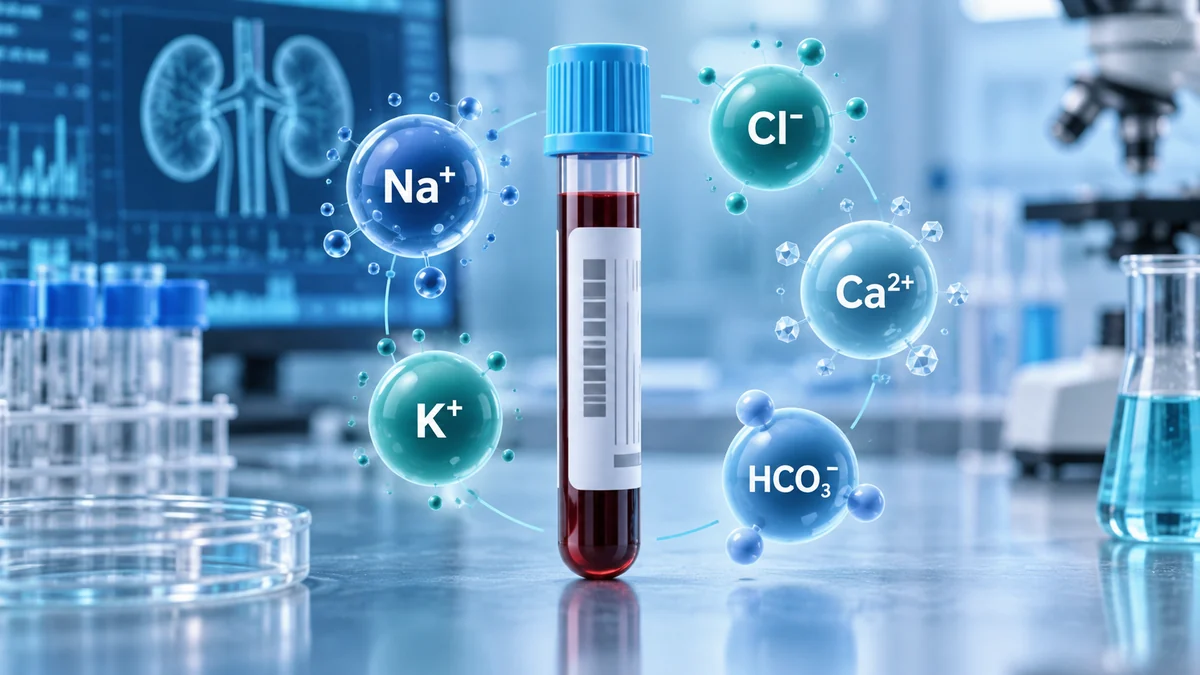
A serum electrolytes panel is a blood test that measures the levels of several key minerals, called electrolytes, circulating in the blood, which play essential roles in many bodily functions.
What It Checks
This panel typically measures sodium, potassium, chloride, and bicarbonate, among the most clinically important electrolytes. These minerals play roles in maintaining fluid balance, supporting nerve and muscle function, and helping regulate the body's acid-base balance.
Why It's Used
A serum electrolytes panel is commonly used as part of routine health checkups, to investigate symptoms that might relate to fluid or electrolyte imbalance, and to monitor patients with conditions affecting the kidneys, heart, or fluid balance more broadly.
How It's Done
A serum electrolytes panel requires a standard blood sample, typically drawn from a vein in the arm, similar to most routine blood tests. The sample is sent to a laboratory, where each electrolyte is measured individually using automated testing equipment.
Background
The ability to measure individual electrolytes in blood developed gradually over the 20th century, alongside advances in laboratory chemistry that allowed increasingly precise measurement of specific dissolved substances in blood. As understanding of the role these minerals play in bodily function deepened, electrolyte testing became a standard, frequently ordered part of laboratory medicine, and it remains a routine and widely accessible blood test today.