What It Is
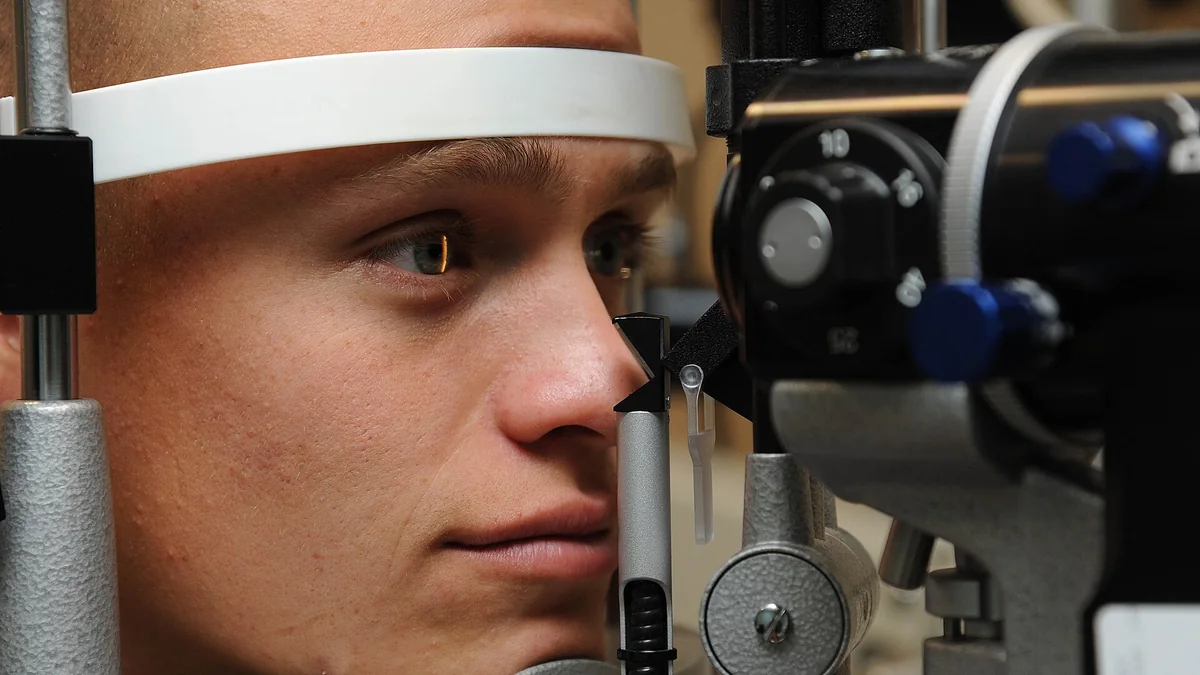
A slit lamp examination is a detailed eye examination that uses a specialized microscope combined with a bright, adjustable light source to closely examine the structures at the front of the eye, and, with certain additional lenses, the back of the eye as well.
What It Checks
A slit lamp allows a magnified, highly detailed view of the eye's structures, including the cornea, iris, and lens, making it possible to detect fine changes or abnormalities that wouldn't be visible during a standard visual inspection.
Why It's Used
A slit lamp examination is commonly used as part of routine comprehensive eye exams, and to investigate specific symptoms such as eye pain, redness, or vision changes, given how much detail it reveals about the structures at the front of the eye in particular.
How It's Done
During a slit lamp examination, the person rests their chin and forehead against supports on the instrument to keep the head steady, while the examiner directs a narrow, adjustable beam of light into the eye and views the structures through the instrument's magnifying lenses. The procedure is painless and generally takes only a few minutes, though certain additional tests, such as using eye drops to allow a view of structures further back in the eye, may extend the examination somewhat.
Background
The slit lamp was developed by a Swedish ophthalmologist in the early 20th century, introducing a way to examine the eye's structures with far greater detail and precision than had previously been possible. The instrument has been refined and improved considerably since its introduction, and it remains a fundamental tool used in essentially every comprehensive eye examination performed by an ophthalmologist today.