
What They Do
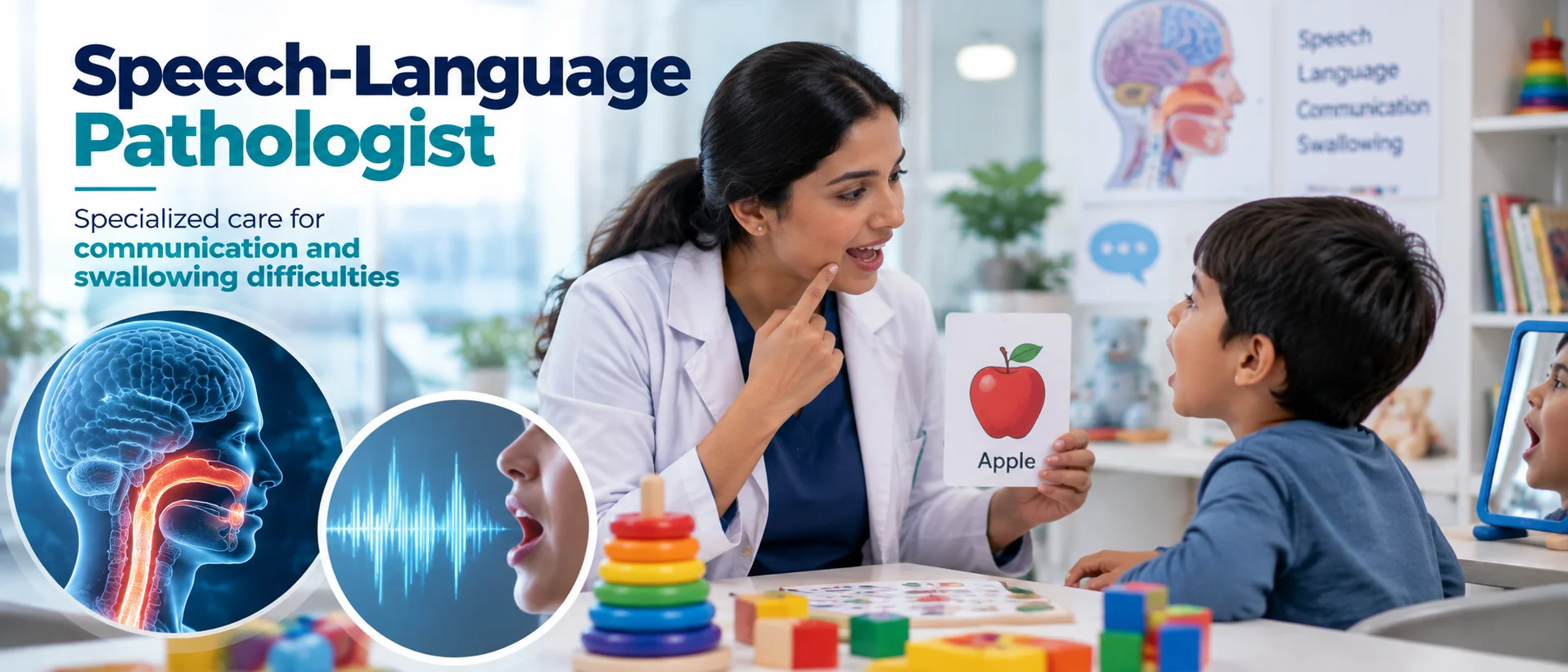
A speech-language pathologist specializes in diagnosing and treating communication disorders, along with certain swallowing difficulties. This includes difficulties with speech sounds, language use and understanding, voice, fluency, and the physical process of swallowing.
What They Treat
Speech-language pathologists work with children who have delays in speech or language development, and with people of any age experiencing communication difficulties following conditions such as stroke, brain injury, or certain progressive neurological conditions. They also treat swallowing difficulties, which can arise from a range of underlying causes and can significantly affect a person's ability to eat and drink safely.
Training Path
Becoming a speech-language pathologist typically requires a graduate degree in speech-language pathology, along with supervised clinical training and, in most countries, a licensing or certification process specific to the field. This training covers the detailed anatomy and physiology involved in speech, language, and swallowing, along with therapeutic techniques for addressing difficulties in each area.
When to See One
Children are commonly referred to a speech-language pathologist when speech or language development appears delayed compared to expected milestones. Adults are commonly referred following a stroke, brain injury, or other condition affecting communication or swallowing, often as part of a broader rehabilitation team working together on recovery.
Background
Speech-language pathology developed as a distinct clinical field over the course of the 20th century, growing alongside an increasing understanding of how speech, language, and swallowing are controlled by the nervous system, and how these functions can be affected by injury, developmental differences, or disease. The field has continued to expand its therapeutic techniques considerably as understanding of communication and swallowing disorders has deepened.