What It Is
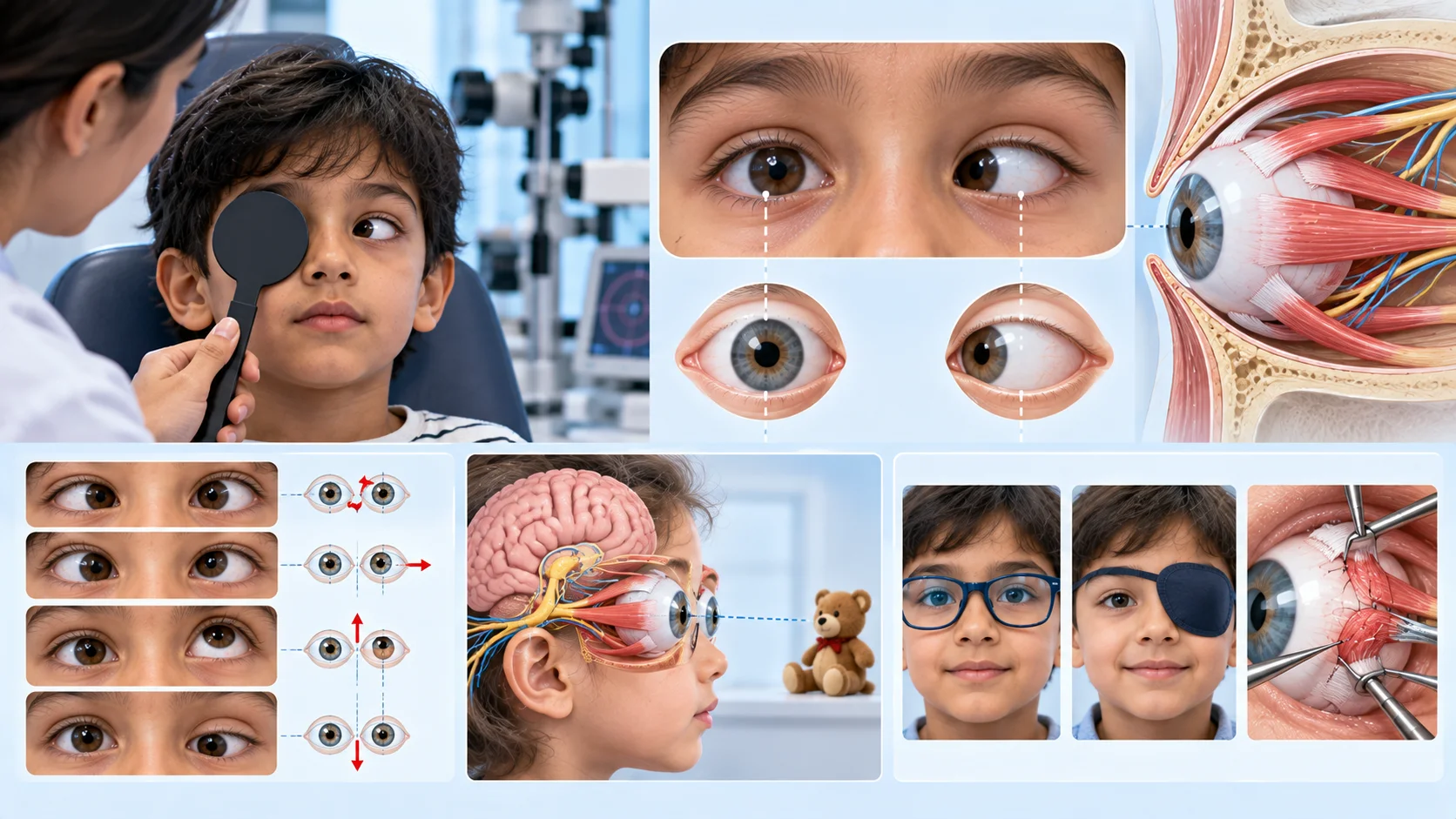
Strabismus, commonly known as a squint, is a condition in which the eyes aren't properly aligned with one another, with one eye pointing in a different direction than the other.
How It Develops
Normal, aligned vision relies on six small muscles around each eye working together in a precisely coordinated way, controlled by signals from the brain, to keep both eyes pointed at the same target at the same time. Strabismus develops when this coordination is disrupted, which can result from an imbalance in muscle strength, a problem with the nerves controlling these muscles, or issues with how the brain processes and coordinates signals to both eyes together. It can be present from early childhood or develop later in life.
General Symptoms
The most visible symptom of strabismus is one eye appearing to turn inward, outward, upward, or downward relative to the other. In children, strabismus can also lead to amblyopia, a related condition affecting vision development, if left uncorrected. In adults who develop strabismus later in life, double vision is a common accompanying symptom.
General Treatment Approaches
Treatment for strabismus depends on its specific cause and severity, and can include glasses to address any underlying refractive error, patching or exercises aimed at improving eye coordination, and, in many cases, surgery to adjust the eye muscles and improve alignment. Early treatment in childhood is generally emphasized, given its close relationship with normal visual development.
Background
Strabismus has been recognized and described throughout recorded medical history, and various surgical approaches to correcting eye muscle imbalance were developed and refined considerably over the 19th and 20th centuries. Understanding of the close relationship between strabismus and vision development in childhood, in particular, has shaped how the condition is prioritized and treated in pediatric eye care today.