What It Is
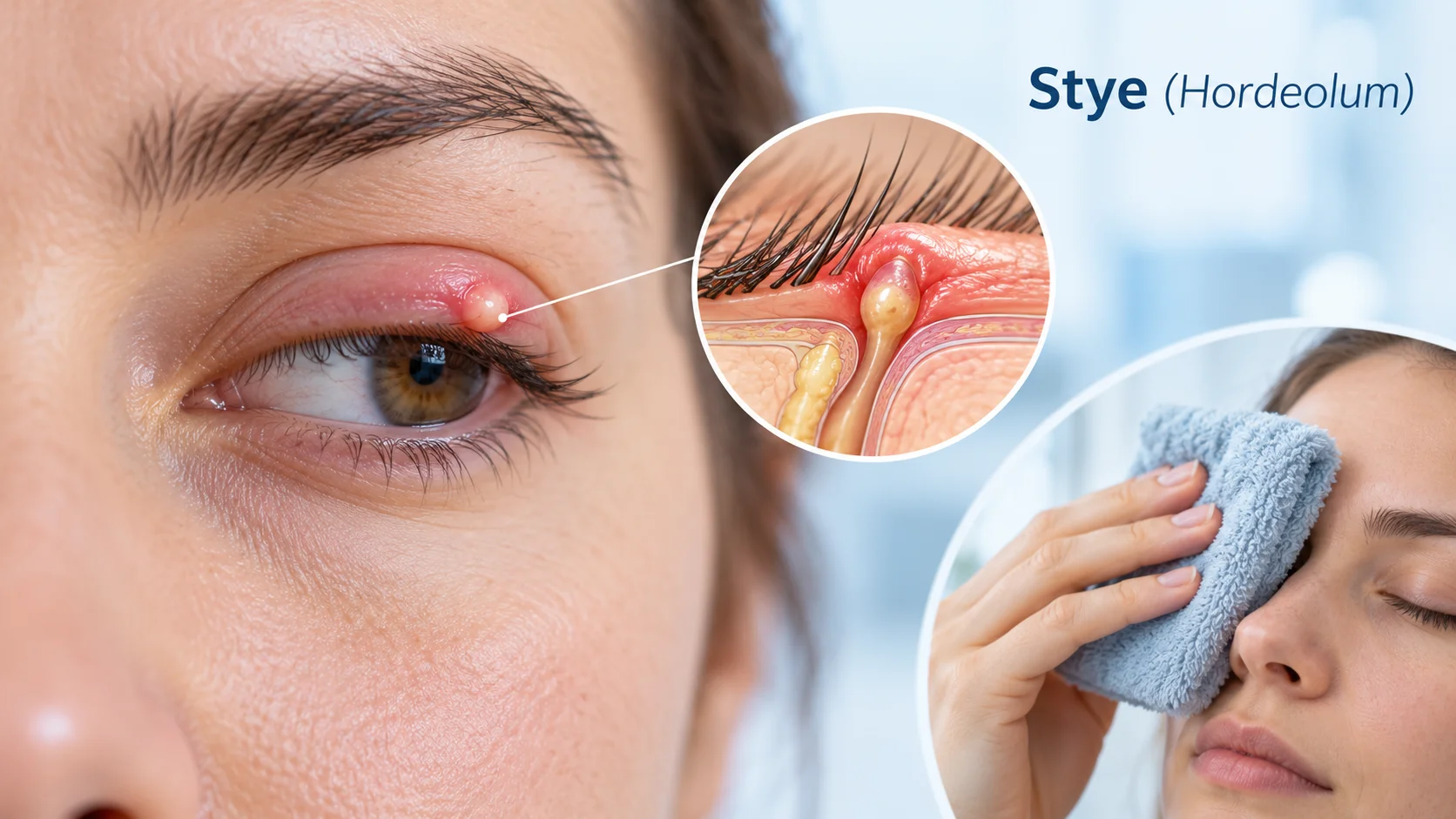
A stye, medically known as a hordeolum, is a small, painful, red bump that develops on or near the edge of the eyelid, resulting from an infected oil gland or eyelash follicle.
How It Develops
A stye develops when a small gland along the eyelid margin, or the follicle of an eyelash, becomes blocked and infected, usually with common bacteria that naturally live on the skin. This leads to a localized area of inflammation and, often, a small collection of pus, similar in nature to a pimple, but occurring specifically along the sensitive eyelid margin.
General Symptoms
Common symptoms of a stye include a red, swollen, tender bump on the eyelid, often near the base of an eyelash, along with mild pain and sometimes a feeling of something being in the eye. A small amount of pus may become visible at the center of the bump as it develops.
General Treatment Approaches
Most styes resolve on their own within about a week, often helped along by applying a warm compress several times a day, which can help the stye drain naturally. In cases that don't improve or that recur frequently, further evaluation and, occasionally, a minor procedure to drain the stye may be considered.
Background
Styes have been recognized as a common, minor eyelid condition throughout recorded medical history, given how frequently they occur and how visibly they present. Understanding of the specific glands and bacteria typically involved developed alongside the broader growth of microbiology, and while treatment approaches have remained relatively simple and consistent over time, warm compresses continue to be recommended today much as they have been for generations.