The adrenal glands are two small, triangular glands, each sitting atop one of the kidneys. Despite being only a few centimeters across, they produce a range of hormones that influence stress response, metabolism, and fluid balance.
Two Distinct Regions
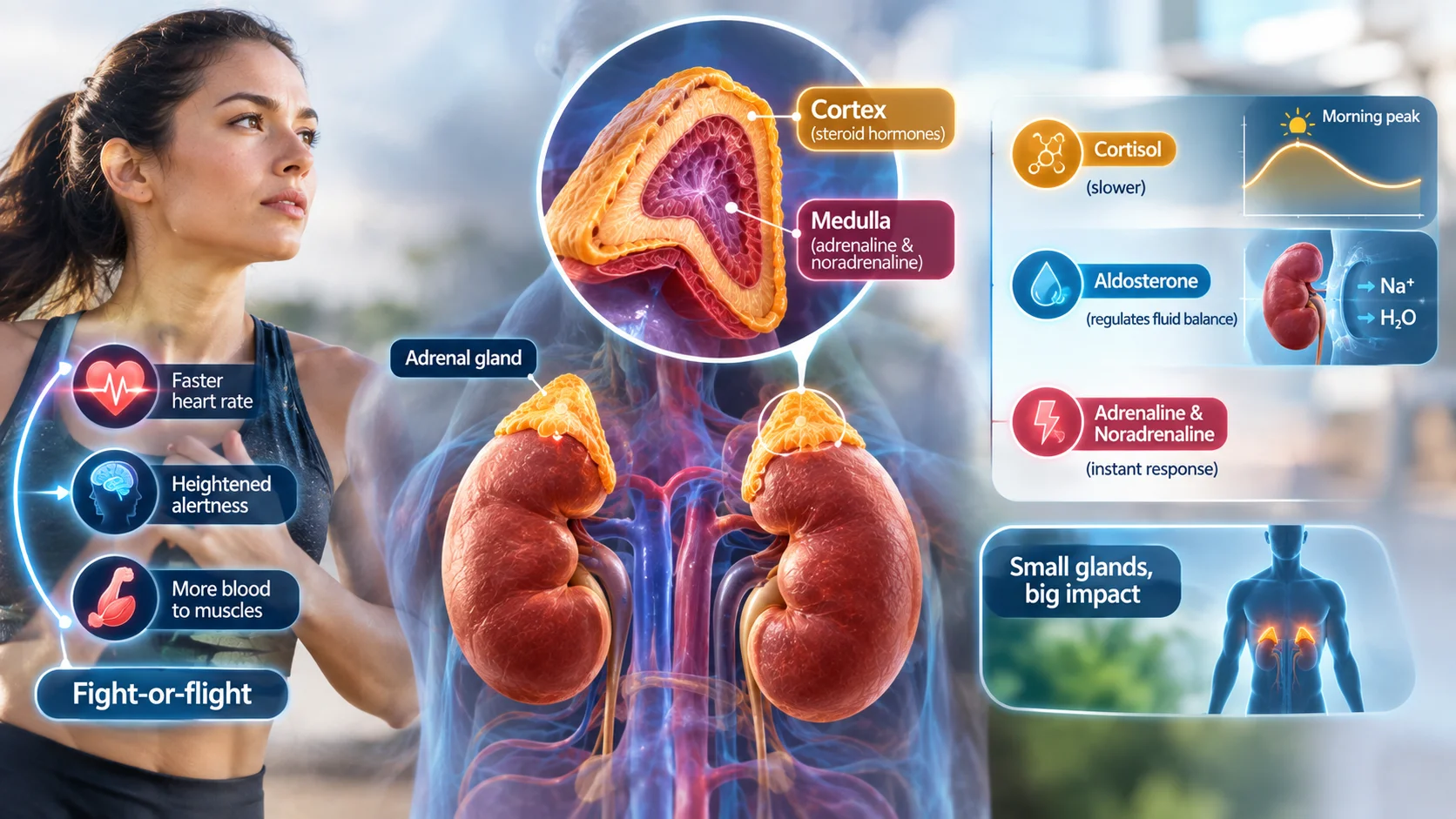
Each adrenal gland is made up of two functionally separate parts. The outer layer, called the adrenal cortex, produces steroid hormones, including cortisol and aldosterone. The inner core, called the adrenal medulla, produces adrenaline and noradrenaline, hormones associated with the body's rapid stress response.
The Stress Response
When the brain perceives a threat or stressor, it signals the adrenal medulla to release adrenaline almost instantly. This triggers familiar physical changes — an increased heart rate, heightened alertness, and blood flow redirected toward muscles — commonly known as the fight-or-flight response, preparing the body to react quickly.
A Slower-Acting Stress Hormone
Cortisol, produced by the adrenal cortex, works on a slower timescale than adrenaline. It helps regulate metabolism, suppresses non-essential processes during periods of stress, and influences blood sugar levels by encouraging the release of stored glucose. Cortisol also follows a natural daily rhythm, typically peaking in the early morning and gradually declining over the course of the day.
Regulating Fluid Balance
Aldosterone, another hormone produced by the adrenal cortex, acts on the kidneys, helping regulate how much sodium and water the body retains, which in turn plays a role in maintaining stable blood pressure.
Small Glands, Wide Reach
Though tucked away and easy to overlook, the adrenal glands influence how the body responds to everything from a sudden fright to prolonged periods of stress, making them a key part of how the body maintains internal stability under changing circumstances.