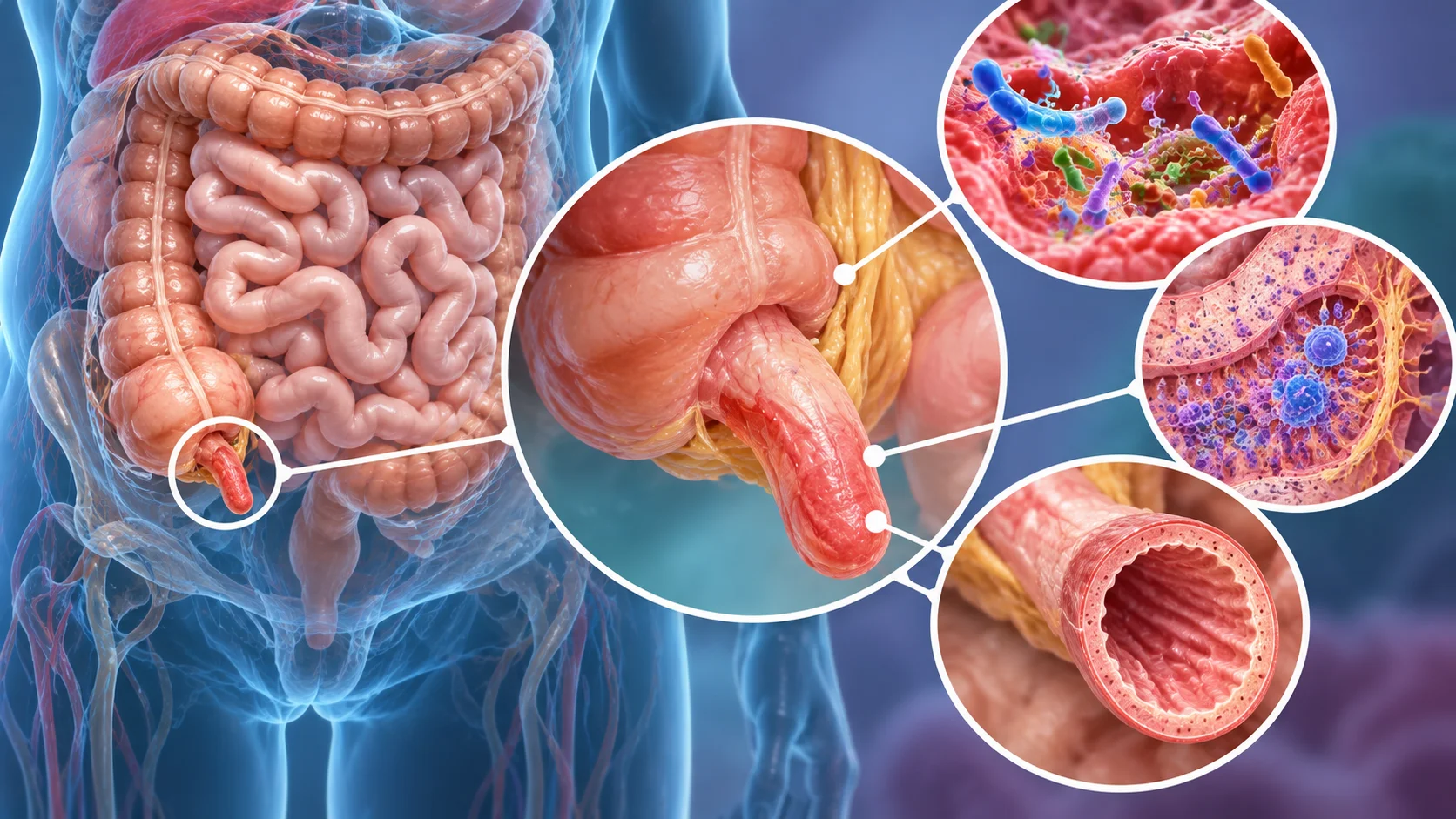
The appendix is a small, narrow, finger-shaped pouch attached to the large intestine, near where the small and large intestines meet. For a long time it was considered a vestigial structure with no real function — but current understanding paints a more active picture.
A Reservoir for Beneficial Bacteria
One theory, supported by a growing body of research, suggests the appendix acts as a safe storage site for beneficial gut bacteria. If the gut microbiome is disrupted, for example after a severe illness, the appendix may help "reseed" the large intestine with healthy bacteria, helping restore a normal microbial balance more quickly.
A Role in Immune Function
The appendix contains a notable concentration of lymphatic tissue, particularly during childhood and young adulthood, similar to tissue found elsewhere in the immune system. This suggests it may contribute to monitoring gut bacteria and supporting immune responses in the digestive tract, especially earlier in life.
Structure and Position
The appendix sits at the junction of the small and large intestine, with a narrow, often twisting internal space. This shape and position are part of why the appendix can become blocked or inflamed, which is a widely known medical concern, though the structure's basic anatomy and typical function are the focus here rather than that condition.
Diminishing Prominence Over Time
The amount of lymphatic tissue in the appendix tends to peak during childhood and gradually decreases with age, which may be part of why its proposed roles seem more relevant earlier in life than in later adulthood.
An Organ Still Being Understood
Research into the appendix's function has evolved considerably over recent decades, shifting from viewing it as a leftover evolutionary structure to recognizing it as an organ with plausible, active roles in supporting gut bacteria and immune function — an example of how scientific understanding of even well-known body parts continues to develop.