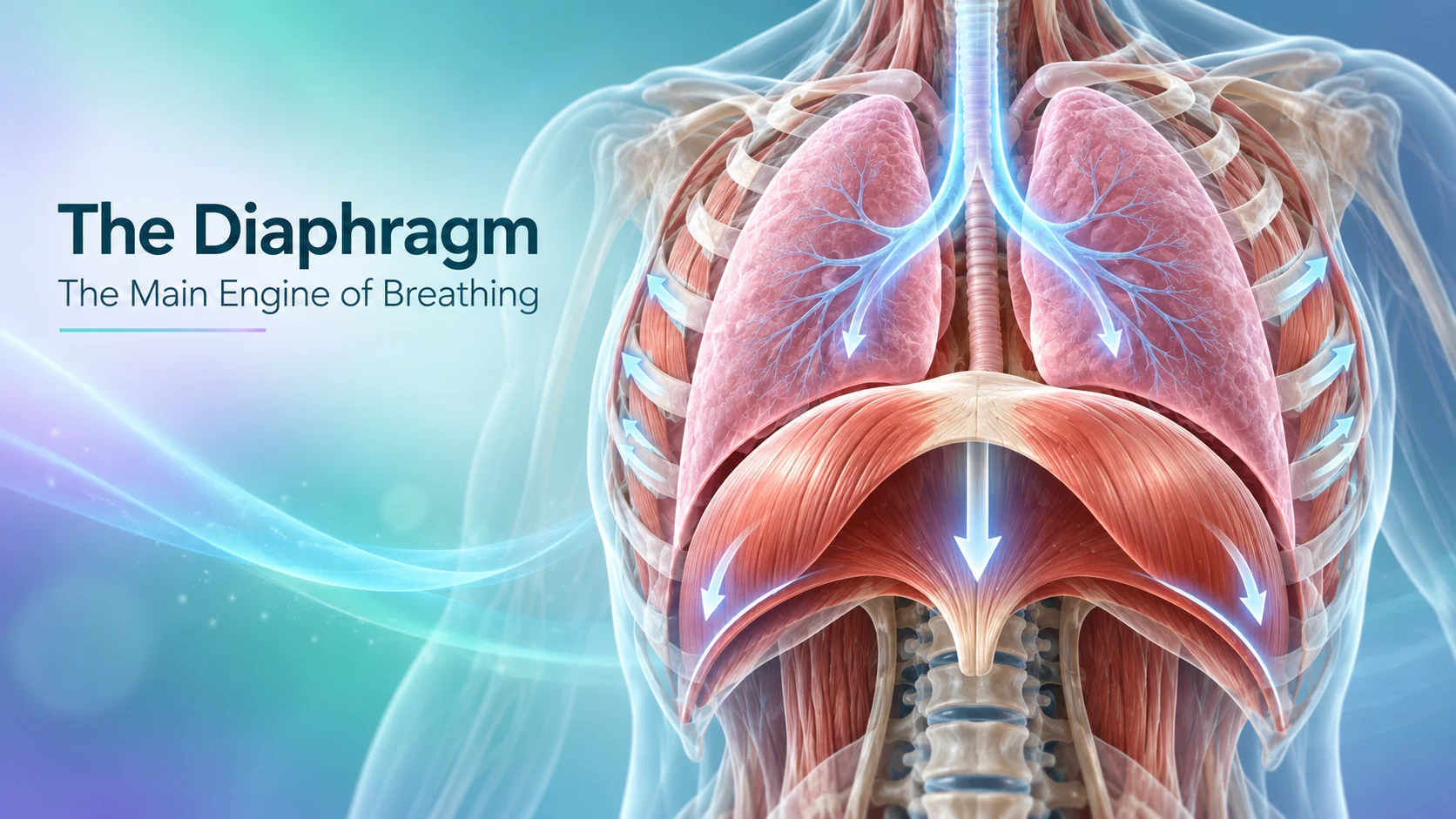
The diaphragm is a large, dome-shaped muscle situated beneath the lungs, separating the chest cavity from the abdomen. Though often overshadowed by the lungs themselves in discussions of breathing, the diaphragm is the primary muscle responsible for making each breath happen.
The Main Engine of Breathing
The lungs have no muscle tissue of their own capable of expanding and contracting them. That job falls largely to the diaphragm. When it contracts, it flattens and moves downward, enlarging the chest cavity and creating a drop in pressure that draws air into the lungs. When it relaxes, it returns to its dome shape, and air is pushed back out — a cycle repeated roughly 20,000 times a day without conscious effort.
Working With Other Muscles
While the diaphragm handles the bulk of the work during quiet, resting breathing, other muscles assist during deeper or more forceful breaths. Muscles between the ribs help expand the chest further, and abdominal muscles can assist in pushing air out more forcefully, such as during exercise or coughing.
Under Both Automatic and Voluntary Control
The diaphragm operates automatically, controlled by signals from the brainstem that keep breathing going even without conscious thought, including during sleep. At the same time, it's one of the few muscles that can also be controlled voluntarily — a person can consciously hold their breath, breathe deeply, or adjust their breathing pattern, within limits, before automatic control takes back over.
A Role Beyond Breathing
The diaphragm also contributes to functions outside of respiration. It assists in increasing pressure within the abdomen during actions like coughing, sneezing, and other bodily processes that require a forceful push, working in coordination with abdominal muscles.
A Muscle That Never Fully Stops
Because breathing is continuous and largely involuntary, the diaphragm is in near-constant motion throughout life, making it one of the most consistently active muscles in the human body.