The eyes are complex sensory organs that convert light into the electrical signals the brain interprets as vision. Each eye is roughly the size of a ping-pong ball, though only about a sixth of it is visible from outside.
Focusing Light
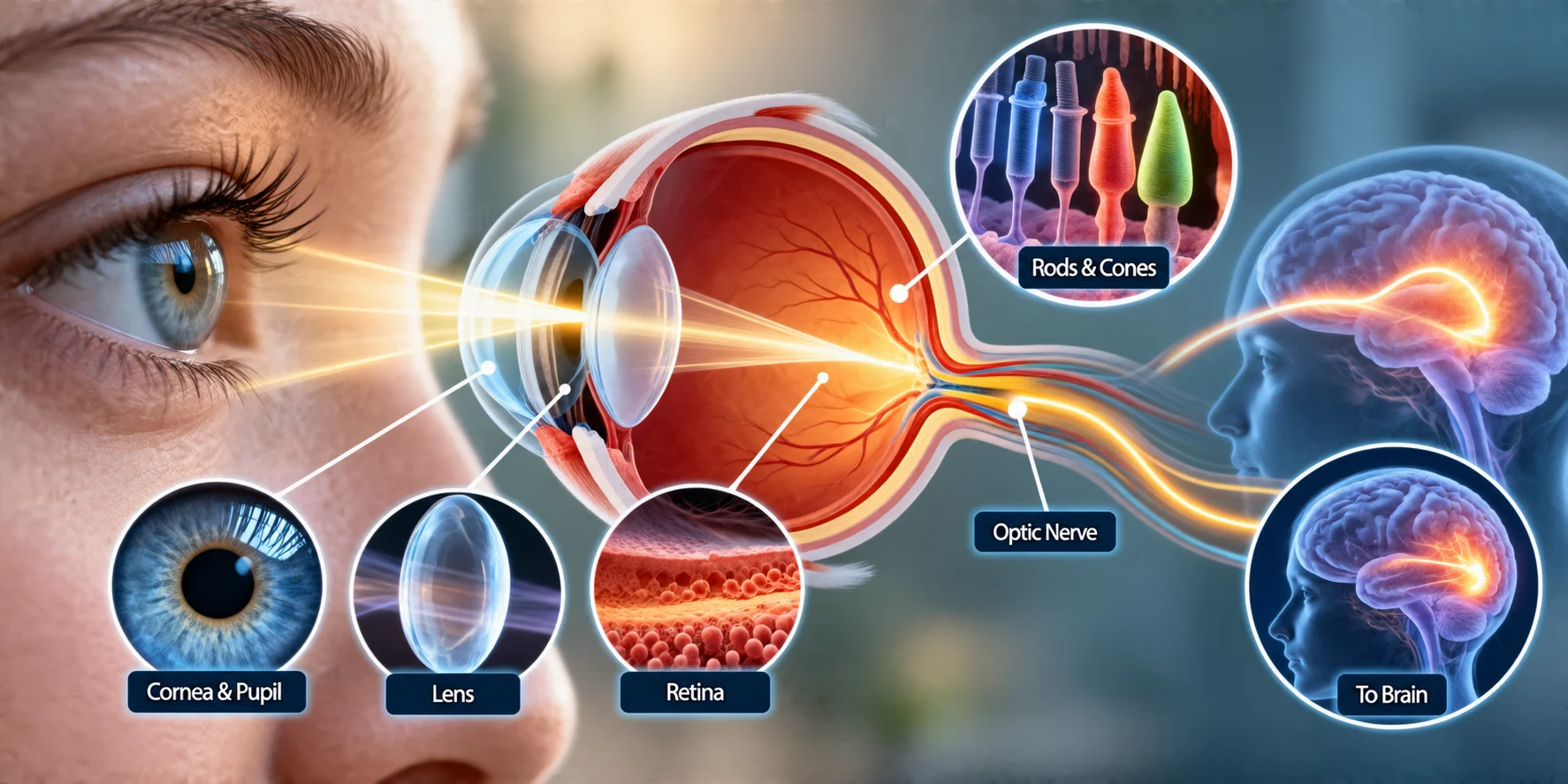
Light entering the eye first passes through the cornea, the clear, curved outer surface, which does most of the work of bending light rays toward a focal point. Light then passes through the pupil, an opening whose size is adjusted by the surrounding iris, the colored part of the eye, which widens the pupil in dim light and narrows it in bright light. Behind the pupil, the lens makes further fine adjustments, changing shape to focus light precisely depending on how near or far an object is.
Converting Light to Signals
Focused light lands on the retina, a thin layer of tissue lining the back of the eye, packed with light-sensitive cells called photoreceptors. Two types exist: rods, which detect light and dark and function well in low light, and cones, which detect color and fine detail but need brighter light to work effectively. When light strikes these cells, it triggers a chemical reaction that generates an electrical signal.
Sending the Signal to the Brain
These electrical signals travel along the optic nerve, a bundle of over a million nerve fibers, to the brain. The brain's visual processing centers, primarily located at the back of the brain, interpret these signals, assembling them into the coherent images a person consciously sees.
Two Eyes, One Picture
Because the eyes are positioned slightly apart, each captures a marginally different view of the world. The brain merges these two images into a single picture, and the slight difference between them is what allows for depth perception, the ability to judge distance.
Constant Small Movements
Even when focused on a single point, the eyes make tiny, rapid movements many times per second. These micro-movements prevent the photoreceptors from adapting to a static image and going blind to it, keeping vision continuously refreshed.