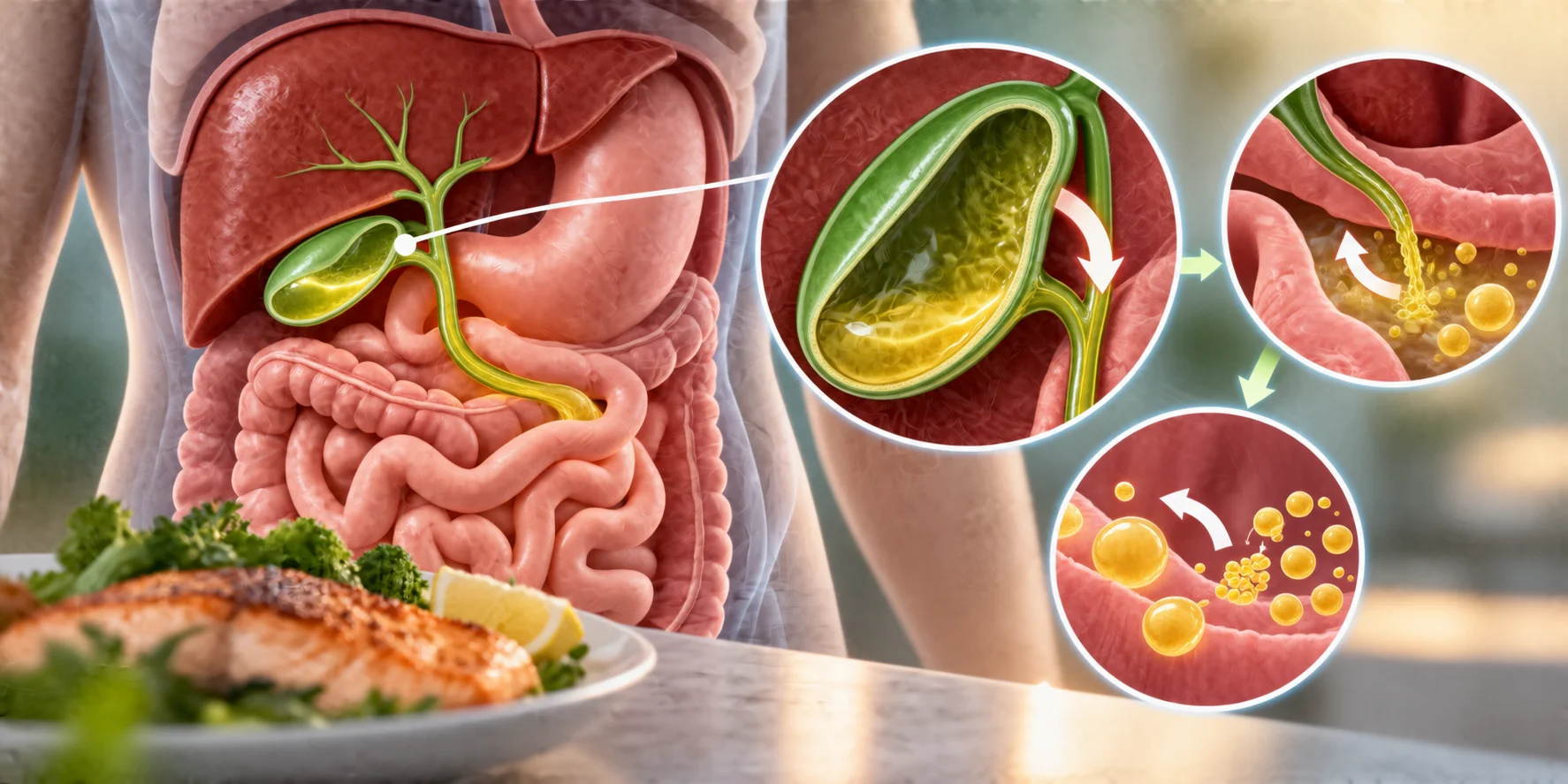
The gallbladder is a small, pear-shaped pouch tucked just beneath the liver, on the right side of the abdomen. Its role is narrow but important: storing and concentrating bile, a fluid essential to digesting fat.
Storing Bile
Bile is produced continuously by the liver, but it isn't always needed right away — its main job is breaking down fats, which only arrive in the digestive system periodically, with meals. Rather than letting bile go to waste between meals, the liver sends it to the gallbladder for storage, where it can be held until it's needed.
Concentrating the Fluid
While bile sits in the gallbladder, the organ absorbs water and certain salts from it, concentrating it into a much more potent form than what originally left the liver. This concentrated bile is considerably more effective at breaking down fats than the diluted version.
Responding to a Meal
When food, particularly fat-containing food, enters the small intestine, it triggers the release of a hormone called cholecystokinin. This hormone signals the gallbladder to contract, squeezing concentrated bile out through a duct that connects to the small intestine, timed to arrive just as fatty food does.
Breaking Down Fat
Bile itself doesn't chemically digest fat the way enzymes do. Instead, it acts like a detergent, breaking large fat globules into smaller droplets, a process called emulsification, which dramatically increases the surface area available for digestive enzymes to act on.
Not Strictly Essential
The gallbladder is one of the organs a person can live without. If it's removed, bile flows directly from the liver into the small intestine in a steady trickle rather than concentrated bursts, and the body generally adapts to digest fat reasonably well without it, though the storage and concentration function is lost.