The heart is a muscular organ about the size of a closed fist, sitting slightly left of center in the chest. Its job is simple to state and remarkable in execution: keep blood moving through the body, every second, for a lifetime.
A Two-Sided Pump
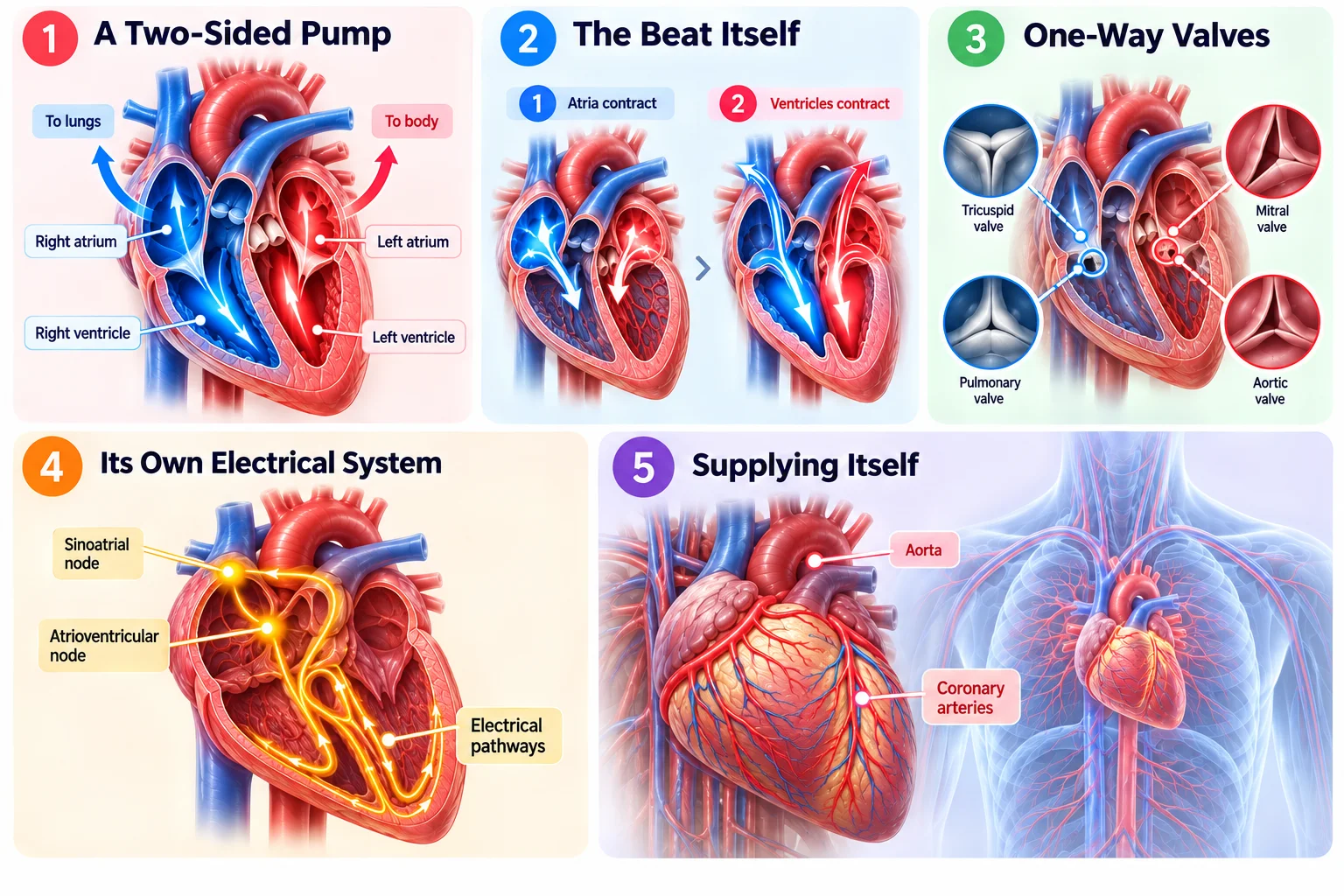
The heart is really two pumps working side by side. The right side receives oxygen-poor blood returning from the body and sends it to the lungs to pick up fresh oxygen. The left side receives that oxygen-rich blood from the lungs and pumps it out to every organ and tissue in the body. Each side has two chambers — an upper atrium and a lower ventricle — giving the heart four chambers in total.
The Beat Itself
A heartbeat is really two coordinated pumping actions happening in a fraction of a second. First, the atria contract, pushing blood into the ventricles. Then the ventricles contract, sending blood out to the lungs and the rest of the body. Four one-way valves keep blood flowing in a single direction, closing firmly enough after each beat to produce the familiar "lub-dub" sound heard through a stethoscope.
Its Own Electrical System
The heart doesn't wait for signals from the brain to know when to beat. A small cluster of cells called the sinoatrial node acts as a natural pacemaker, generating electrical impulses that spread across the heart muscle in a precise pattern, triggering each contraction. This is why a heart can keep beating even outside the body for a short time, given the right conditions — it runs on its own built-in rhythm.
Supplying Itself
Despite pumping blood to the entire body, the heart muscle needs its own dedicated blood supply. Coronary arteries, branching off the base of the aorta, wrap around the heart's surface and feed oxygen and nutrients directly into the heart muscle itself.
A Lifetime of Work
At an average resting rate of around 60 to 100 beats per minute, the heart beats roughly 100,000 times a day — over 2.5 billion times across an average lifespan — without ever formally "resting" between beats. It's one of the hardest-working muscles in the body, and one of the few that never fully relaxes.