The hypothalamus is a small region located deep within the brain, just above the pituitary gland to which it's directly connected. Despite being roughly the size of an almond, it serves as a critical link between the nervous system and the endocrine, or hormonal, system.
The Body's Regulatory Hub
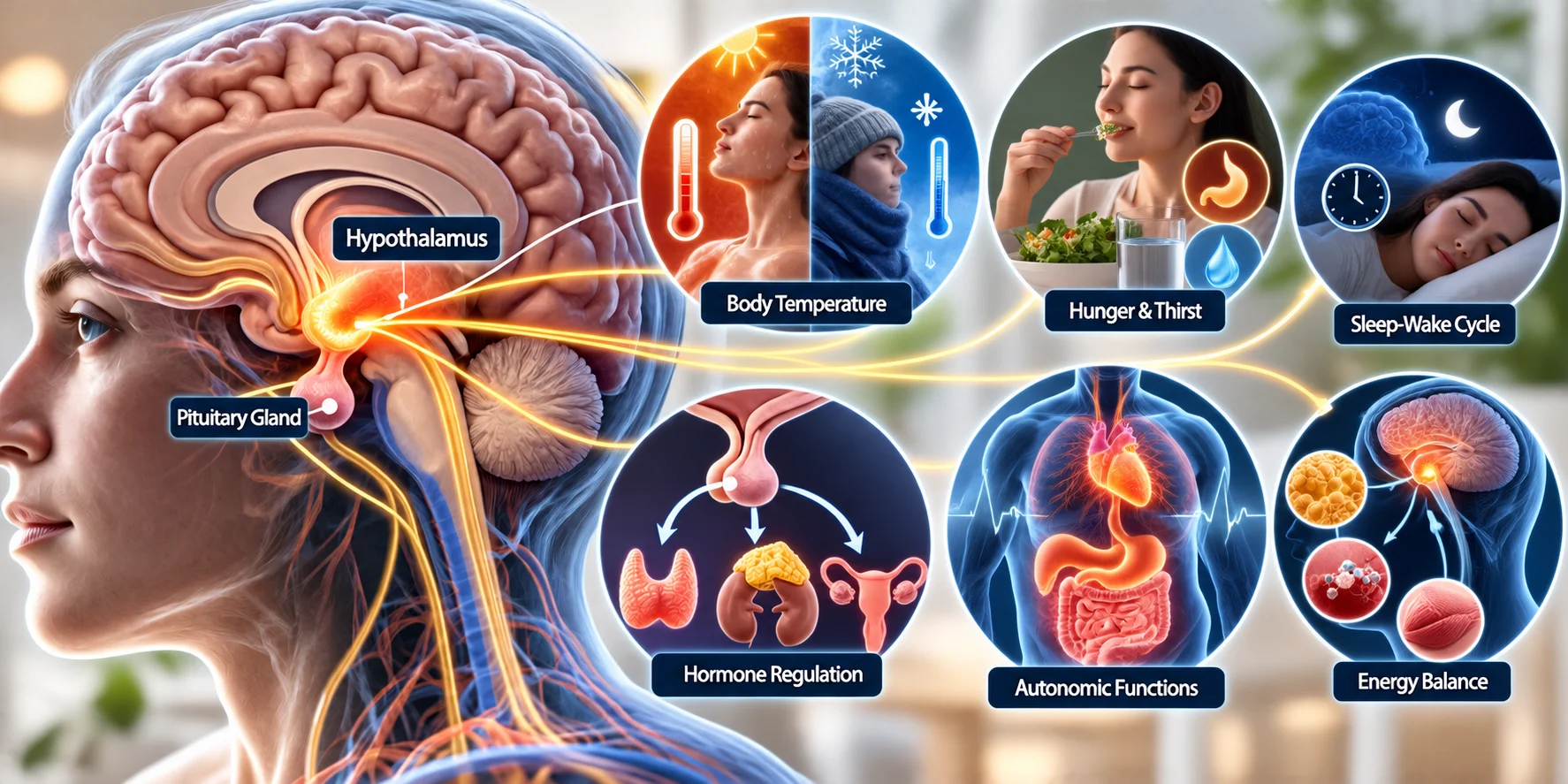
The hypothalamus continuously monitors conditions inside the body — temperature, hydration levels, energy stores, and more — and works to keep them within a stable, healthy range, a process known as homeostasis. When it detects a deviation, it triggers responses to correct it.
Controlling Temperature
When body temperature rises, the hypothalamus triggers responses such as sweating and the widening of blood vessels near the skin to release heat. When temperature drops, it triggers shivering and the narrowing of blood vessels to conserve heat, acting much like a thermostat for the body.
Directing the Pituitary Gland
The hypothalamus produces releasing and inhibiting hormones that travel a short distance to the pituitary gland, instructing it to either release or withhold its own hormones. Through this connection, the hypothalamus indirectly influences the thyroid, adrenal glands, and reproductive organs, since the pituitary's output depends on hypothalamic signals.
Regulating Hunger and Thirst
The hypothalamus contains regions specifically involved in generating the sensations of hunger and thirst, responding to signals about blood sugar levels, stored fat, and hydration status, and playing a central role in driving eating and drinking behavior.
Connecting to the Nervous System
Beyond its hormonal role, the hypothalamus is directly connected to the autonomic nervous system, the part of the nervous system that controls involuntary functions like heart rate and digestion. It also plays a role in regulating the sleep-wake cycle, working in coordination with other brain structures.
A Small Region With Broad Influence
Given its position linking the nervous system to hormone regulation, the hypothalamus affects an unusually wide range of bodily processes for its size, making it one of the most functionally significant structures in the brain.